
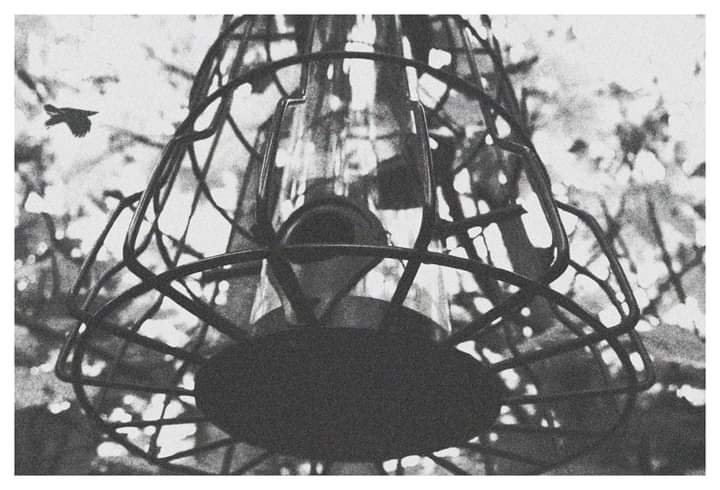
Even if it knows not where the flight will take. A cage is no place for it.
Exploration.
Analogue print. Black and white photography.
…. Sapna Dhandh-Sharma
Even if it knows not where the flight will take. A cage is no place for it.
Exploration.
Analogue print. Black and white photography.
…. Sapna Dhandh-Sharma
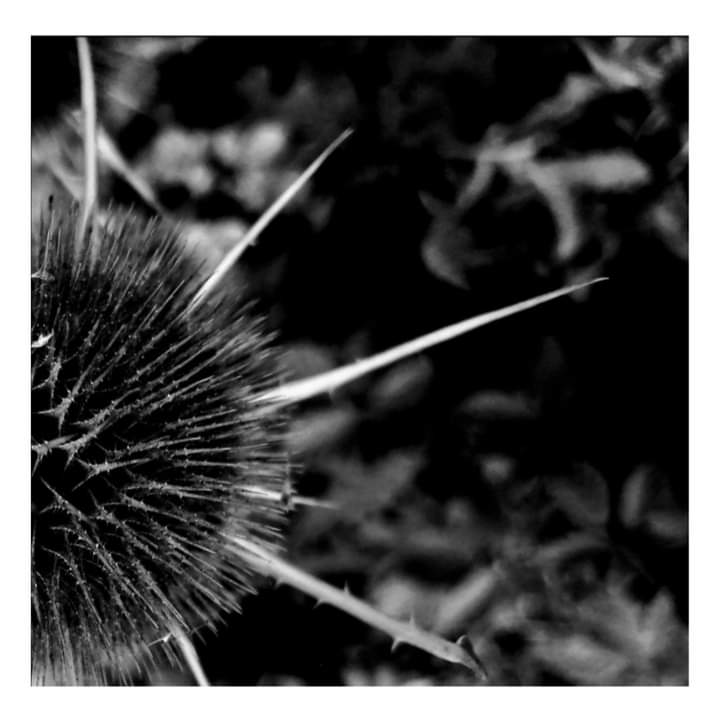
Hand-printed a 6×6 negative. Shot with an expired FP4 Plus.
Hand-printed a 6×6 negative. Shot with an expired FP4 Plus.
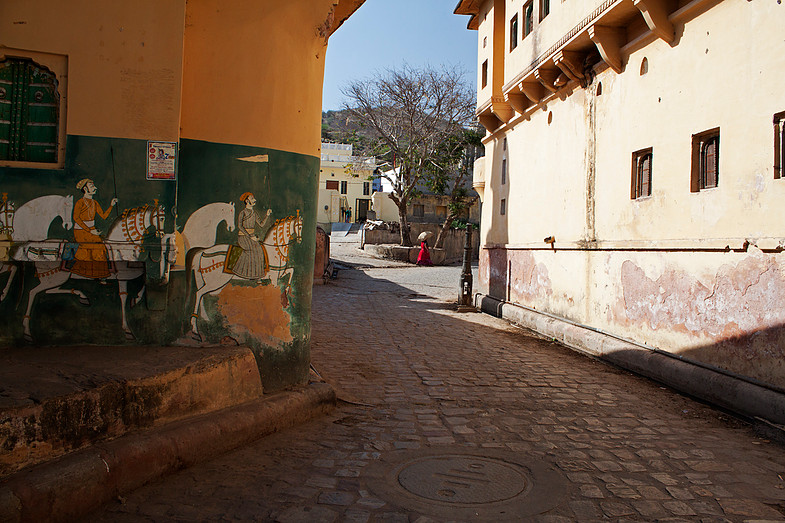
Apart from the great many tourists flocking to the grand fortress of Amer, where the maximum activity is noticed, the town of Amer remains unchanged since at least my childhood days. I cannot imagine it being any different a century ago, or even two or three centuries ago for that matter. The 17th century muralled walls of the many temples, the Panna Meena Kund, the bazaars, and the shops tucked into the small pockets of the fort’s base, remain untouched and neglected. As a result, many sandstone structures have fallen into a state of grave disrepair. But, the raw beauty prevails.
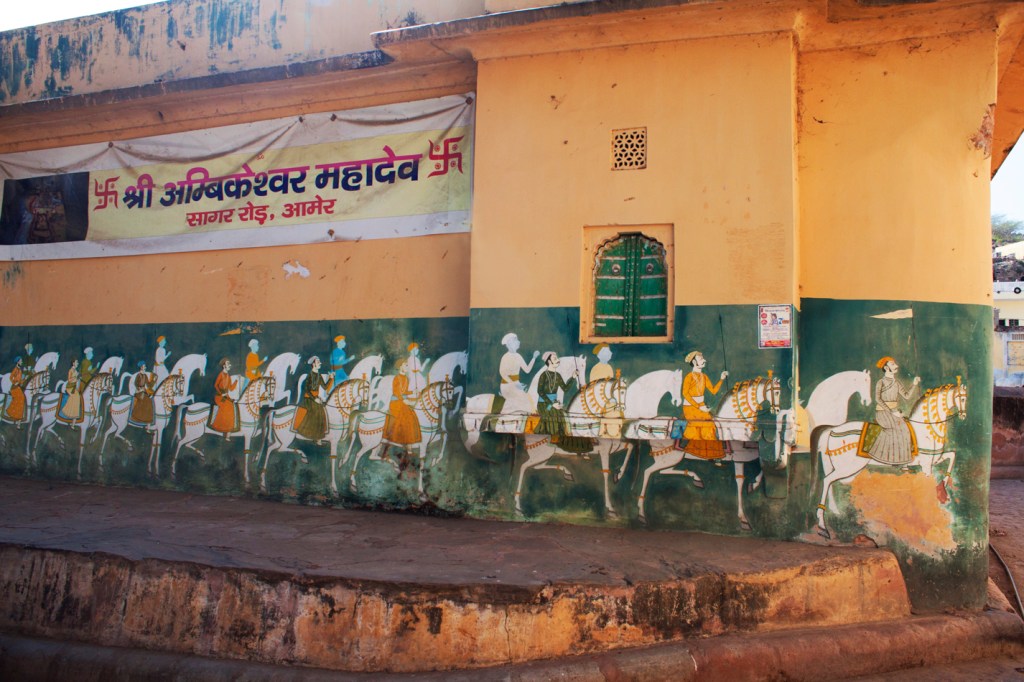
I hail from Rajasthan, and the areas around Aravalli Mountains (the oldest range of fold mountains in India) have been frequented by me since I was a child. I grew up knowing the region, its people, language and the customs. The women’s attires were always ‘very’ colourful, with one neon-orange found aplenty, the men wore the same multi-coloured turbans as they did now, and the kids played with marble balls on sandy tracks even then.
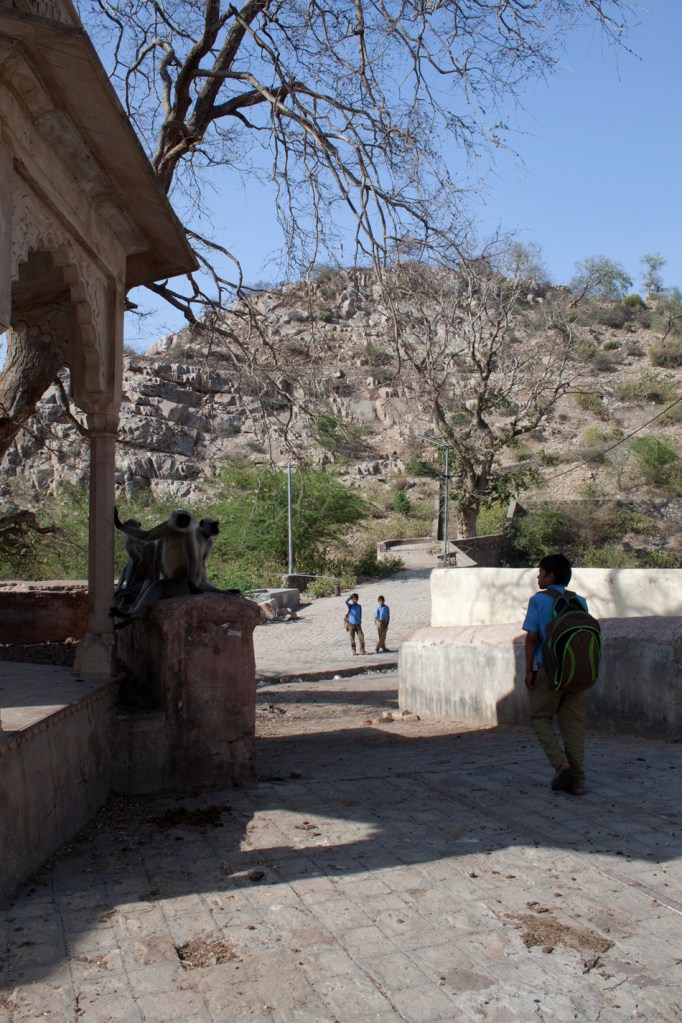
The sultry afternoons were, and still are, lazy, and many folks kept cows, buffaloes and goats for milk. Langurs guard the gullies, and keep a count of the kids returning from school with their huge backpacks.
A few women carried hay on their heads for the cattle, while some hung-out to sing desert lyrics, or gossip. The men played card games and smoked bidis and chewed tobacco or paan.
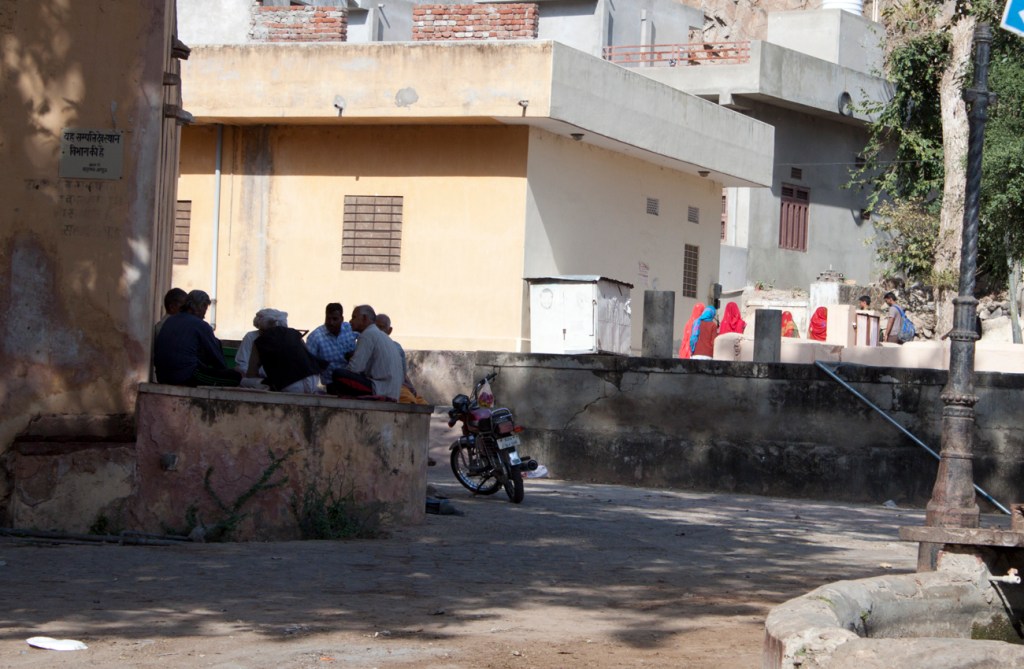
Once in a while an object comes into sight that makes the time we are in apparent. My camera being the biggest reminder, of course.
It takes them a while to acclimatise to my presence . These people do not like their privacy being invaded. It is very difficult to photograph women facing the camera with their veil completely lifted. I speak their language, and yet…
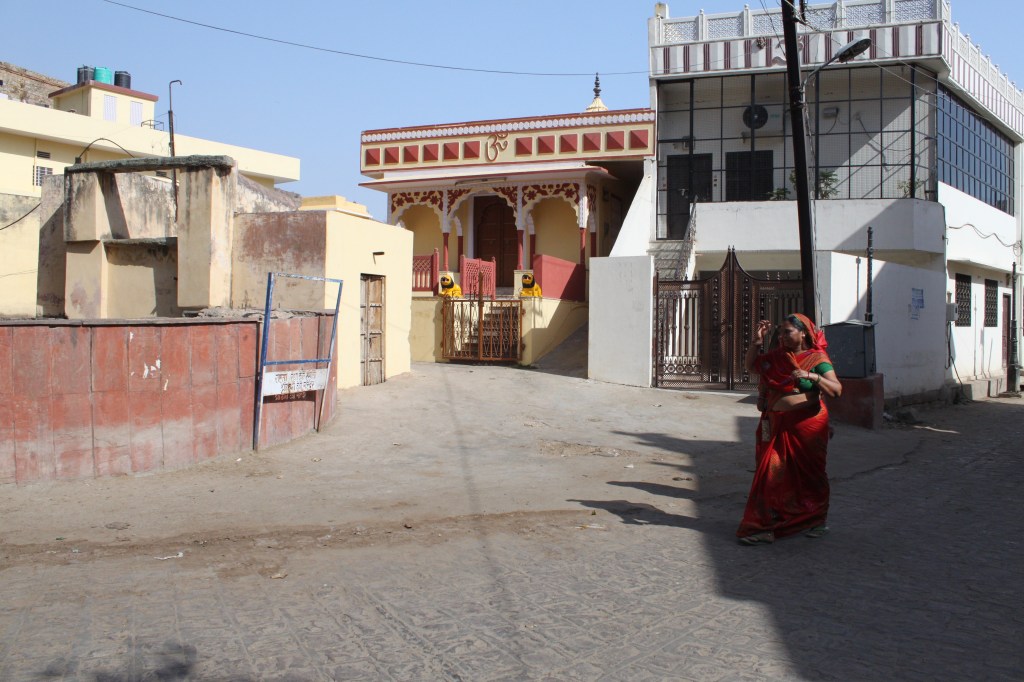
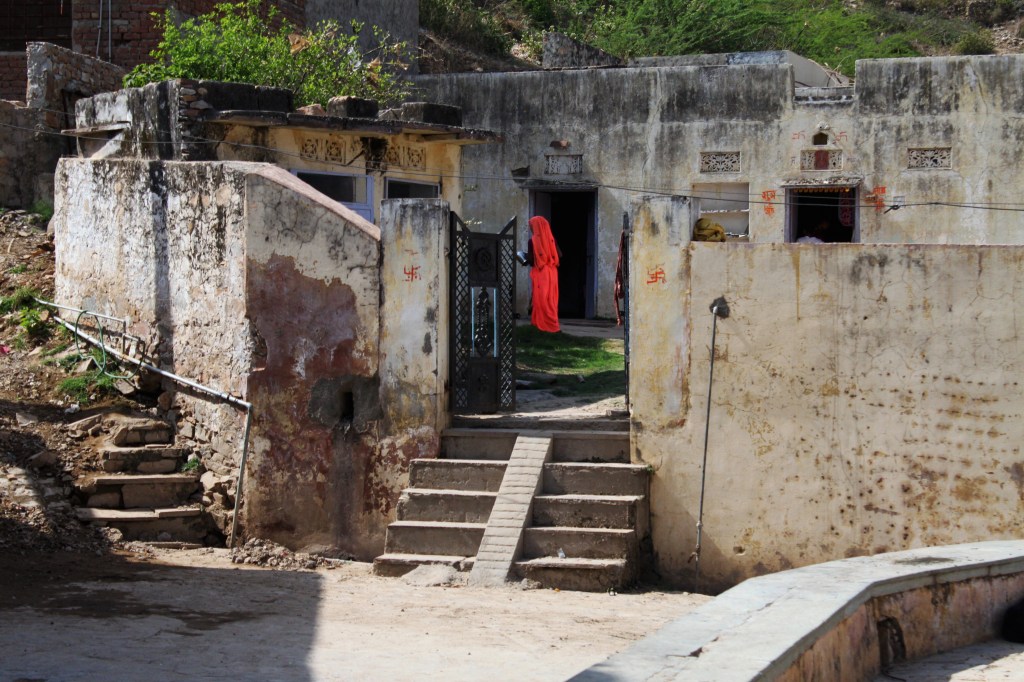
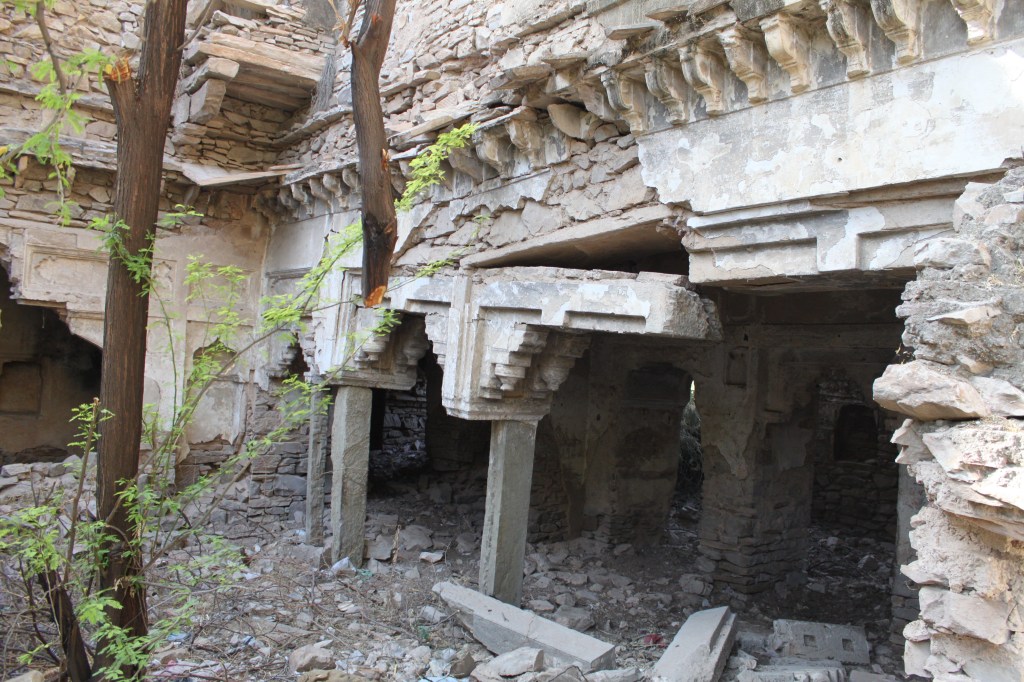
Many grand old mansions that belonged to the aristocrats are now in a crumbling and uninhabitable state. The families and their grandeur have long gone and, despite a shortage of good living space for people, these mansions are allowed to wither away.
But the Khejri tree indiscriminately thrives in every quarter.
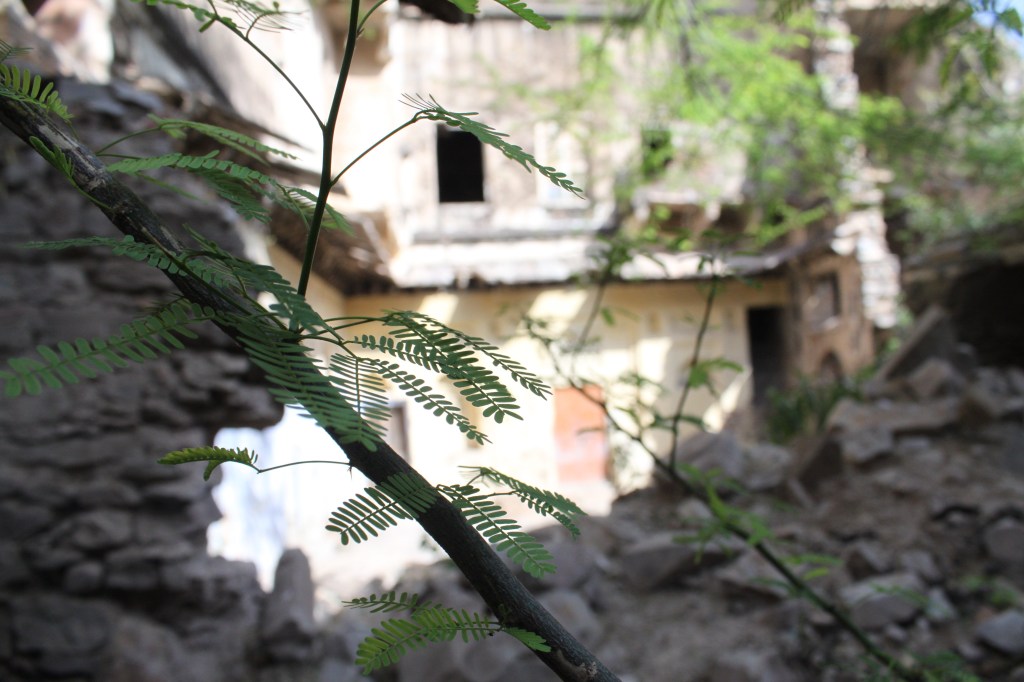
I take my time. I am in no rush. I carry my heavy camera in the sweltering afternoon, walking miles, striking conversations with those I walk past, ensuring they realise I am one of them, that I just wear different clothes.
I long to return.
I am now a full time Canonite but, over the years, I have tried very many different camera brands in film and digital both: Canon, Fuji, Pentax, Yashica, Minolta, Kodak, Polaroid, Hasselblad, and a few lesser known brands. Several models in each of these brands were tried by me, and each brand owned with several different lenses. At one point I worried I was becoming a collector.
Pentax made fine SLRs and supreme lenses. I had owned several of them, including a 17 mm fisheye. I had no idea when/how/why anyone would use it. For a photographer using a standard prime lens extensively, I found the fisheye too gimmicky for my needs. I was documenting life around me, and my eyes did not see the world like a fish’s eye.
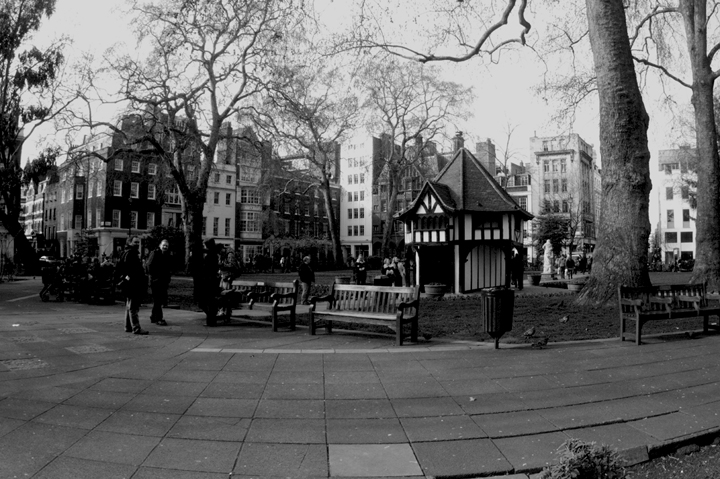
Before I parted with the lens, I was curious to know how a fish would see London’s Soho Square. This shot was the result of my curiosity, but it failed to impress me. All the other fisheye photographers had splendid convexes, but mine was an image struggling to bloat from its belly. How can I present the mildly wide image to the world, I thought, and talk about the impressiveness of the lens? What was all that ado about when all it did was distort everything. and not do a good job at that either? What next? A Dogeye lens? Then a Coweye, a Pigeye, a Waspeye? Like the lens, the image never left my bag.
All this time I was familiar with the full frame equivalence and crop factor calculation, but it never struck the dense me that the 17 mm fisheye from the film days, now being used on my APS-C sensor Pentax DSLR, was not exempt from this. Don’t know why the calculations were restricted by me only to the ‘straightforward’ focal lengths! 😦
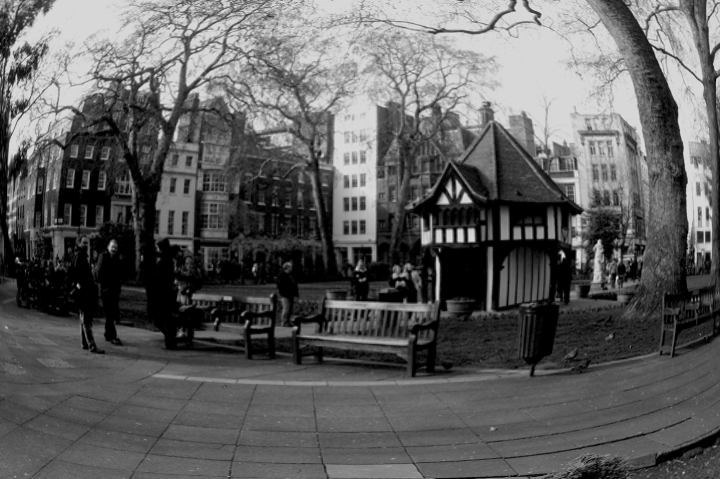
Now that I realise the reason behind the lacklustre result, I decided to recreate the image, pretending to be a fish wanting to correct the perspective. I used Photoshop to do this. Stretched, squashed, squeezed, pushed and pulled………..and voila! I ended up with this beautiful image. For a fish. Just kidding! I find it splendidly pleasing. There is so much more to absorb and admire. In short, it is akin to looking at the world from a different perspective, literally.
I regret cursing my lens and parting with it prematurely. Each time I see this picture, I imagine a gold fish with a curled lower lip, looking at me with annoyance and saying, “These humans and their obsession with the standard view!”
(The only reason some of us Pentax lovers moved away from the Pentax range of cameras was because it, sadly, delayed entering the full-frame market. Even now, their D-range DSLRs are highly underrated. In my opinion, they were capable of producing superior images that were on a par with those with the best Cannikons of the time)
 People | Life