
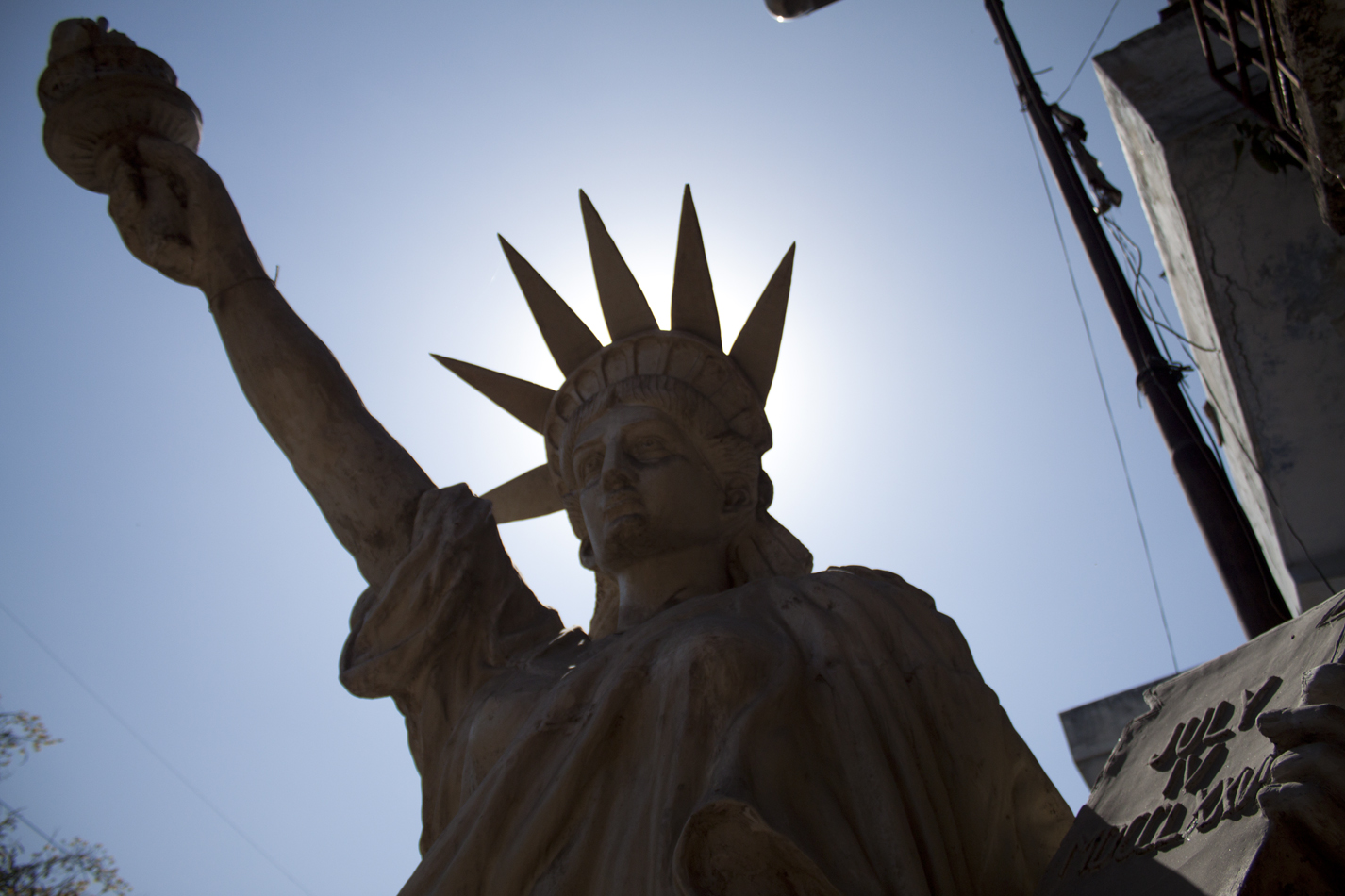
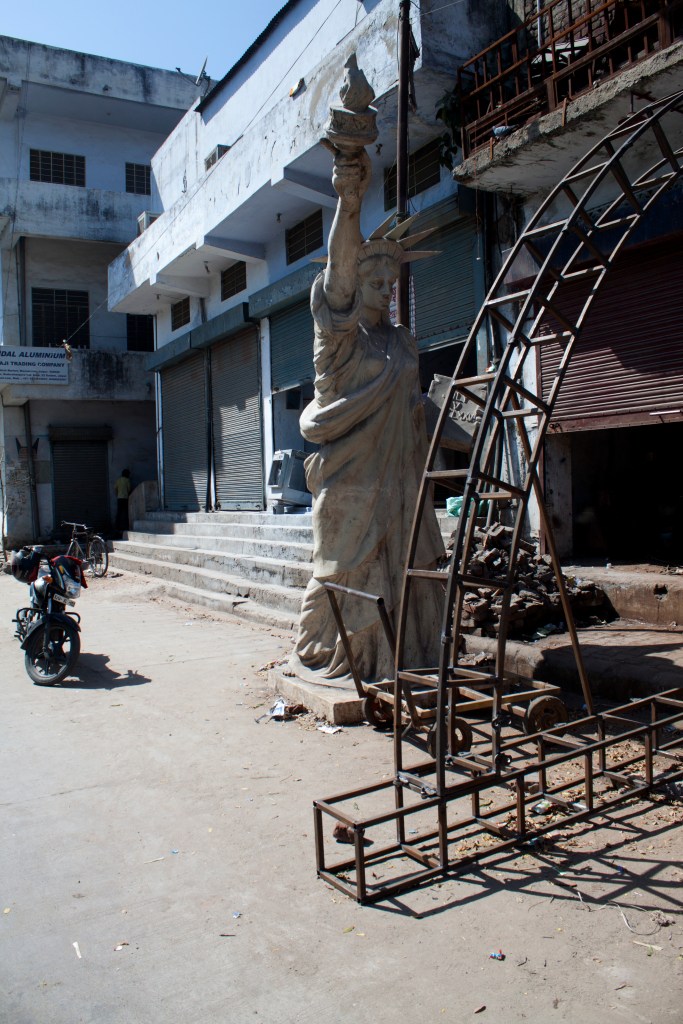
My family and myself were in a car driving through the lesser known streets of Jaipur. There were shops alongside residential areas — greengrocers, motorcycle repairers, barbers, stationers, street vendors, metalsmiths and stonemasons. Building smaller replicas of famous statues and other landmarks seemed to be the side business of the metalsmiths and stonemasons combined, as I saw quite a few statues scattered, part finished, part unsculpted.
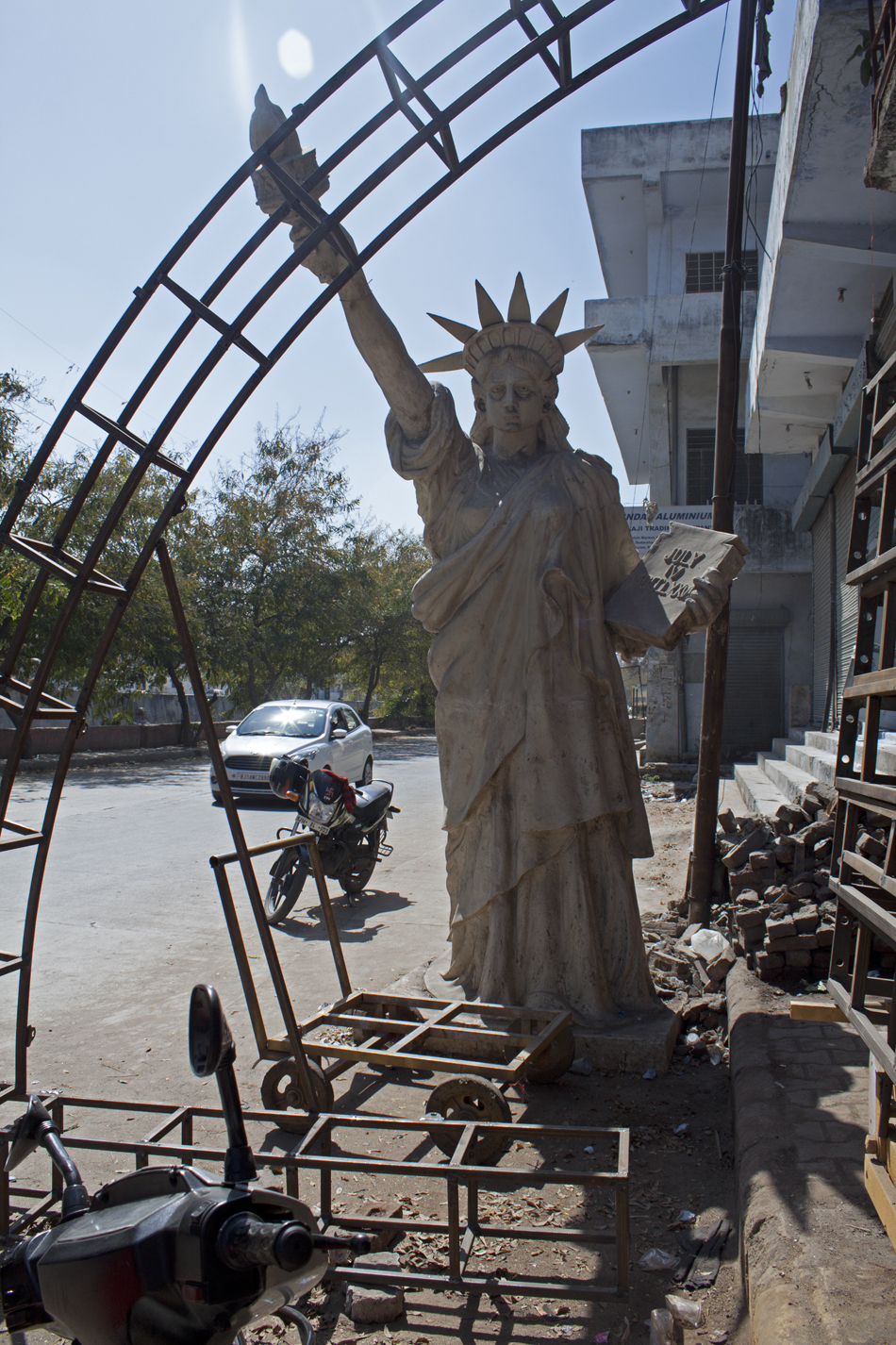
Libertas, that attracted millions of visitors daily in the West, had almost zero admirers on that street. She stood on a shoddy unpaved muddy sidewalk in 48°C (118.4°F).
We were instantly amused, but also bemused. What was that statue doing there? There was clearly a demand for these. In the habit of always carrying my camera, I got off the car to take a couple of photographs. The men on the site found my actions as hilarious as I found theirs.

I asked where the statue was going. “It’s for a wedding.” It saddened me to learn that these men on meagre wages were building these enormous figures for an evening party. “What pleasure exactly could be derived from these cheap replicas that cost many times more than those workers’ combined monthly wages?” I wondered. “Were they trying to fake the location through these?” “Were the business families uploading the party videos on YouTube, captioned, ‘Cocktail in New York’?”
What next? A demolition party? Where do these statues go? Submerged into the waters like Kali and Ganesha? But this is the desert state – so, no sea. Recycled? Maybe! There might just be a second-hand market for these for smaller budget weddings. Who knows!
I never found out.
Later that evening, just when my camera packed up (probably due to the heat), I saw an Eiffel Tower in the middle of a garden in an affluent residential area. The bungalow was getting ready for a wedding (one can tell of the nature of the event from the extent of the embellishments). That was definitely a wedding.
I bet there is a YouTube video of the pheras in Paris.
In my next trip, I would like to know of the fate of these non-permanent structures.
 People | Life