
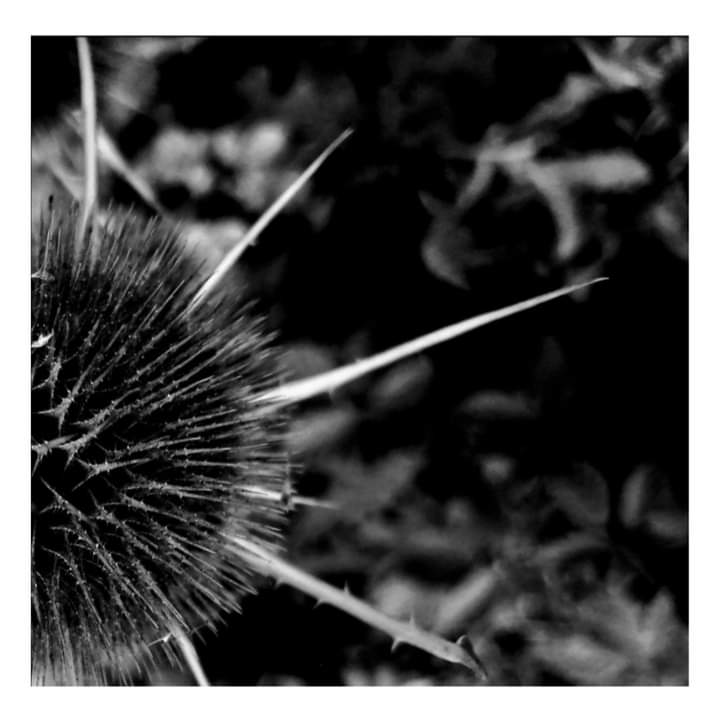
Hand-printed a 6×6 negative. Shot with an expired FP4 Plus.
Hand-printed a 6×6 negative. Shot with an expired FP4 Plus.
Hand-printed a 6×6 negative. Shot with an expired FP4 Plus.
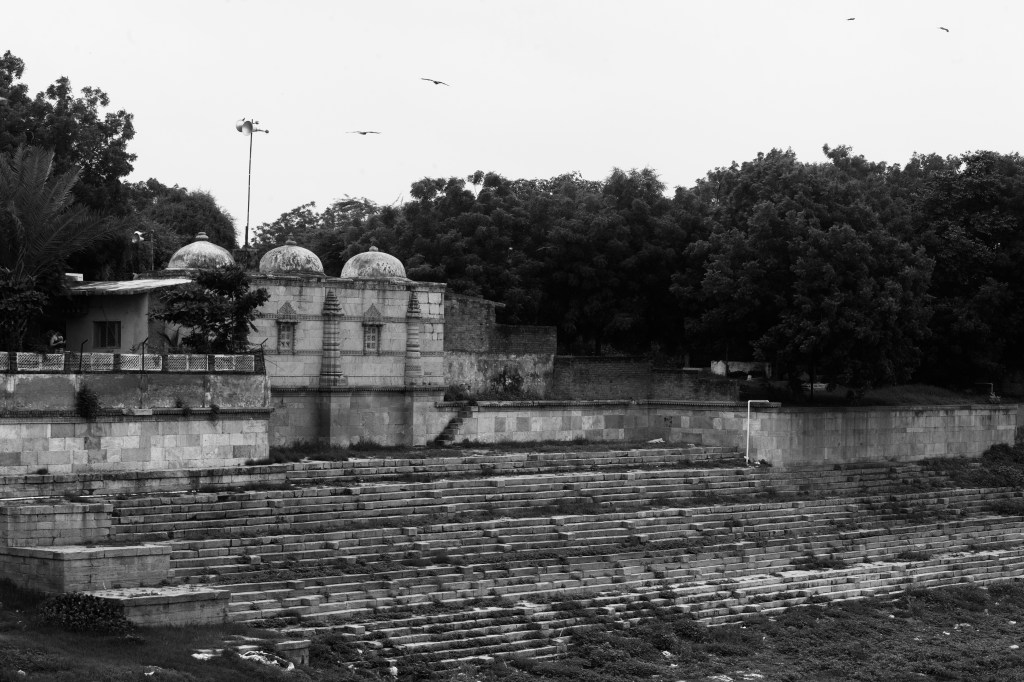
It was an early start. Ahmedabad has changed to an unrecognisable extent. I drove from there through S.G. Highway to Makarba one July morning in 2018 as per the directions given by Bubbles in a cutely sincere manner – two lefts, then right, then straight for 2 kms, then three rights, and so on. It must have been the combination of her accuracy and my ability to grasp that I reached the masjid with sheer ease. The light from the golden torch was making its way to the earth before bribing its way into the roza’s courtyard.
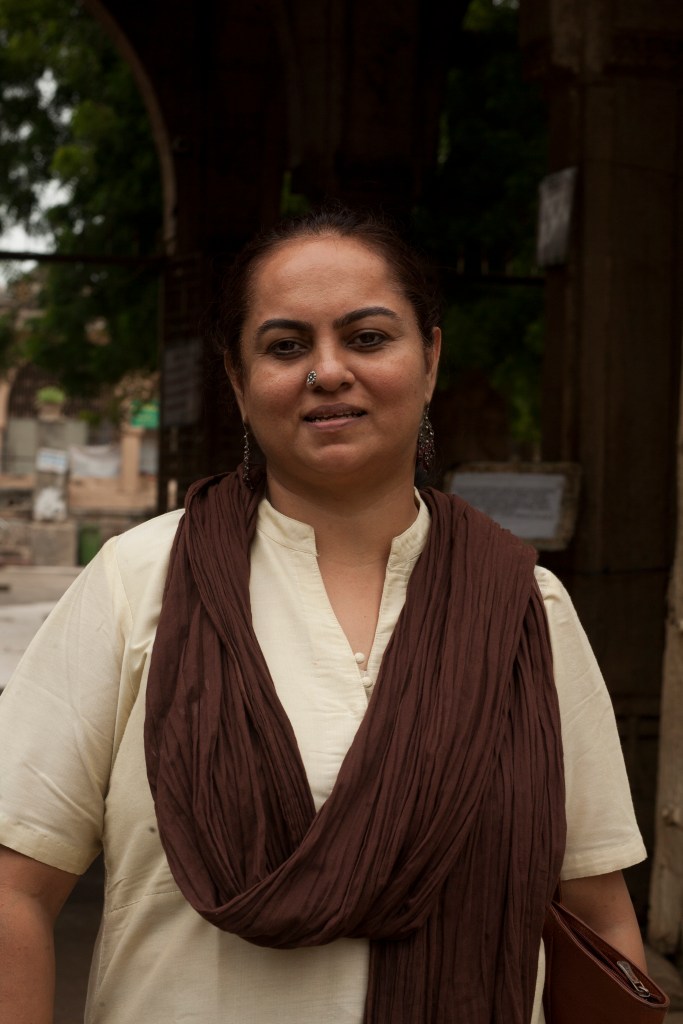
Bhavna stood there to greet me. Oh, what a beautiful face she had. Those eyes!! She instantly came across as a warm person willing to share her knowledge of the place. She spoke a welcome mix of educated English and raw Hindi. We entered the monument, removed our shoes, covered our heads.
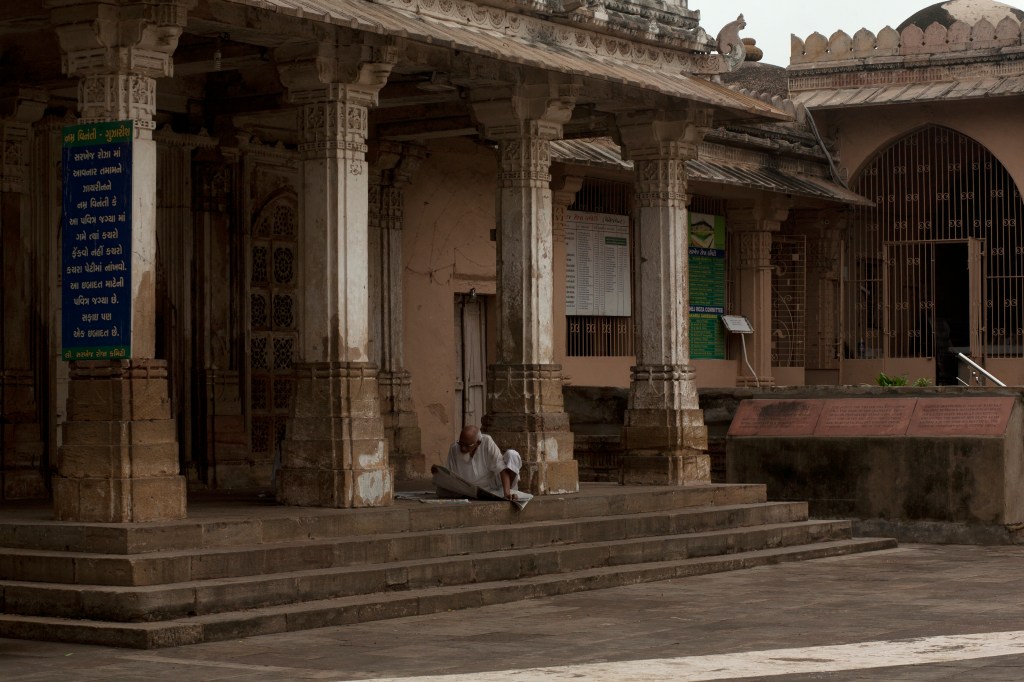
A typical morning scene. Touchingly serene. A few men, unperturbed by my presence, read the morning papers. I felt at home. I kept taking photographs as Bhavna’s soft voice kept singing in my ears. We Indians are spoilt. Our history dates so far back that we casually declare a six centuries old structure as recent. We even neglect it.
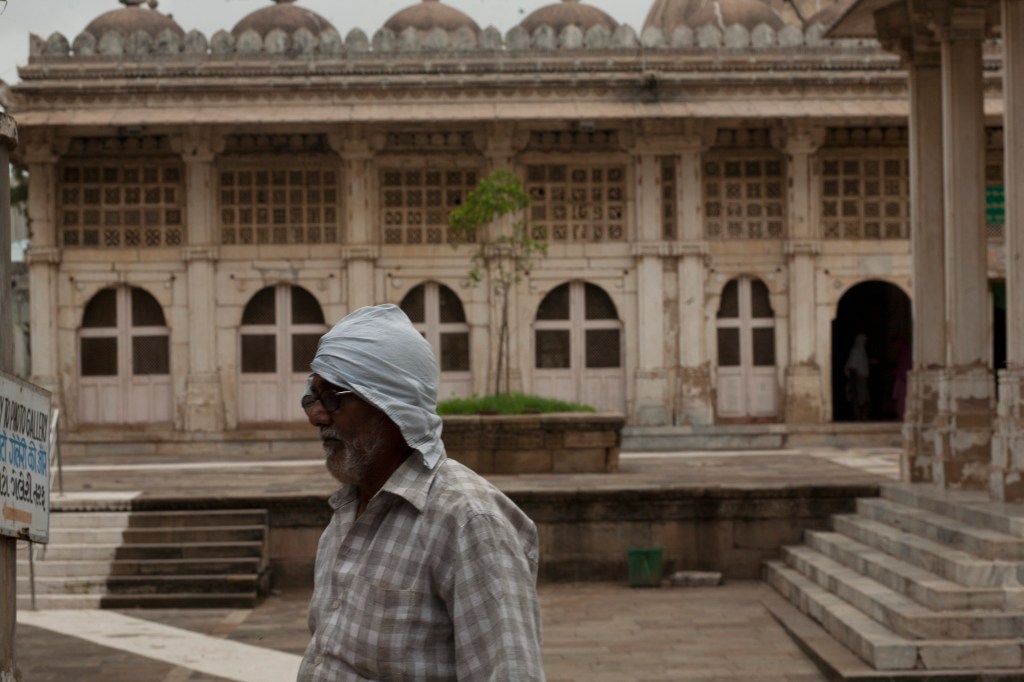
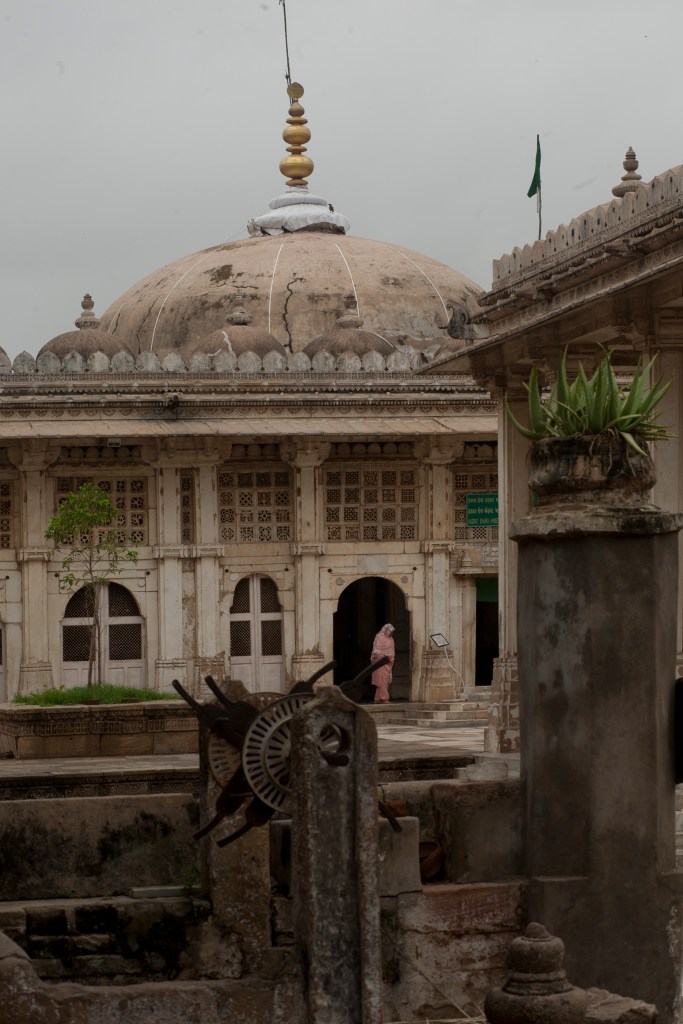
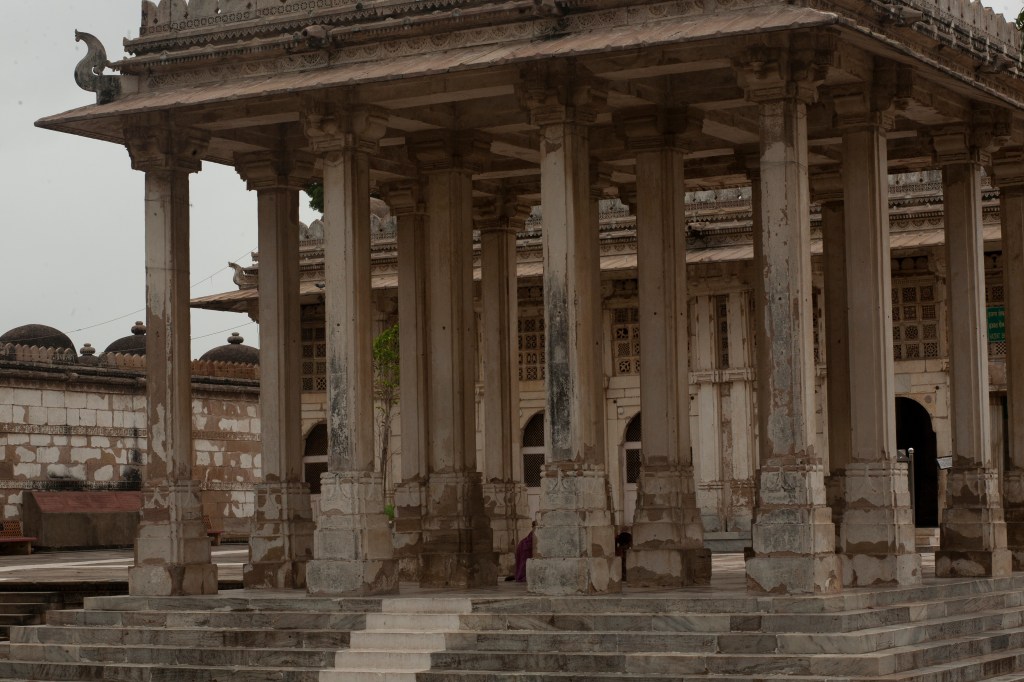
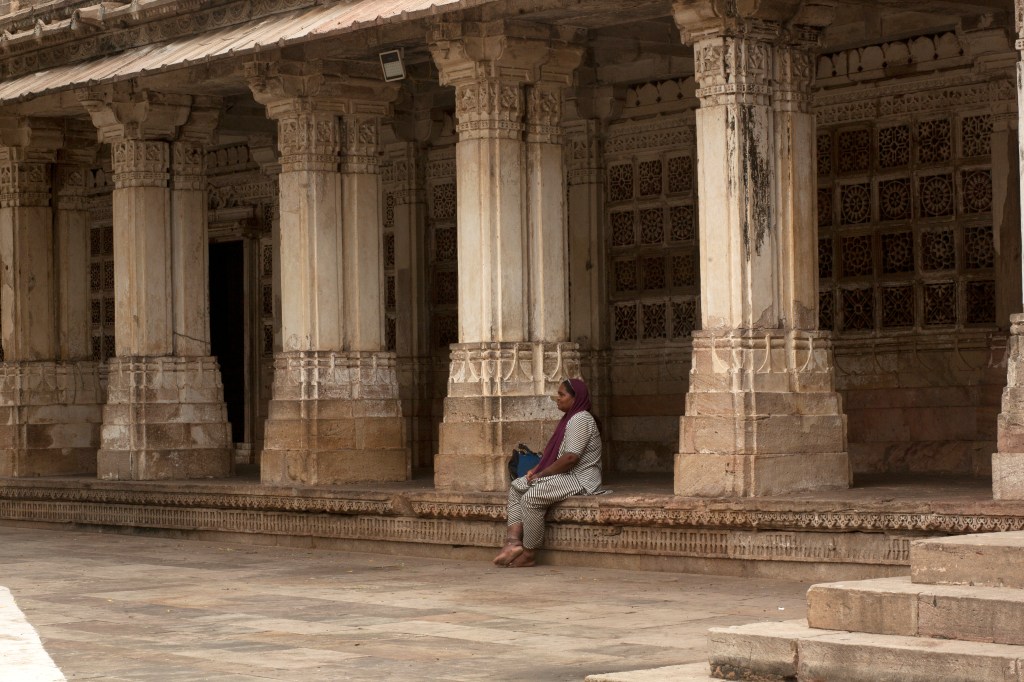
This was Sarkhej Roza, once the home of sufi saint, Ganj Baksh. To one side stood a stone pavilion in a sad state of disrepair and to the other, a courtyard with a masjid and quietly guarded tombs. Several mausoleums, an old well, hundreds of wide steps leading down to a dried tank and the infinite expanse. One part of the mosque, with its tall pillars reminded me of the Acropolis of Athens. It was too much for me to take in on a short morning tour.
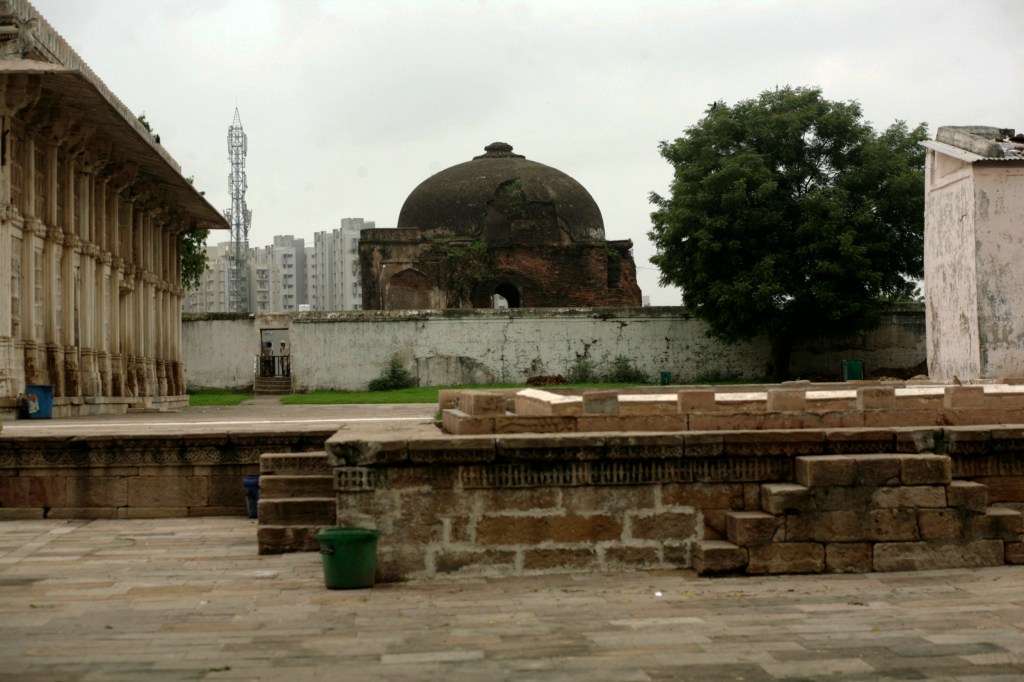
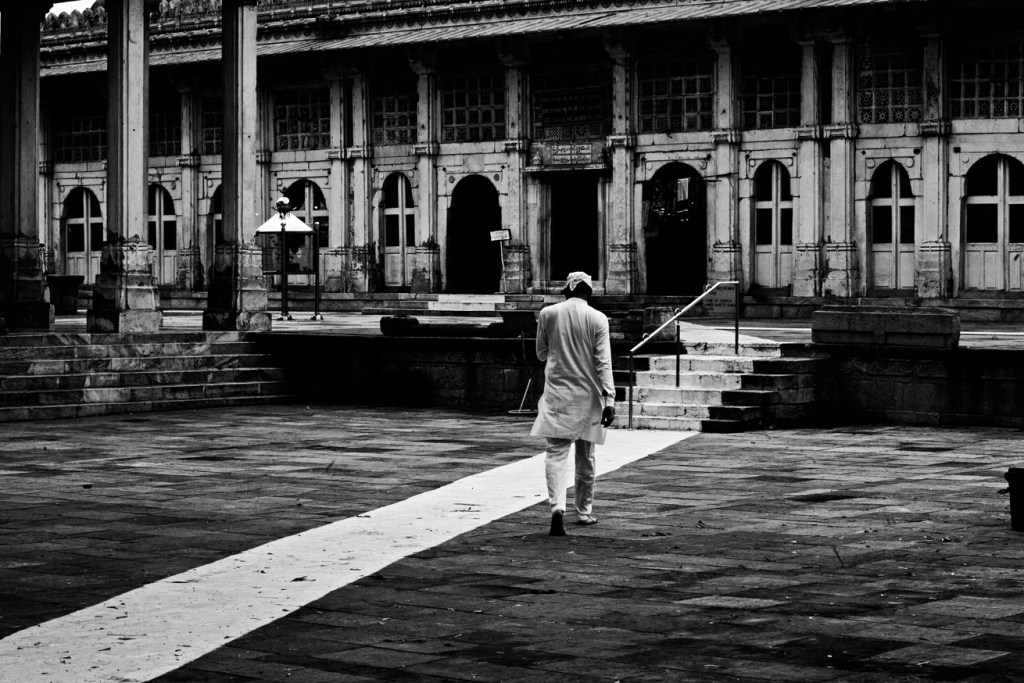
Once in a while a person will walk the white-painted path, that led to the masjid, to speak in private to the supreme being. This path was also taken by the Sun to kiss the cheek of the messiah who must most definitely reside in such quietude.
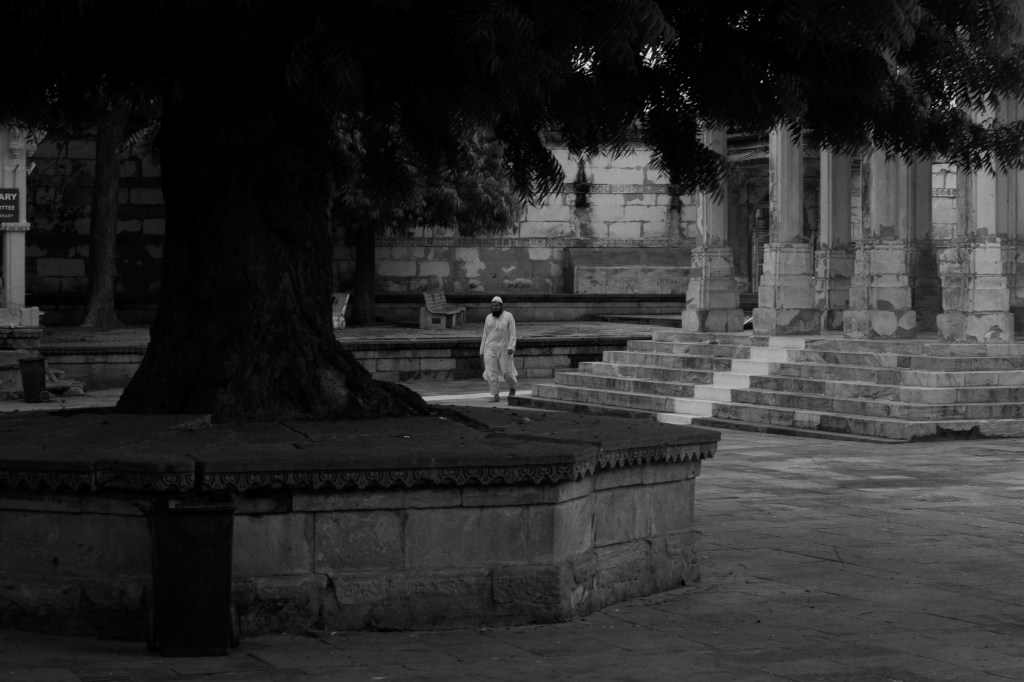
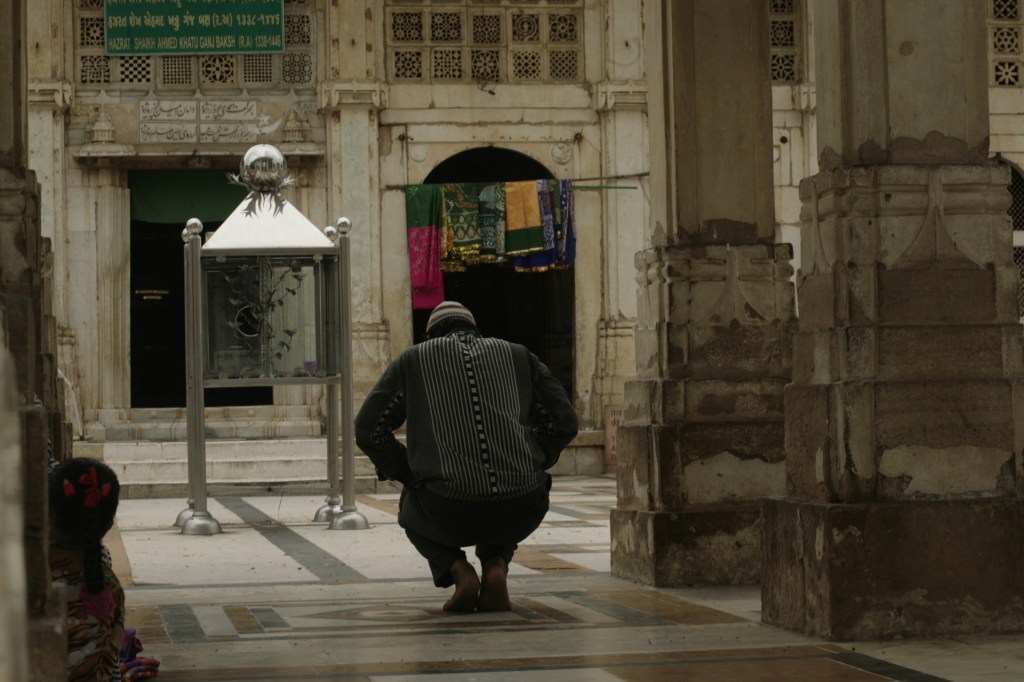
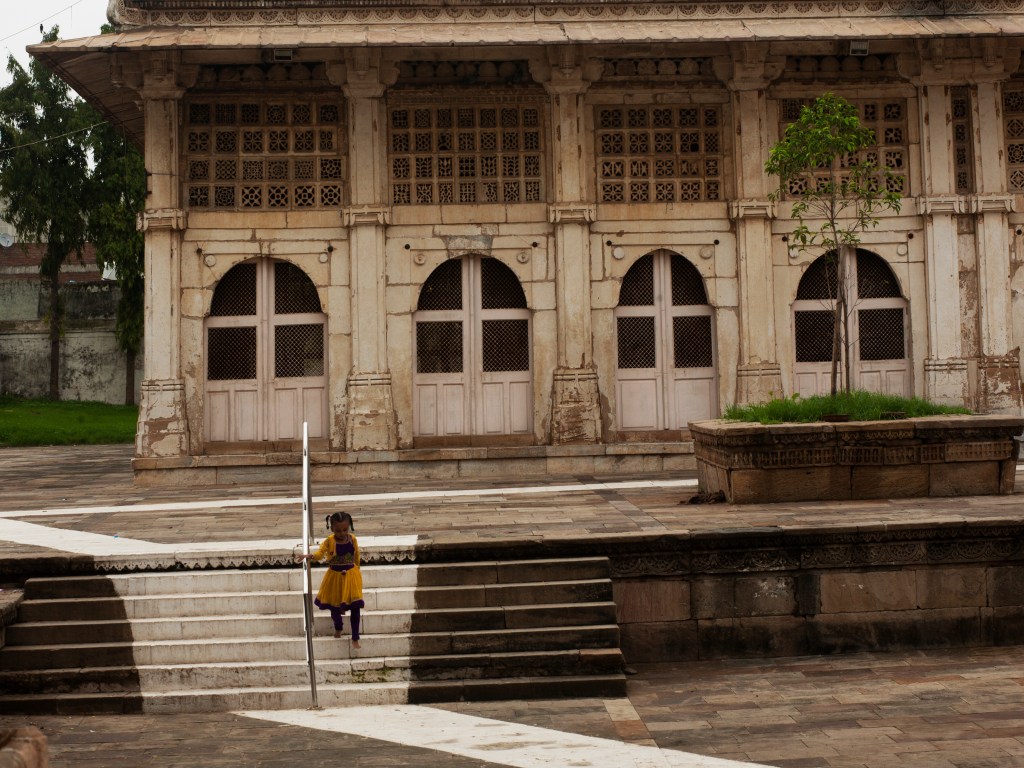
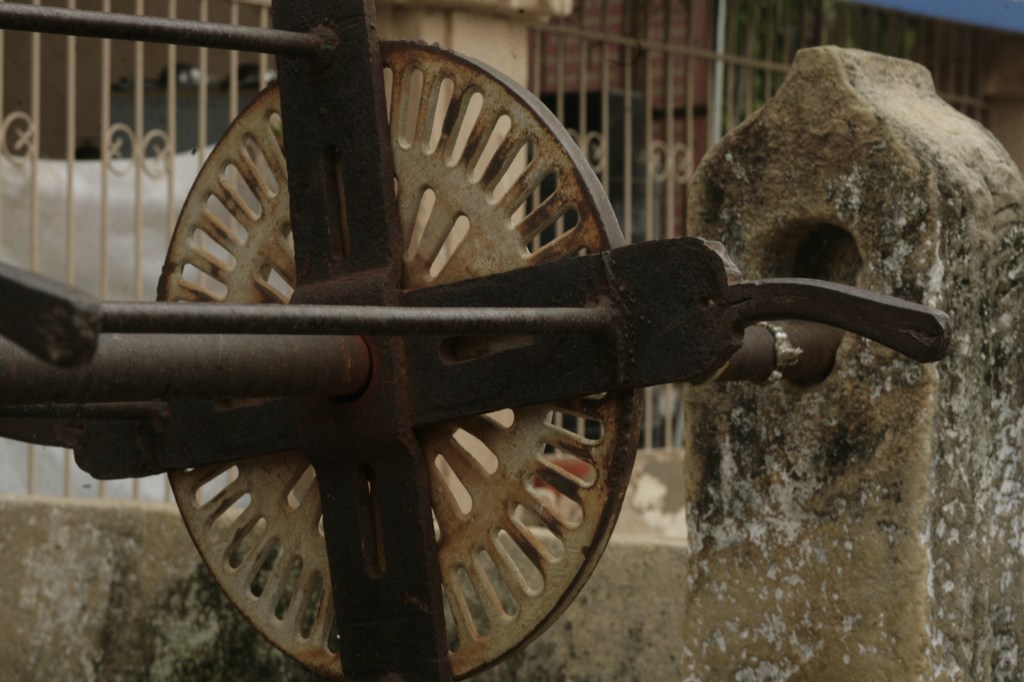
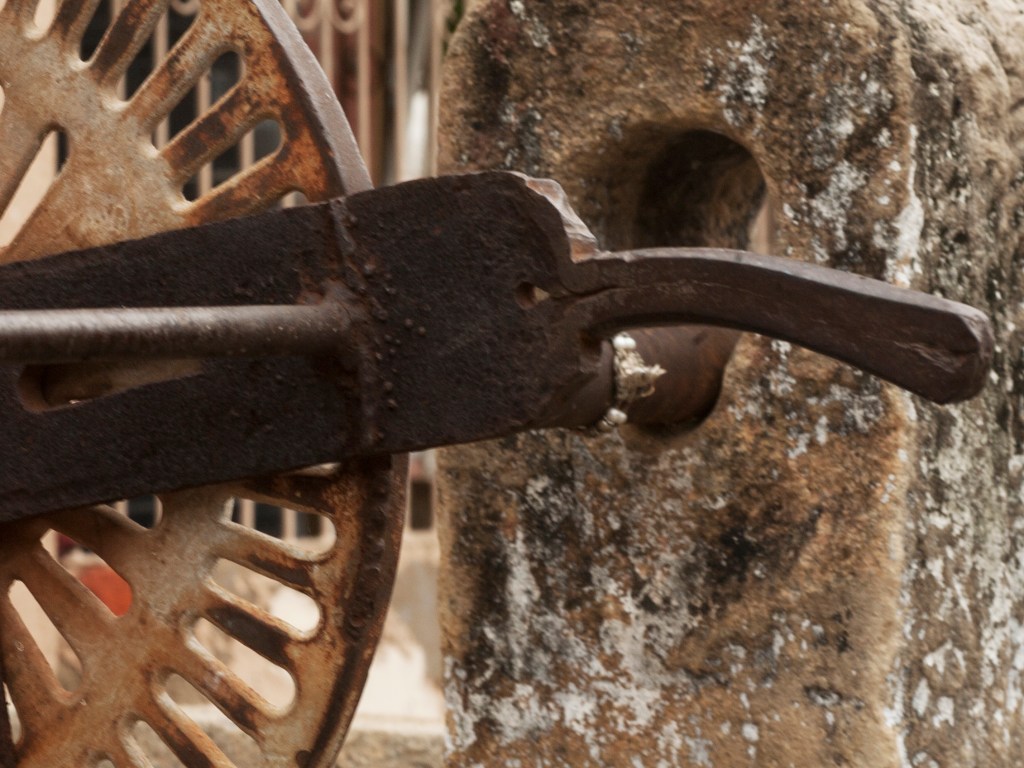
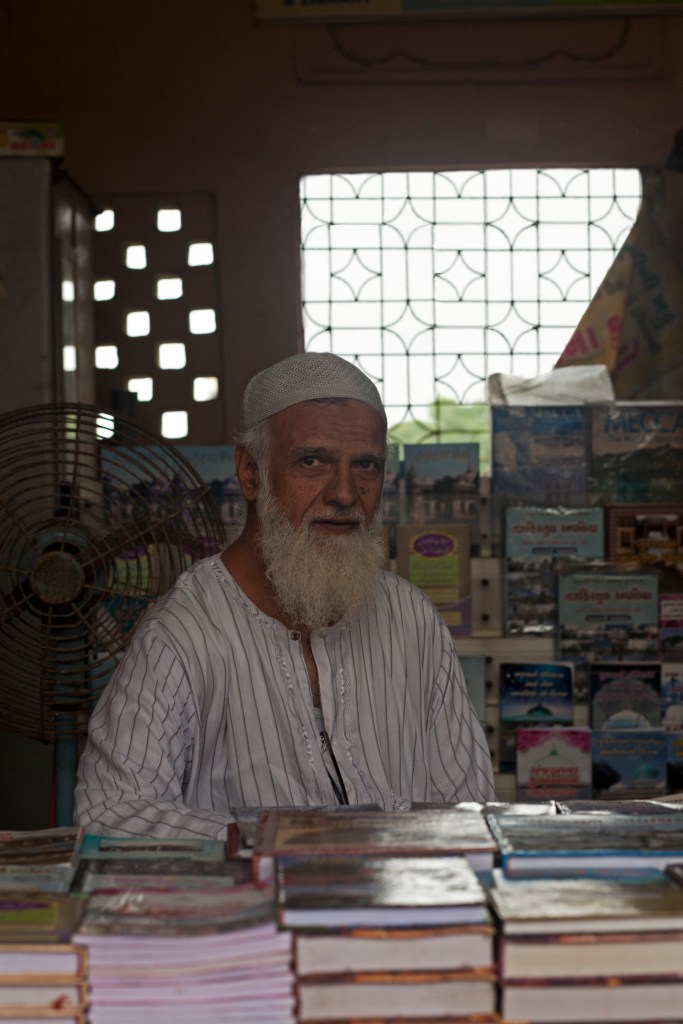
A small girl jumped and skipped on the steps oblivious to all. A spoke of the well-wheel pulley made to resemble an exotic visitor to the Sabarmati River. A cormorant or a spoonbill perhaps. The little bookshop opened early. A few men sat selling to no customers at all. Bhavna enjoyed a nice chat with them. A silvery bearded man in immaculate white clothes and matching taqiyah takes over the shop. “Maybe he’ll sell only one book today,” I thought. I buy one. But he will remain all day no matter what. Dedication. Service. We all can learn.

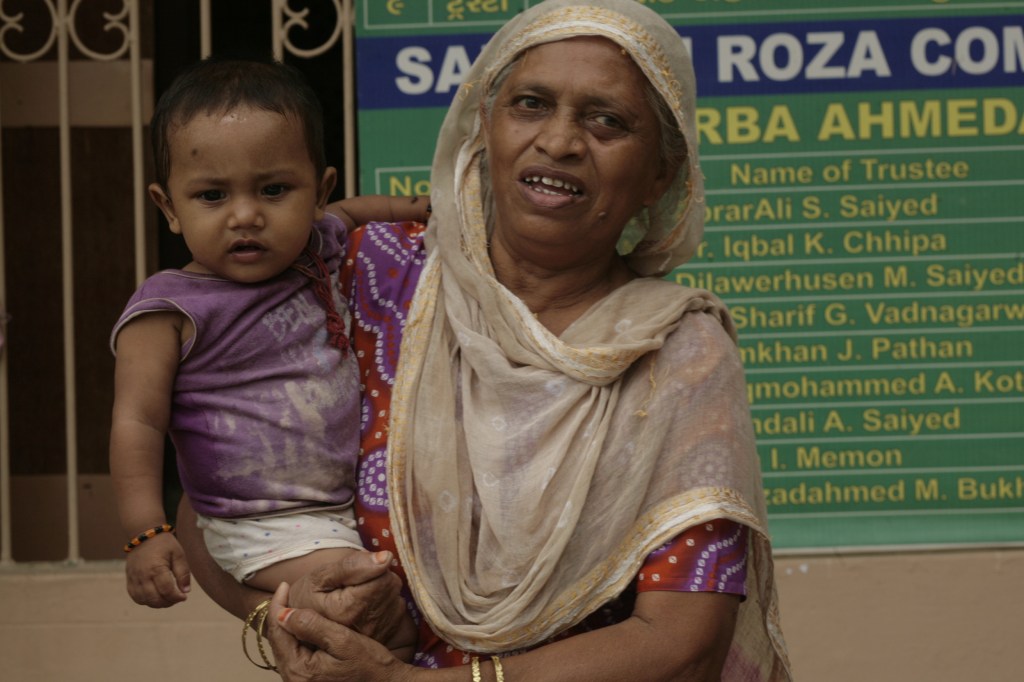
The cleaner, with her younger grandson in her arms, complained about her useless son-in-law. From Bhavna’s story to this – it felt like I had changed the radio station.
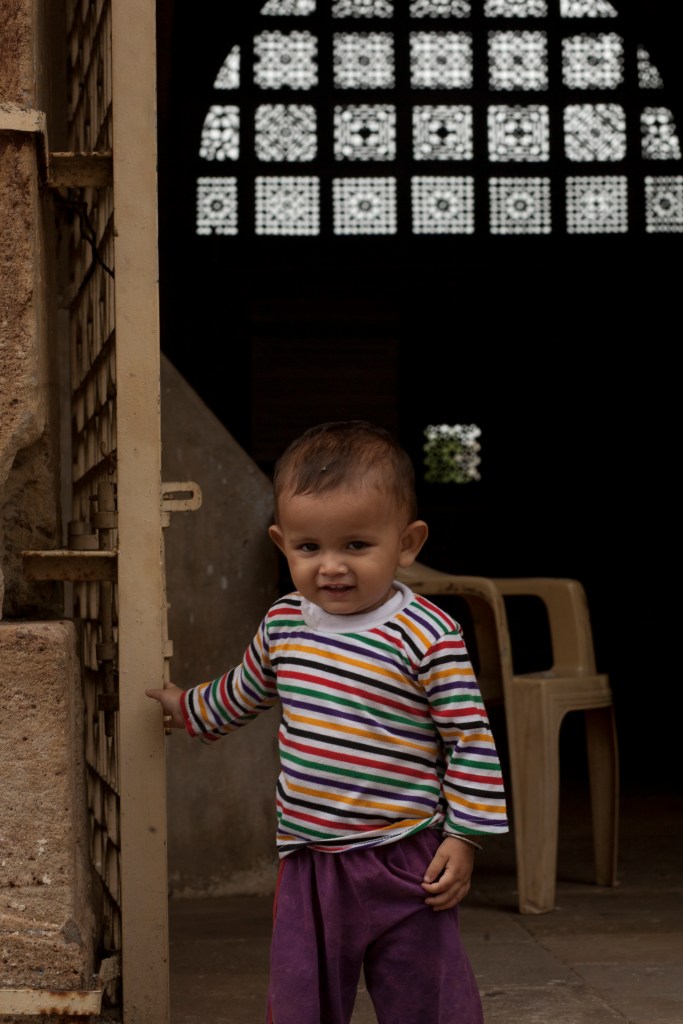
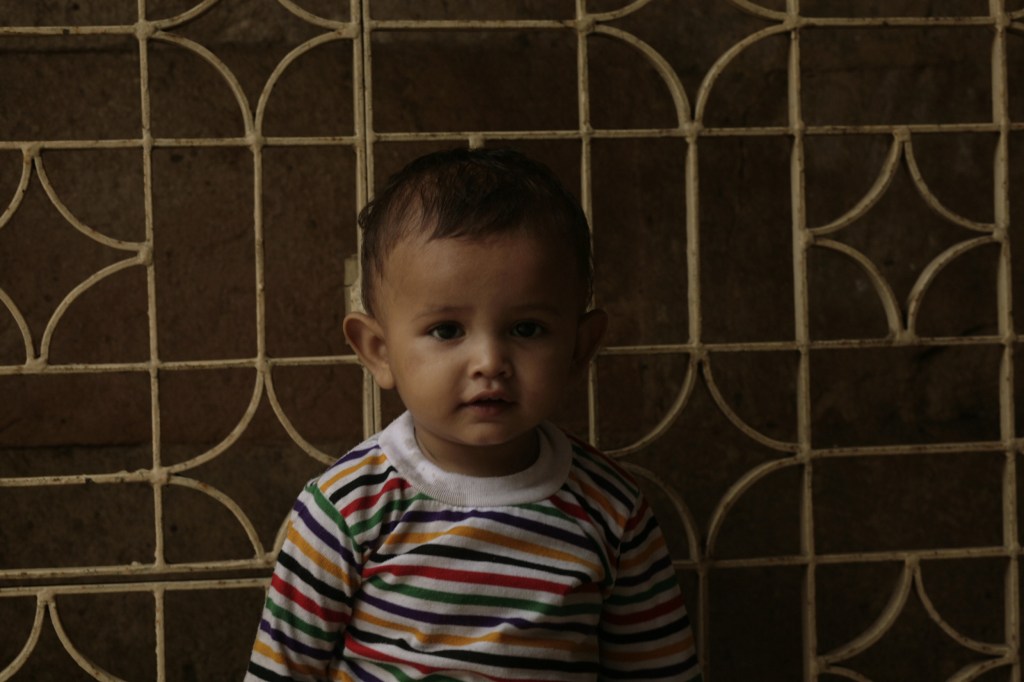
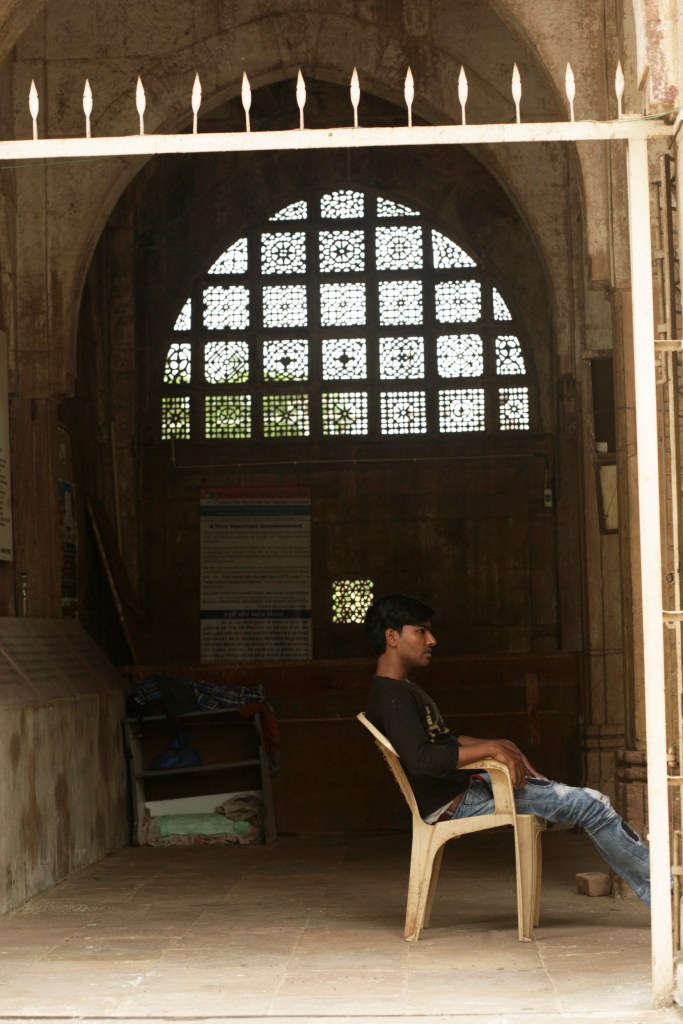
Her elder grandson played near the main gate. His angelic face captivated me so much that I took several photos of him. He kept changing poses. A young man sat on the chair.
Maybe, that was the accused.
My gaze locked on a woman sitting outside the room that housed the tombs. She was not present there. She appeared to be talking to someone. But there was no one. She then laughed, and continued to laugh. Her ankles were swollen. She was a regular I was told. She walked out as aimlessly as she had walked in.
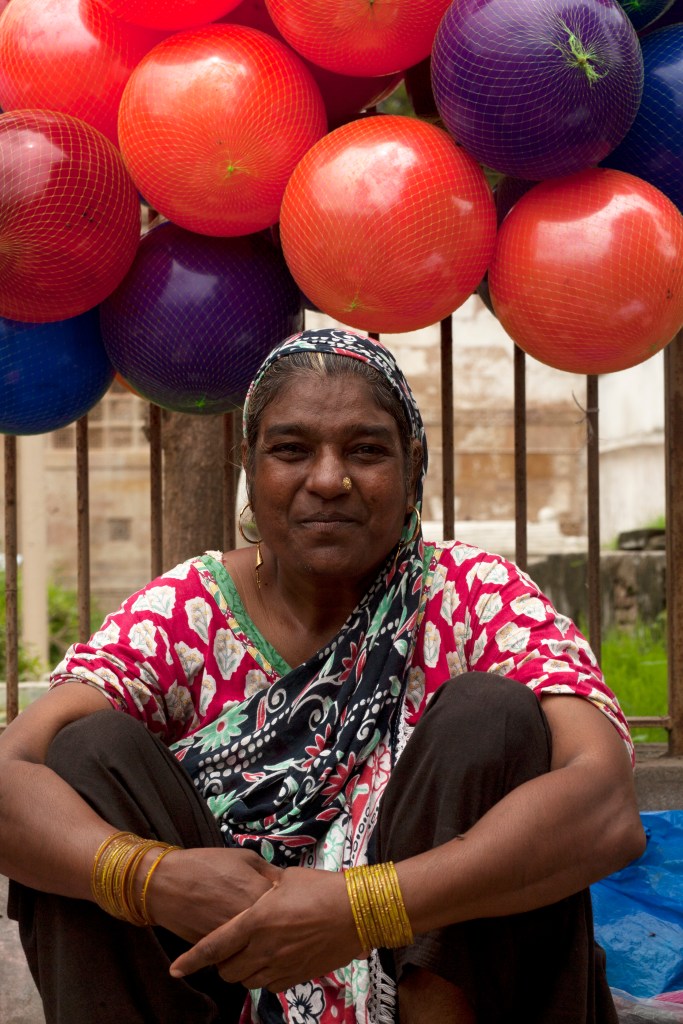
Outside the mosque, another lady sold balloons. “She’s my friend,” announced Bhavna. Where did these people buy such delightful smiles from when they could not even afford a decent meal? How can they afford such precious attributes?
On my drive back to Ahmedabad, and before I hit the highway, I saw the lady who spoke to the spirits. She was on her way to… nowhere.
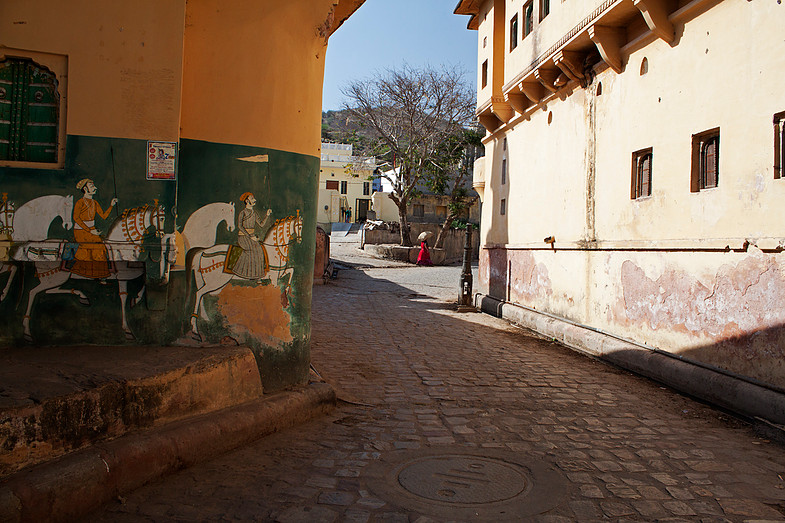
Apart from the great many tourists flocking to the grand fortress of Amer, where the maximum activity is noticed, the town of Amer remains unchanged since at least my childhood days. I cannot imagine it being any different a century ago, or even two or three centuries ago for that matter. The 17th century muralled walls of the many temples, the Panna Meena Kund, the bazaars, and the shops tucked into the small pockets of the fort’s base, remain untouched and neglected. As a result, many sandstone structures have fallen into a state of grave disrepair. But, the raw beauty prevails.
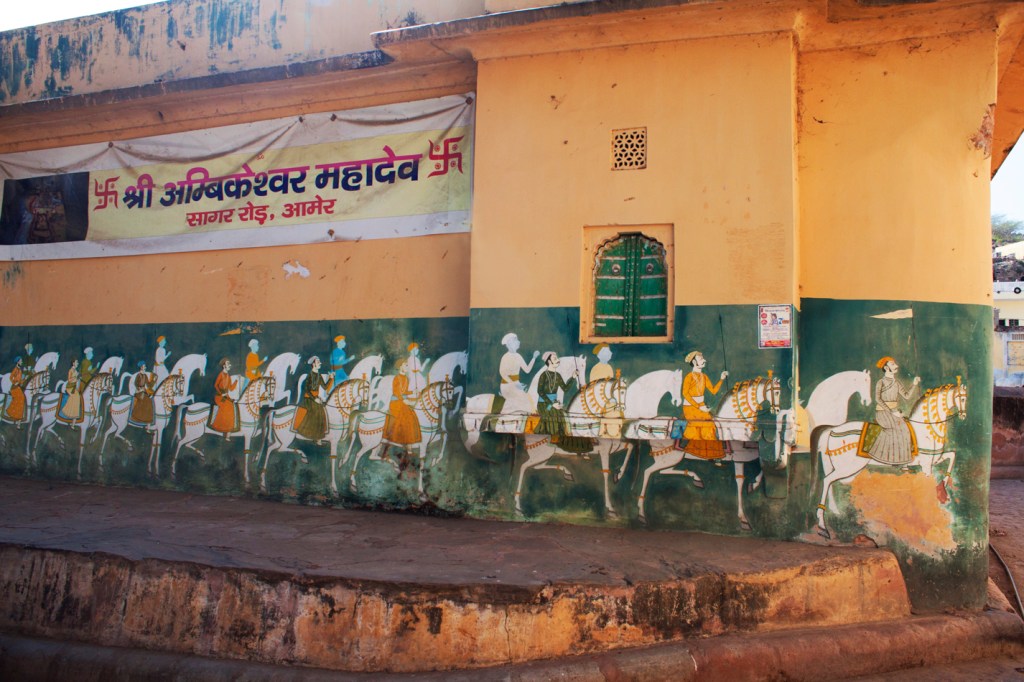
I hail from Rajasthan, and the areas around Aravalli Mountains (the oldest range of fold mountains in India) have been frequented by me since I was a child. I grew up knowing the region, its people, language and the customs. The women’s attires were always ‘very’ colourful, with one neon-orange found aplenty, the men wore the same multi-coloured turbans as they did now, and the kids played with marble balls on sandy tracks even then.
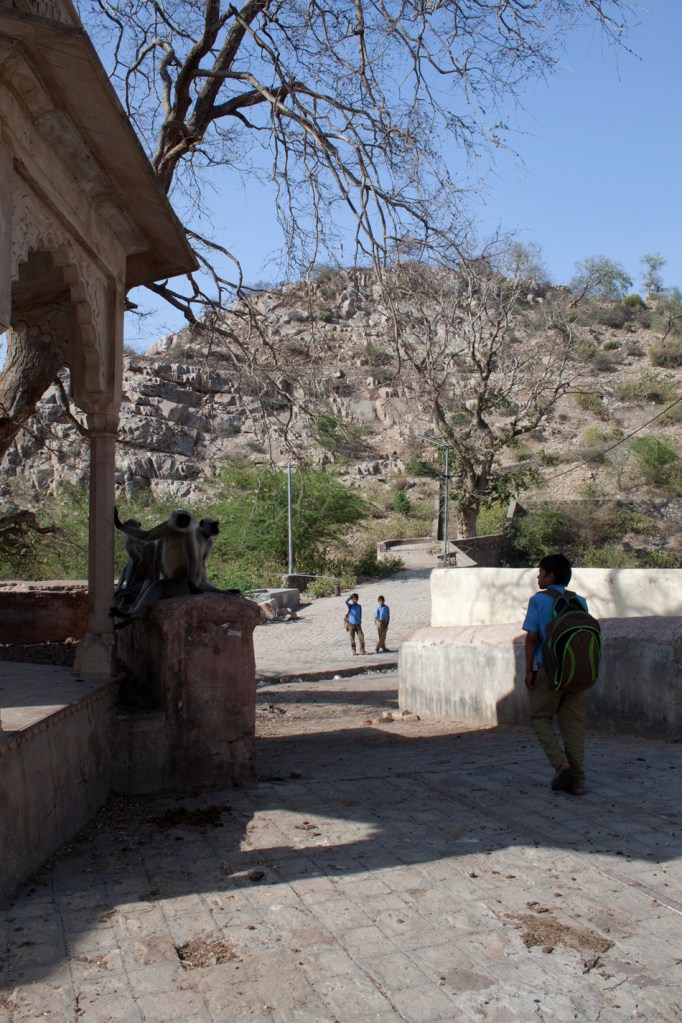
The sultry afternoons were, and still are, lazy, and many folks kept cows, buffaloes and goats for milk. Langurs guard the gullies, and keep a count of the kids returning from school with their huge backpacks.
A few women carried hay on their heads for the cattle, while some hung-out to sing desert lyrics, or gossip. The men played card games and smoked bidis and chewed tobacco or paan.
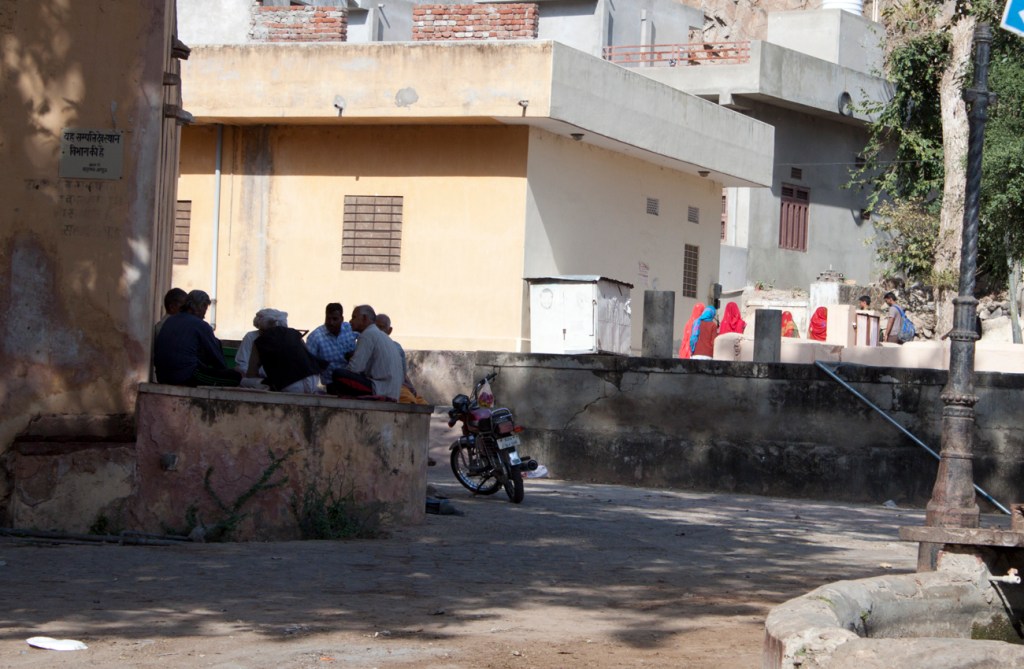
Once in a while an object comes into sight that makes the time we are in apparent. My camera being the biggest reminder, of course.
It takes them a while to acclimatise to my presence . These people do not like their privacy being invaded. It is very difficult to photograph women facing the camera with their veil completely lifted. I speak their language, and yet…
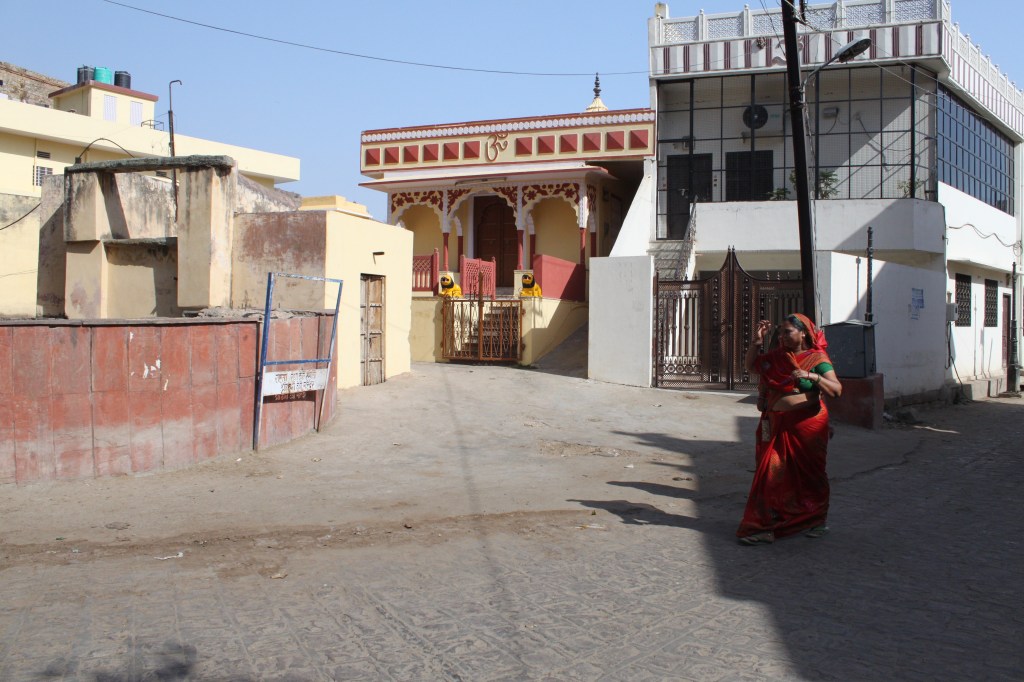
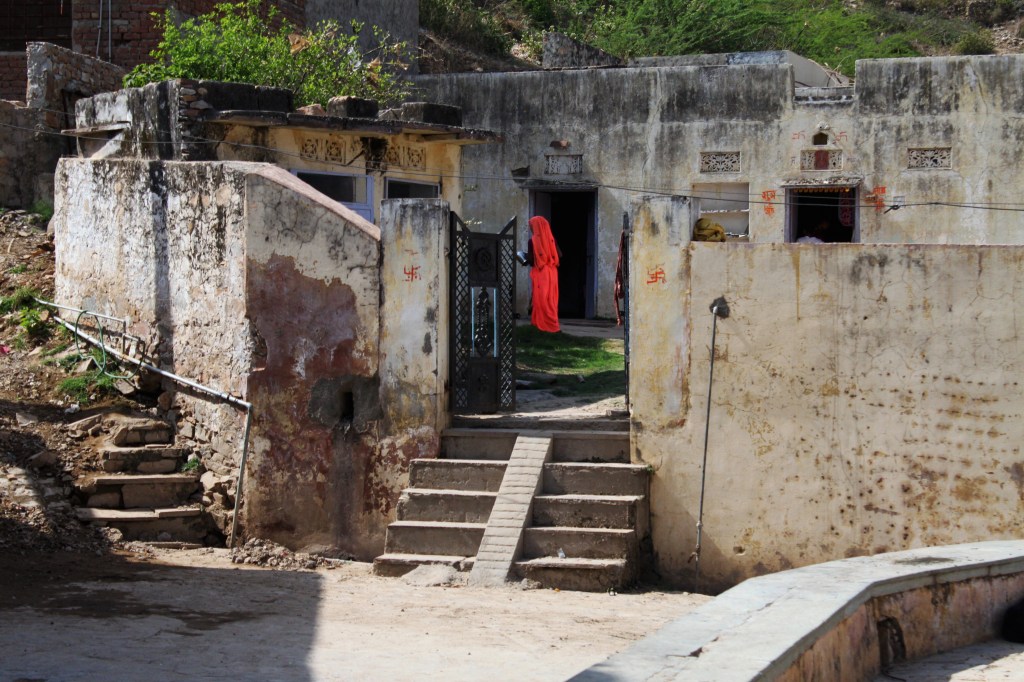
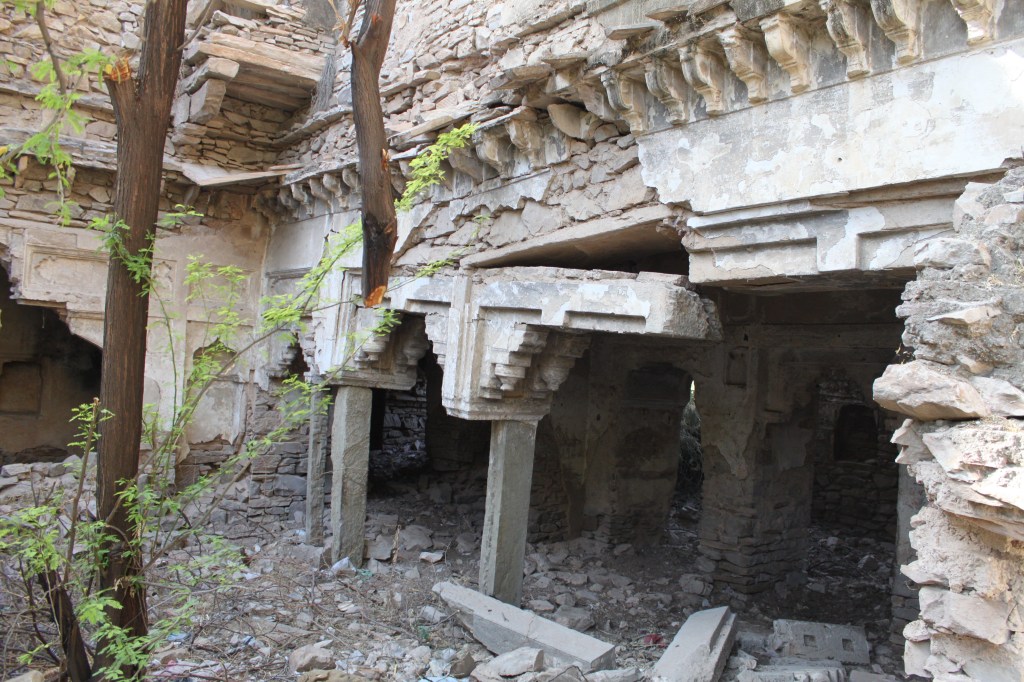
Many grand old mansions that belonged to the aristocrats are now in a crumbling and uninhabitable state. The families and their grandeur have long gone and, despite a shortage of good living space for people, these mansions are allowed to wither away.
But the Khejri tree indiscriminately thrives in every quarter.
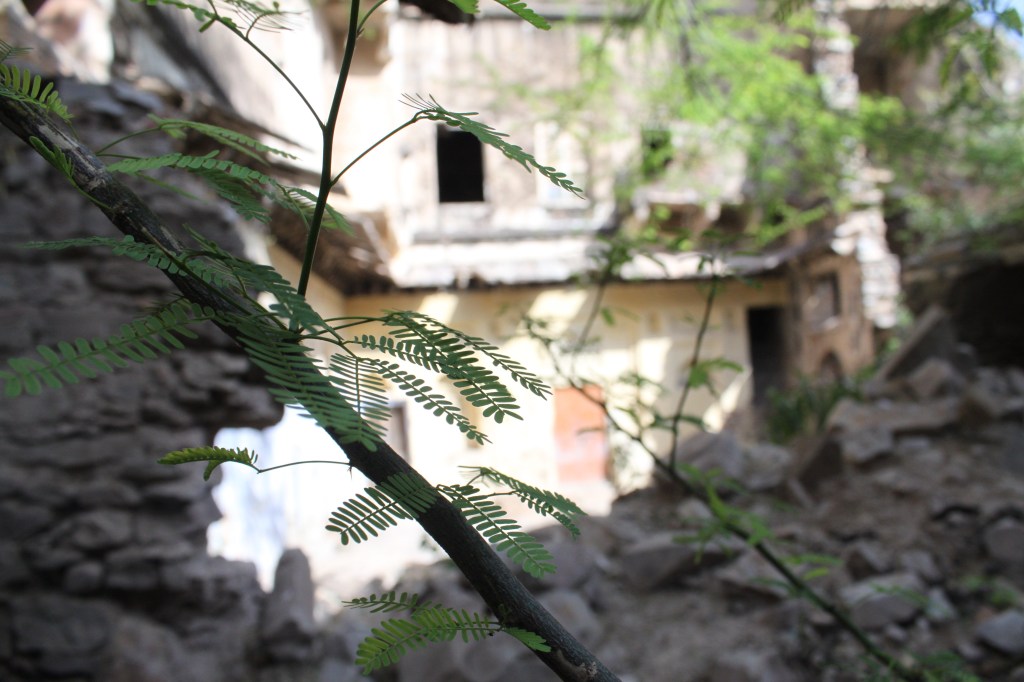
I take my time. I am in no rush. I carry my heavy camera in the sweltering afternoon, walking miles, striking conversations with those I walk past, ensuring they realise I am one of them, that I just wear different clothes.
I long to return.
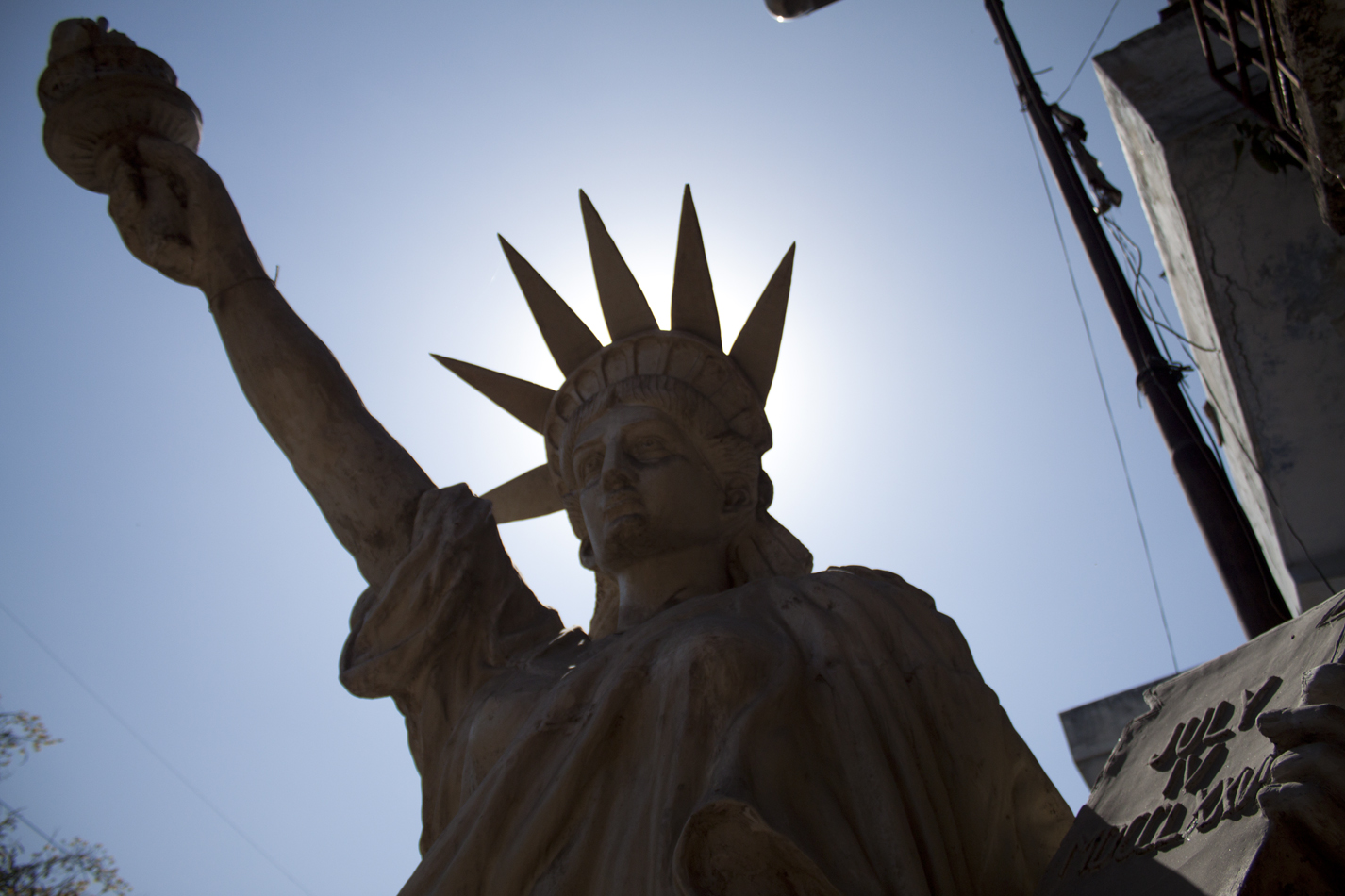
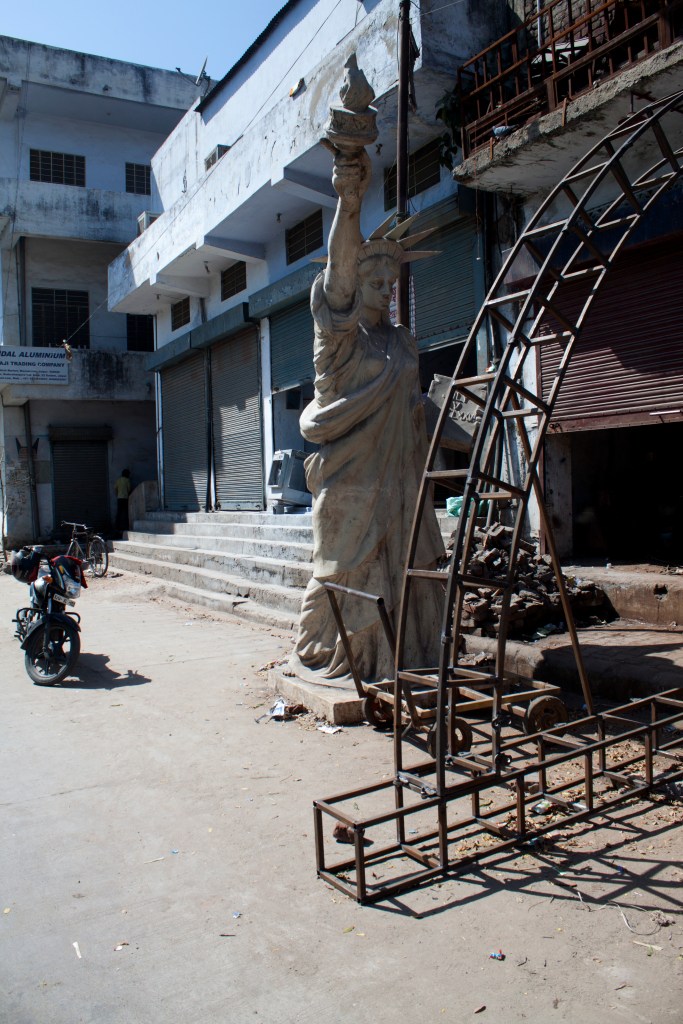
My family and myself were in a car driving through the lesser known streets of Jaipur. There were shops alongside residential areas — greengrocers, motorcycle repairers, barbers, stationers, street vendors, metalsmiths and stonemasons. Building smaller replicas of famous statues and other landmarks seemed to be the side business of the metalsmiths and stonemasons combined, as I saw quite a few statues scattered, part finished, part unsculpted.
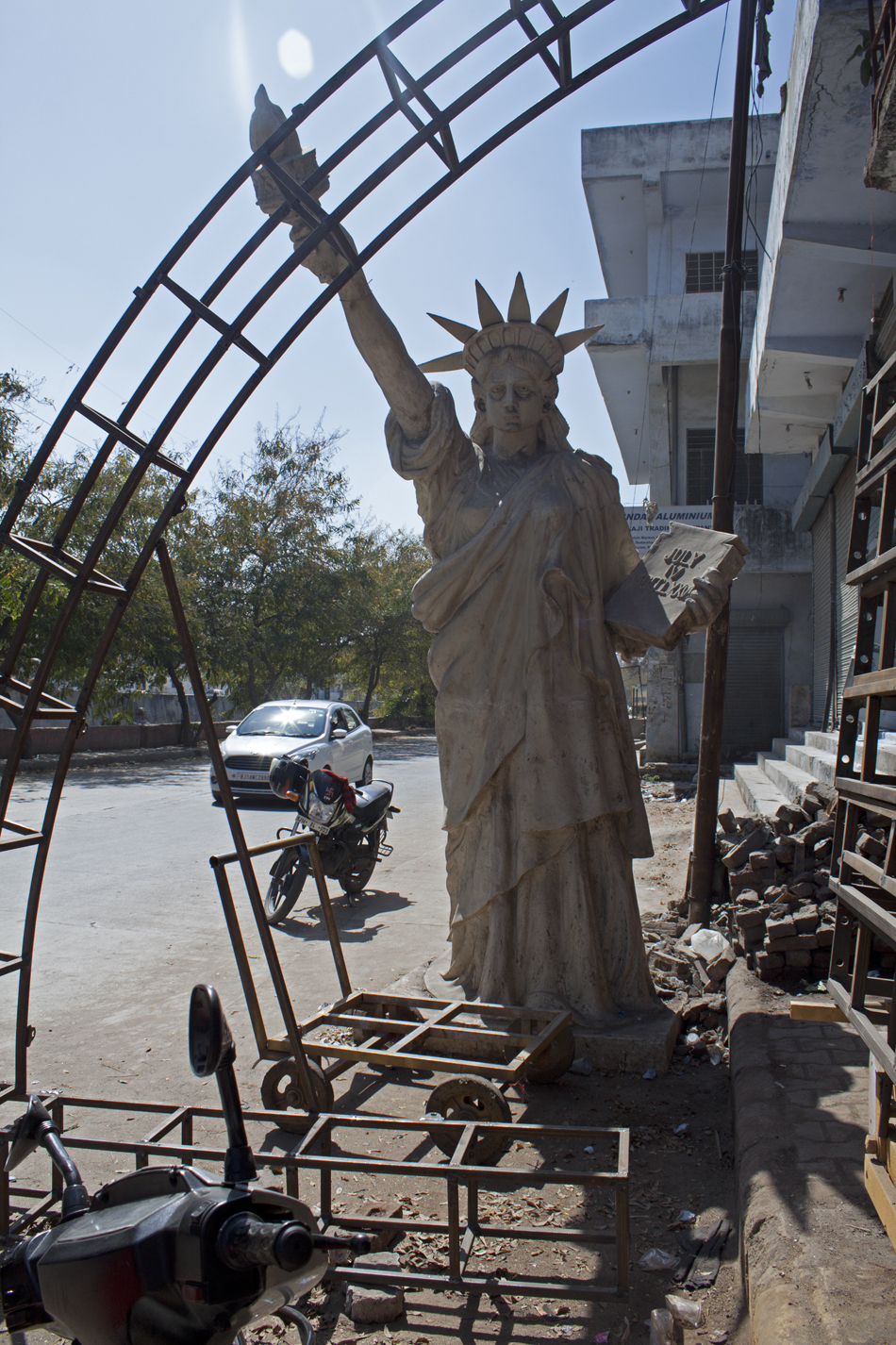
Libertas, that attracted millions of visitors daily in the West, had almost zero admirers on that street. She stood on a shoddy unpaved muddy sidewalk in 48°C (118.4°F).
We were instantly amused, but also bemused. What was that statue doing there? There was clearly a demand for these. In the habit of always carrying my camera, I got off the car to take a couple of photographs. The men on the site found my actions as hilarious as I found theirs.

I asked where the statue was going. “It’s for a wedding.” It saddened me to learn that these men on meagre wages were building these enormous figures for an evening party. “What pleasure exactly could be derived from these cheap replicas that cost many times more than those workers’ combined monthly wages?” I wondered. “Were they trying to fake the location through these?” “Were the business families uploading the party videos on YouTube, captioned, ‘Cocktail in New York’?”
What next? A demolition party? Where do these statues go? Submerged into the waters like Kali and Ganesha? But this is the desert state – so, no sea. Recycled? Maybe! There might just be a second-hand market for these for smaller budget weddings. Who knows!
I never found out.
Later that evening, just when my camera packed up (probably due to the heat), I saw an Eiffel Tower in the middle of a garden in an affluent residential area. The bungalow was getting ready for a wedding (one can tell of the nature of the event from the extent of the embellishments). That was definitely a wedding.
I bet there is a YouTube video of the pheras in Paris.
In my next trip, I would like to know of the fate of these non-permanent structures.
I am pretty much bored of taking photos. There is no challenge around, nil creativity, internet deluged with mediocre work, everybody falsely praising everybody else, sycophantic and sugar-coated comments becoming the norm, and art critics dead.
Just when I thought I was done, I am able to envision images before shooting, and also getting the results. Oh, no, I am still far from being labelled an expert. Karma is playing a role here. Photography is not letting me go. It loves me. It misses me when I ignore it. It pushes itself in my face, in my psyche, my heart, my hands, and my dreams. It is entrapping me with fluke shots.
Last couple of days I have walked aimlessly on London streets. Like any other metropolis, this too is busy. Too busy to pause, look, or care. The anonymity it lends to individuals is sort of nice. I can sit, think for hours. It won’t impose on me its speed. I won’t be pushed or shoved if I didn’t allow. I am part of a slowly exposed still.
I stop noticing people. They are like a motion blur. My camera is restless. I spend money and time to be there. One good shot would be a bonus. I have shot almost everything on those streets. I start to create ‘odd’ images in my head, and then fire the camera. God damn it! I am starting to get exactly what I pre-see in my head. I have the camera on full manual settings, including the lens. I don’t want perfect results. I want blurs, poor compositions, over-or-under exposed shots, and other such results that will convince me enough that I am not cut out to be a photographer. It is not happening. Something out there is not letting me give up just yet. I want to travel. Have adventure. Spend my days walking and observing life, and nights in dimly-lit rooms in near silence. No camera to distract me.
It won’t happen yet. My camera is intelligent. It programmes itself to my visualisation. It is giving me the results with very little effort on my part except the part where I am being a fantasist. Canon baby is making my fantasies come true. This will last until I fall in love again. I have to pretend to ‘neglect’ it.
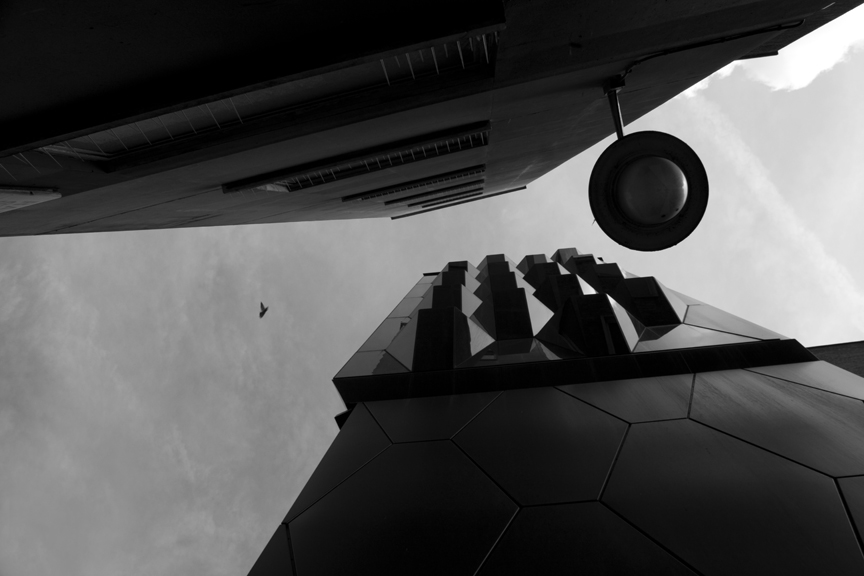
Seated on a bench, I watched the pigeon. It won’t leave my feet, hopeful for some crumbs. It then flies. I wait again. I will photograph it in flight, between those buildings, almost silhouette-y, but not entirely, as I want the lamp to have some light from underneath the white globe, and also slightly exposed buildings to give some context to the bird’s position.
Wishful thinking with an all-manual camera and an unpredictable bird.
It comes in the view, and I wait again until it is there where I want it. Will it? Maybe not! It just might!
And, it did.
One shot only. I didn’t want to do a second ‘for luck’s sake’. I wanted a ruined image. I wanted to return home frustrated, angry.
Can anyone ever get a image exactly how they imagined against such odds?
Divine intervention, perhaps.
On a separate note — I feel like the bird. Free. On my Jack Jones amidst urban chaos.
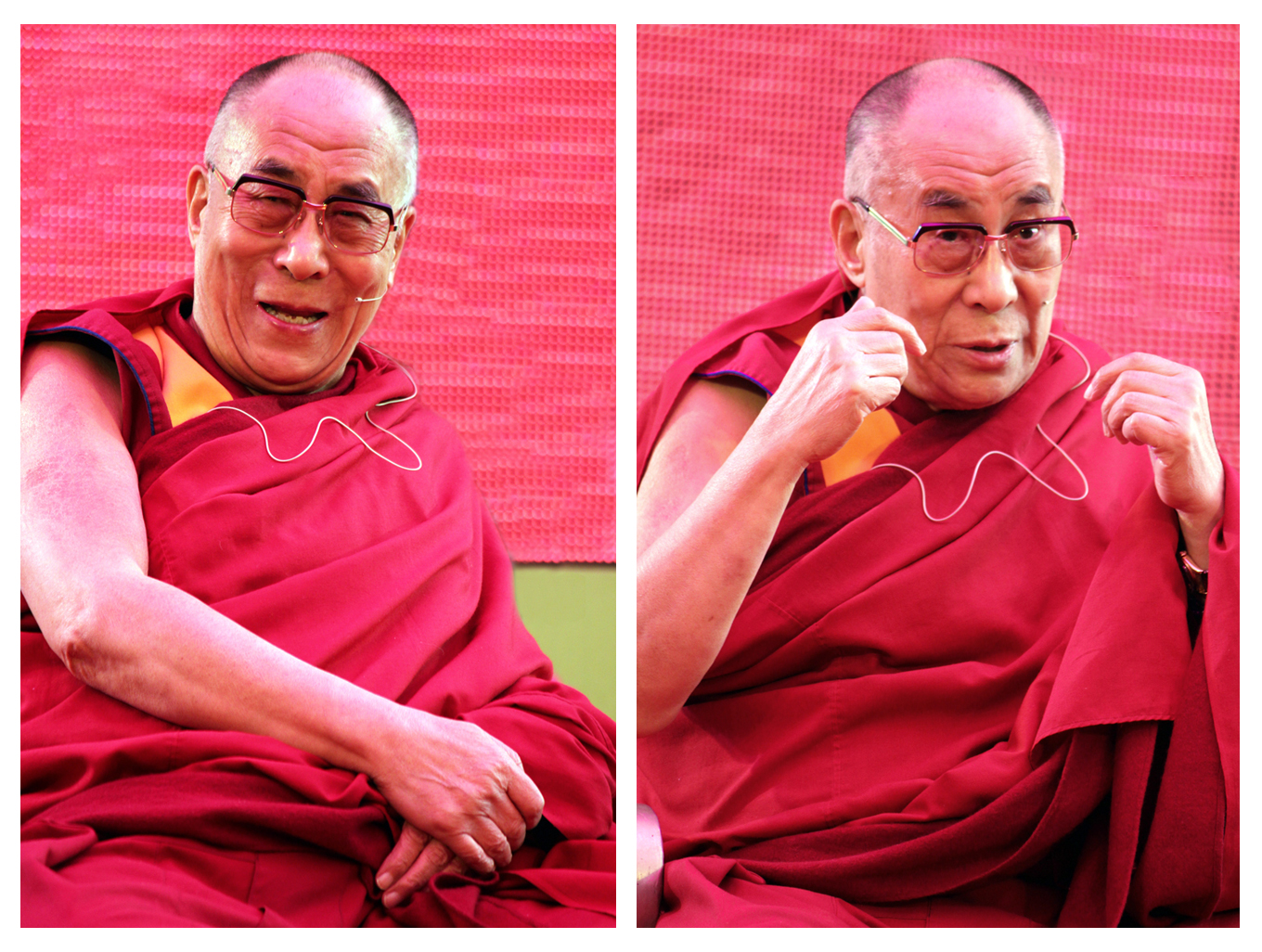
The opportunity to photograph His Holiness the 14th Dalai Lama was one I had waited all my life. I am not sure if his arrival has always been such a closely guarded secret as it was at this particular event in Rajasthan, India! People got to find out only half hour or so before about the arrival of their much-loved spiritual leader. The moment the news broke, so did the rest. The uncontainable darting, galloping, hurtling, flurry of humanity with lost sense of direction, all wanting to take position for the best view.
Having good connections within the event’s committee meant I learnt about the his arrival the night before. Landing at the venue slightly early, I glued myself to the front, slightly lower, of the stage, without giving into the the pushing and shoving, where I thought he would be seated. I wanted to photograph him up close. Full stop.
There he walked in, the humble superstar, followed by hundreds of Buddhist monks. His mesmerising presence induced a brief state of hypnosis and I forgot all about firing my camera’s shutter. Once ‘awake’, I fired a couple of shots, determined to capture his captivating and infectious laughter. He delivered, like always, in the famed Dalai-Lama-style, leaving me entranced by his charm and magnetism.
 People | Life