
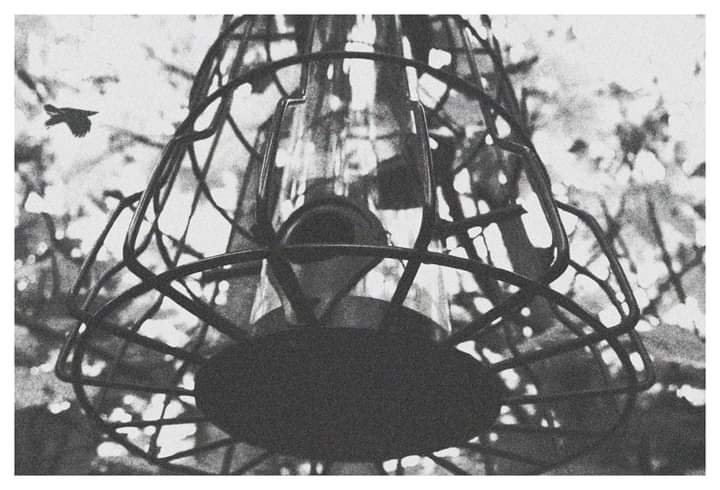
Even if it knows not where the flight will take. A cage is no place for it.
Exploration.
Analogue print. Black and white photography.
…. Sapna Dhandh-Sharma
Even if it knows not where the flight will take. A cage is no place for it.
Exploration.
Analogue print. Black and white photography.
…. Sapna Dhandh-Sharma
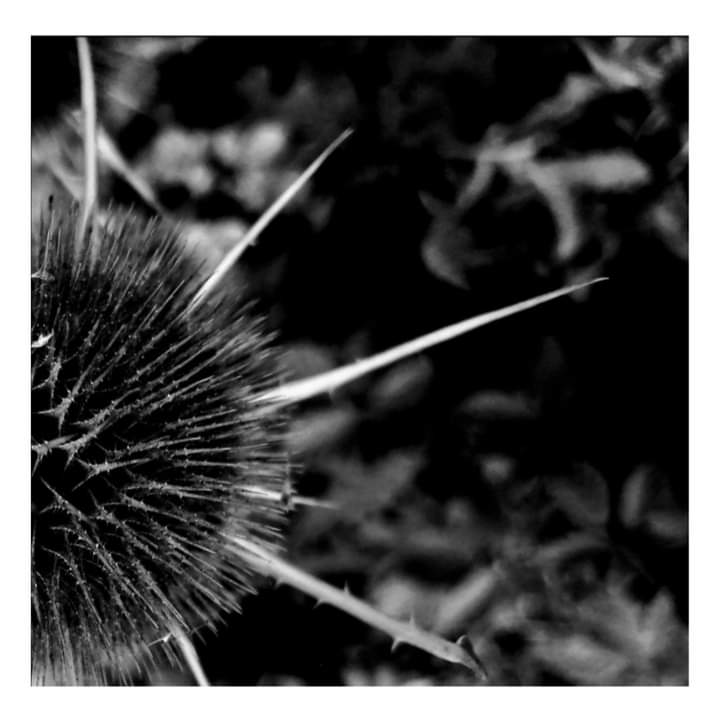
Hand-printed a 6×6 negative. Shot with an expired FP4 Plus.
Hand-printed a 6×6 negative. Shot with an expired FP4 Plus.
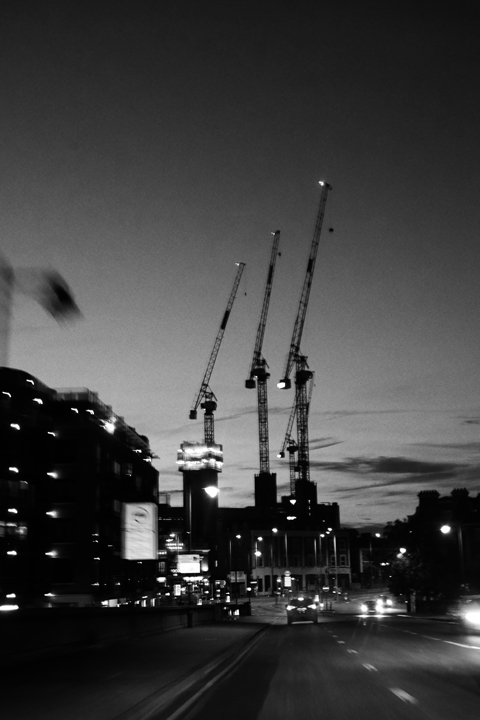
When we talk about landscape photography, we usually would visualise trees, mountains, rivers, gardens, beautiful buildings and so on. Never would an evening’s dull sky with man-made machines spring to mind. Does it not mean that in photographs we seek escapism too?
With this photo, I am using landscape photography as documentary photography. So, I am not trying to escape into a world that is not always so beautiful around us. This is the reality. The ever-changing urban landscape and the ubiquitous machines.
Kew is a beautiful town, and this is the last thing one would expect of Kew from a photographer. That’s right. There will be expectations of colours, sunshine, flowers, trees and such. My photograph, in that sense, is anti-Kew.
This was not a planned photograph. As I often drive on that bridge, I notice cranes on the building sites. This particular evening, as I approached the site, I noticed three silhouettes in a synchronised resting position, with hundreds of lights in the foreground – lights in the buildings, of moving cars, on the tower and billboards, etc. The clouds and the rest were dark. I had to capture the shot, but had to do it from my moving car as one is not allowed to stop the car on the bridge.
Phone camera was the only option. Blurry is what I wanted. Blurry is what I got. Blurry is what looks best.
I think.
I converted it to black and white.
……. Sapna Dhandh-Sharma
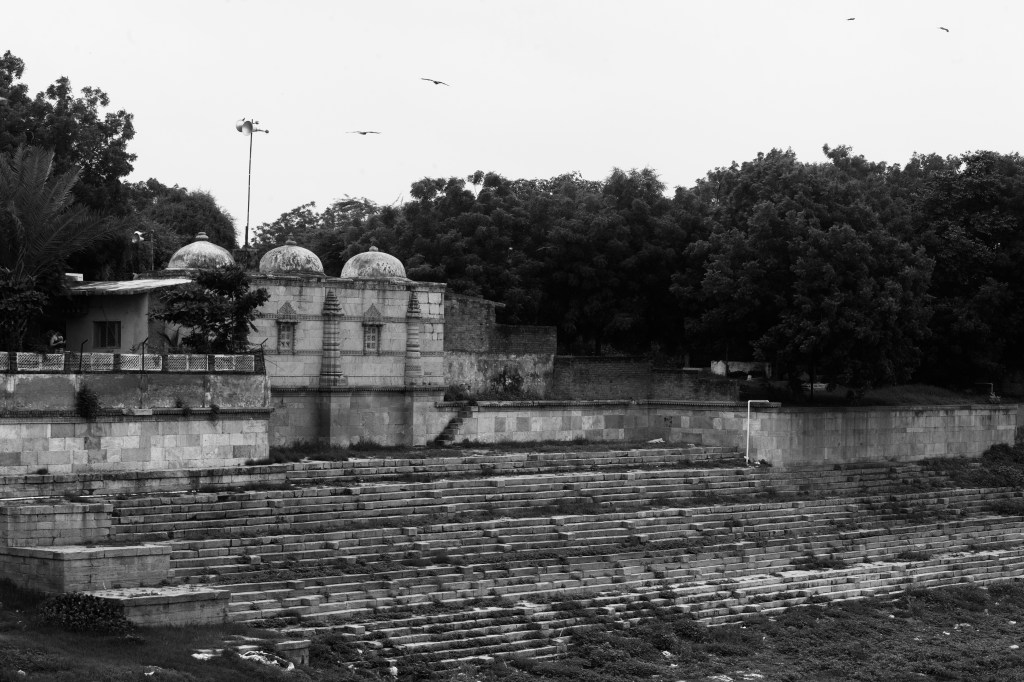
It was an early start. Ahmedabad has changed to an unrecognisable extent. I drove from there through S.G. Highway to Makarba one July morning in 2018 as per the directions given by Bubbles in a cutely sincere manner – two lefts, then right, then straight for 2 kms, then three rights, and so on. It must have been the combination of her accuracy and my ability to grasp that I reached the masjid with sheer ease. The light from the golden torch was making its way to the earth before bribing its way into the roza’s courtyard.
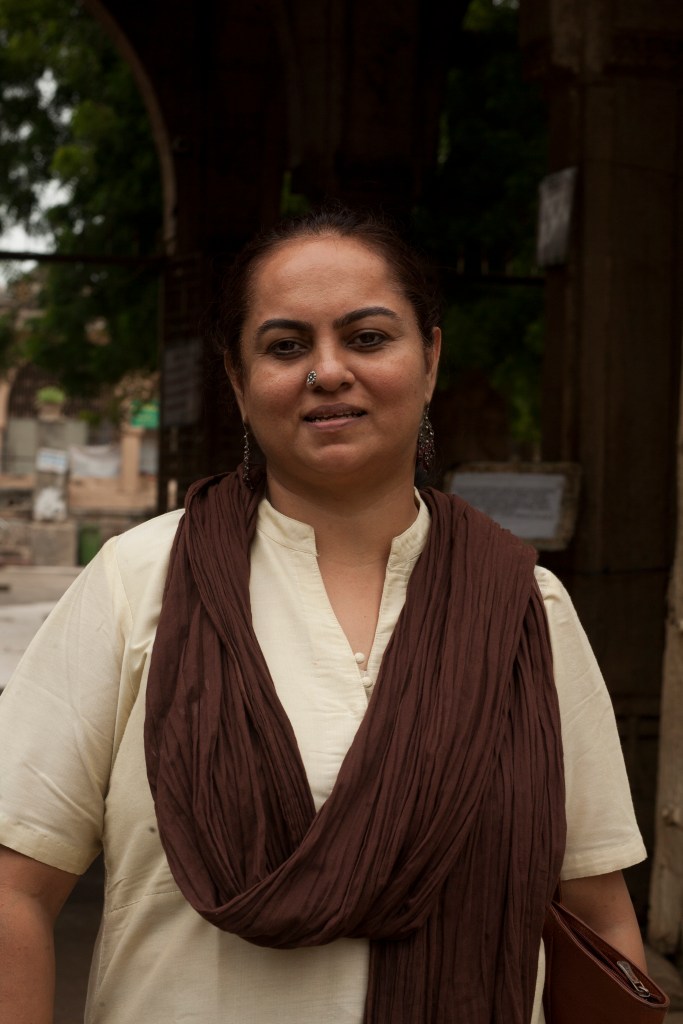
Bhavna stood there to greet me. Oh, what a beautiful face she had. Those eyes!! She instantly came across as a warm person willing to share her knowledge of the place. She spoke a welcome mix of educated English and raw Hindi. We entered the monument, removed our shoes, covered our heads.
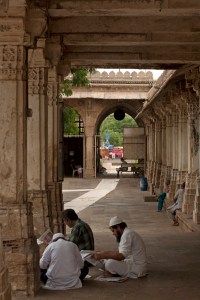
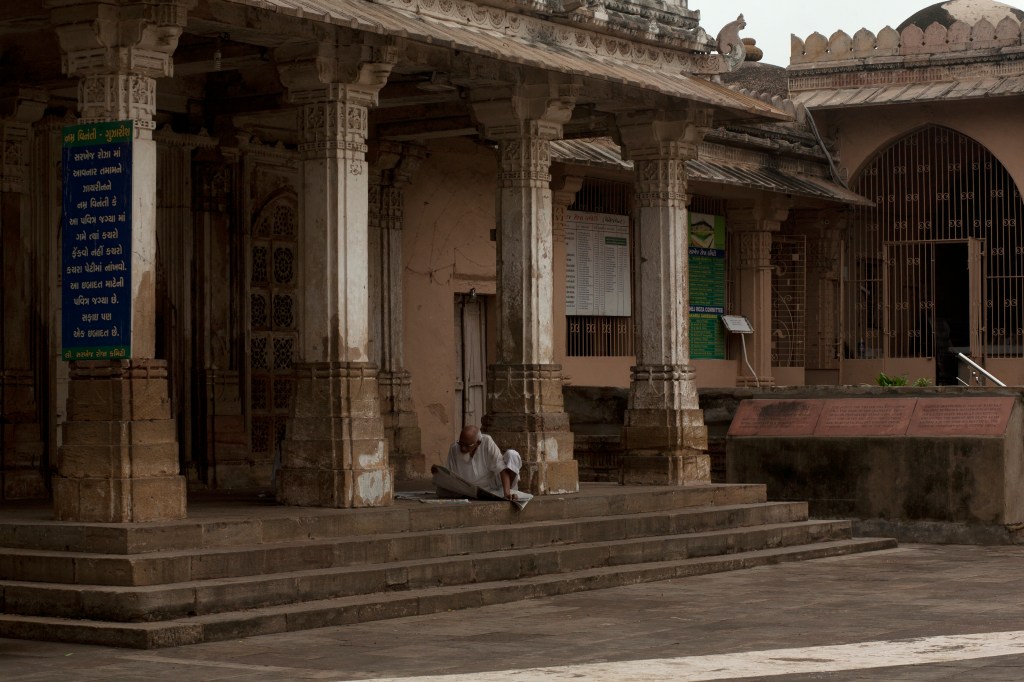
A typical morning scene. Touchingly serene. A few men, unperturbed by my presence, read the morning papers. I felt at home. I kept taking photographs as Bhavna’s soft voice kept singing in my ears. We Indians are spoilt. Our history dates so far back that we casually declare a six centuries old structure as recent. We even neglect it.
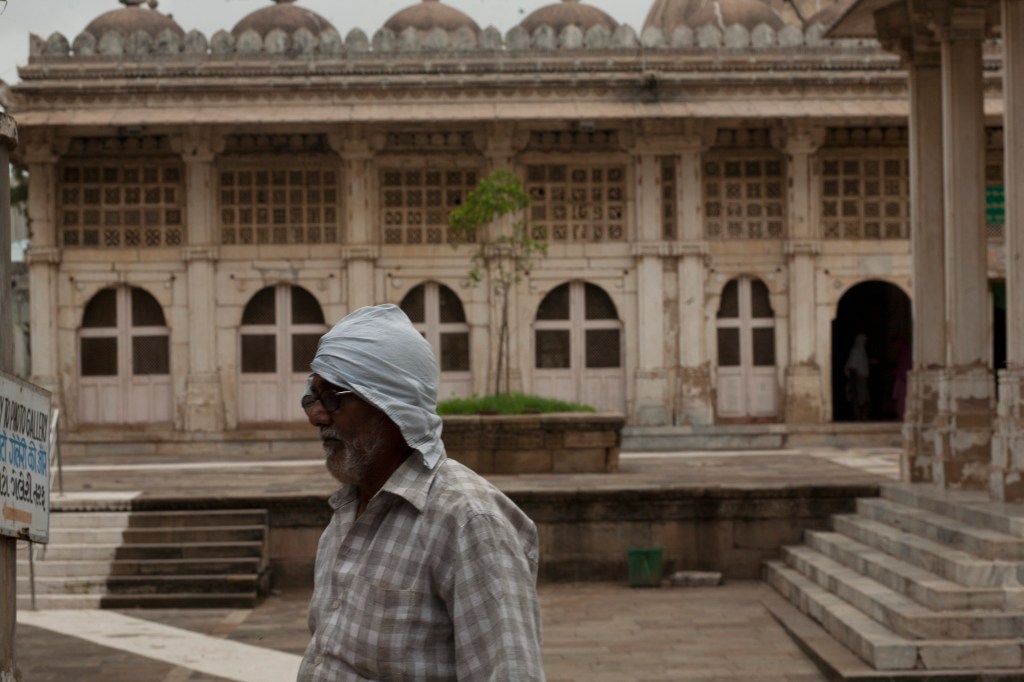
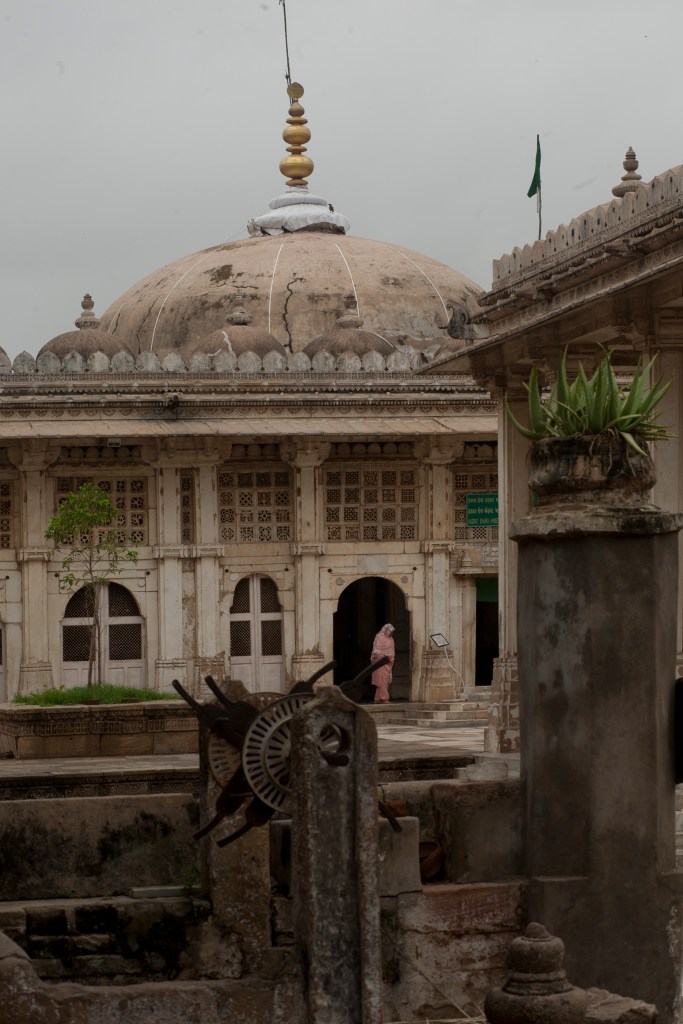
This was Sarkhej Roza, once the home of sufi saint, Ganj Baksh. To one side stood a stone pavilion in a sad state of disrepair and to the other, a courtyard with a masjid and quietly guarded tombs. Several mausoleums, an old well, hundreds of wide steps leading down to a dried tank and the infinite expanse. One part of the mosque, with its tall pillars reminded me of the Acropolis of Athens. It was too much for me to take in on a short morning tour.
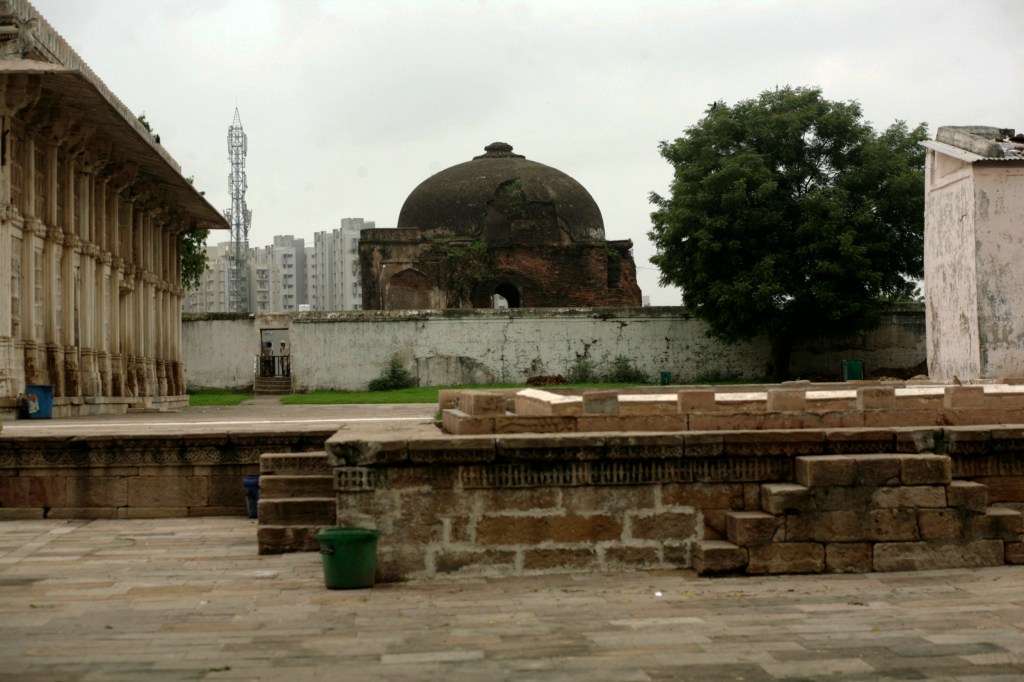
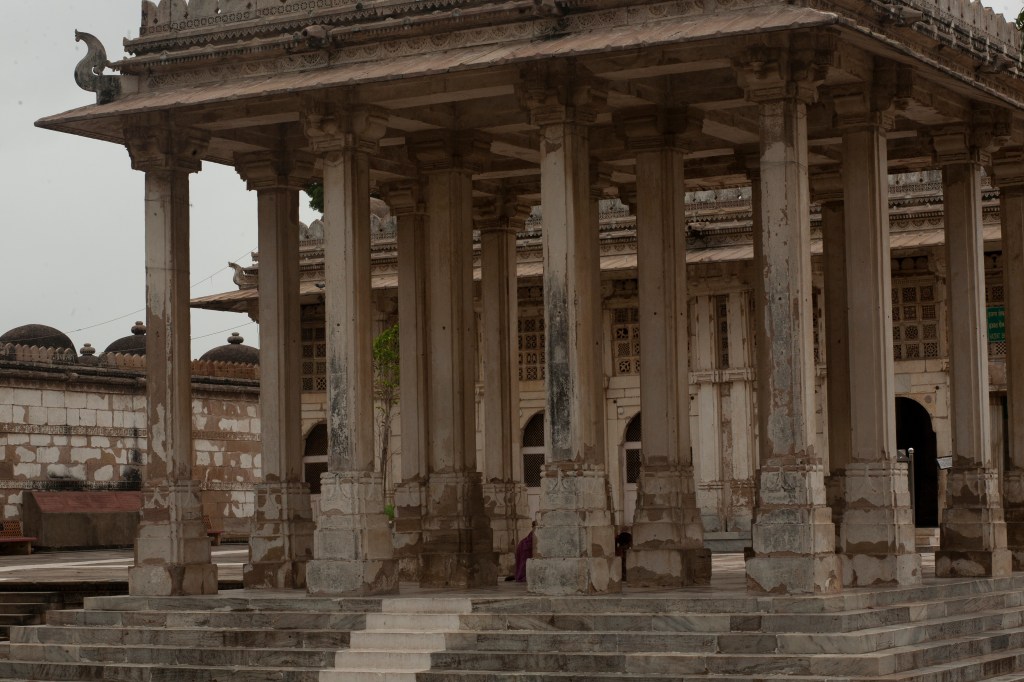
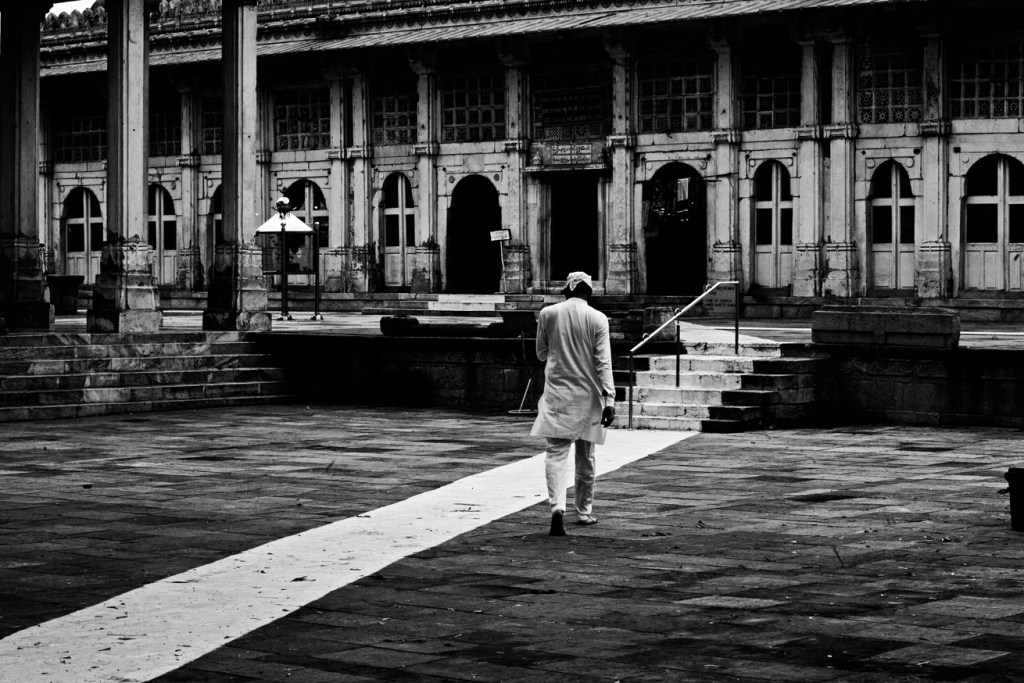
Once in a while a person will walk the white-painted path, that led to the masjid, to speak in private to the supreme being. This path was also taken by the Sun to kiss the cheek of the messiah who must most definitely reside in such quietude.
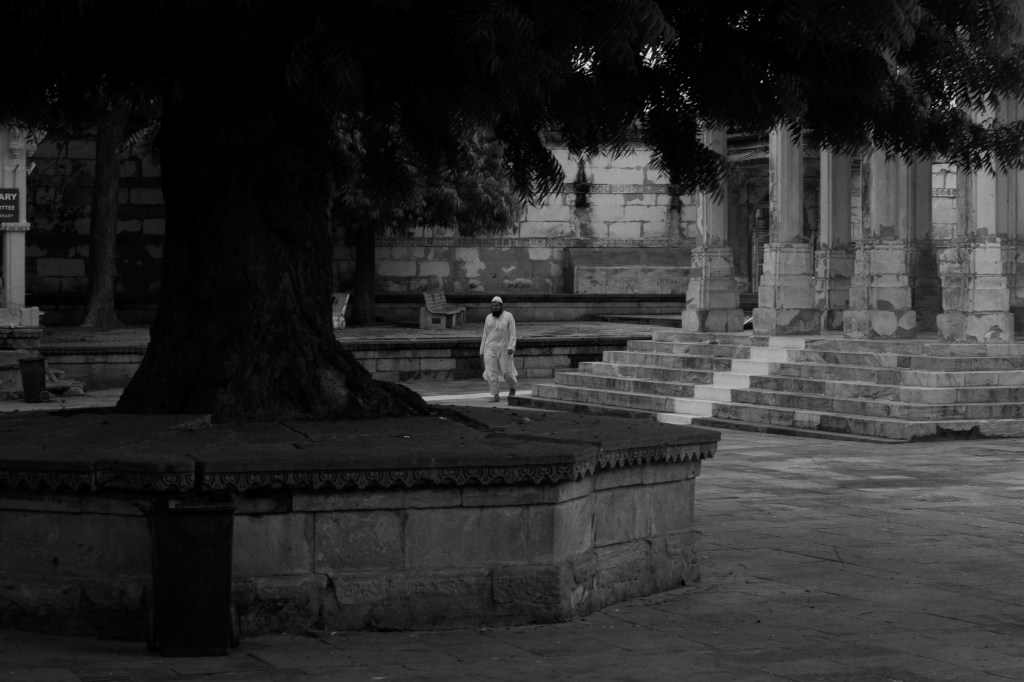
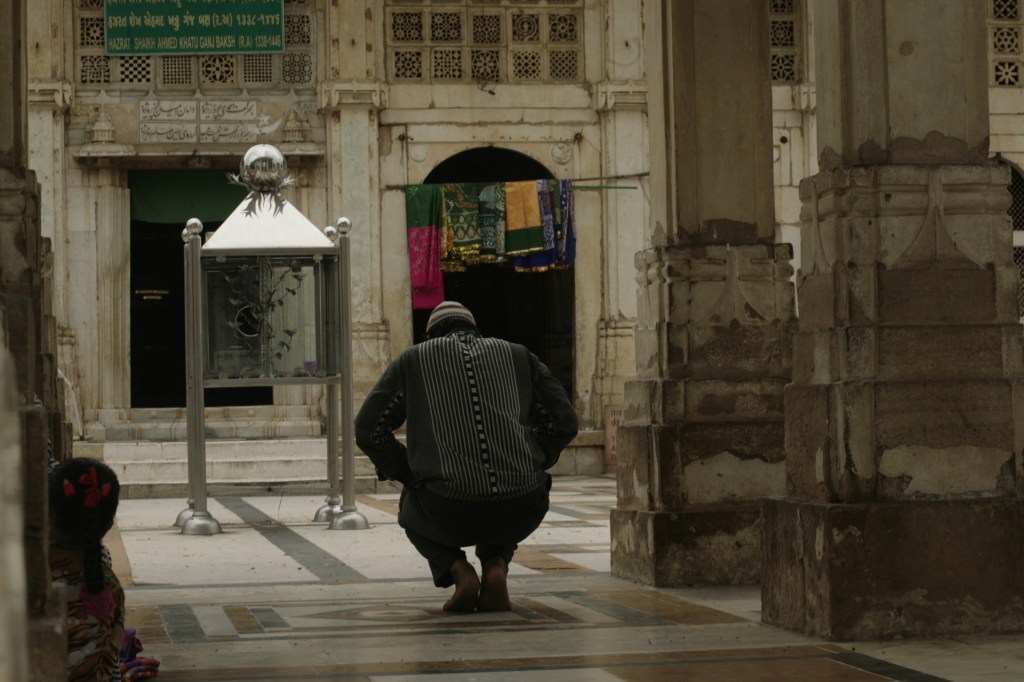
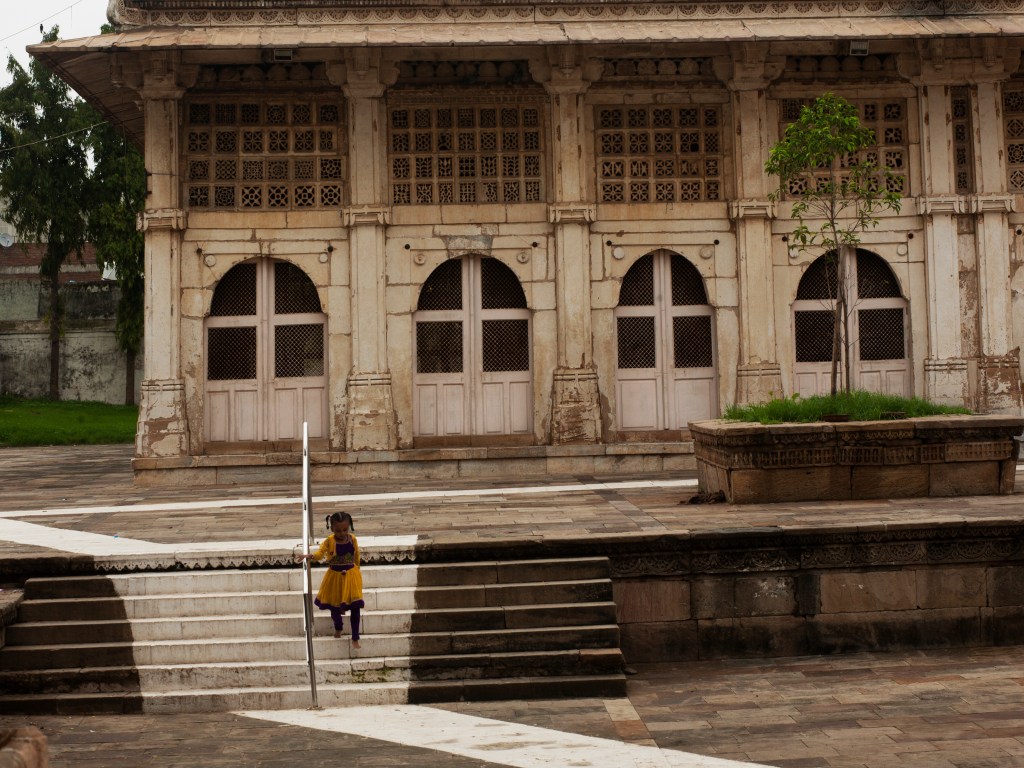
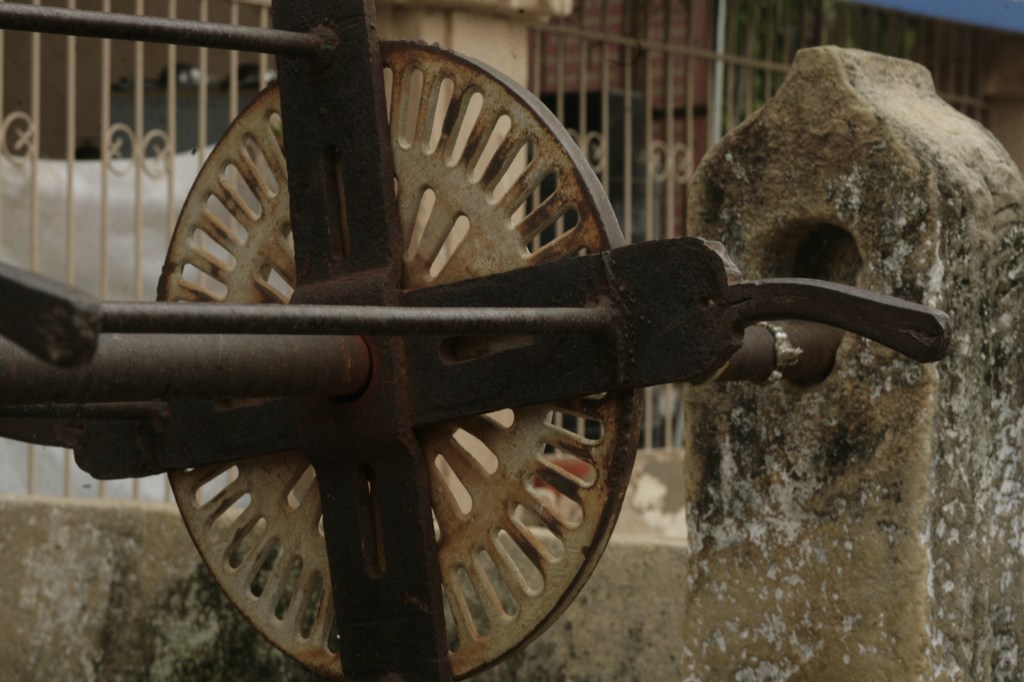
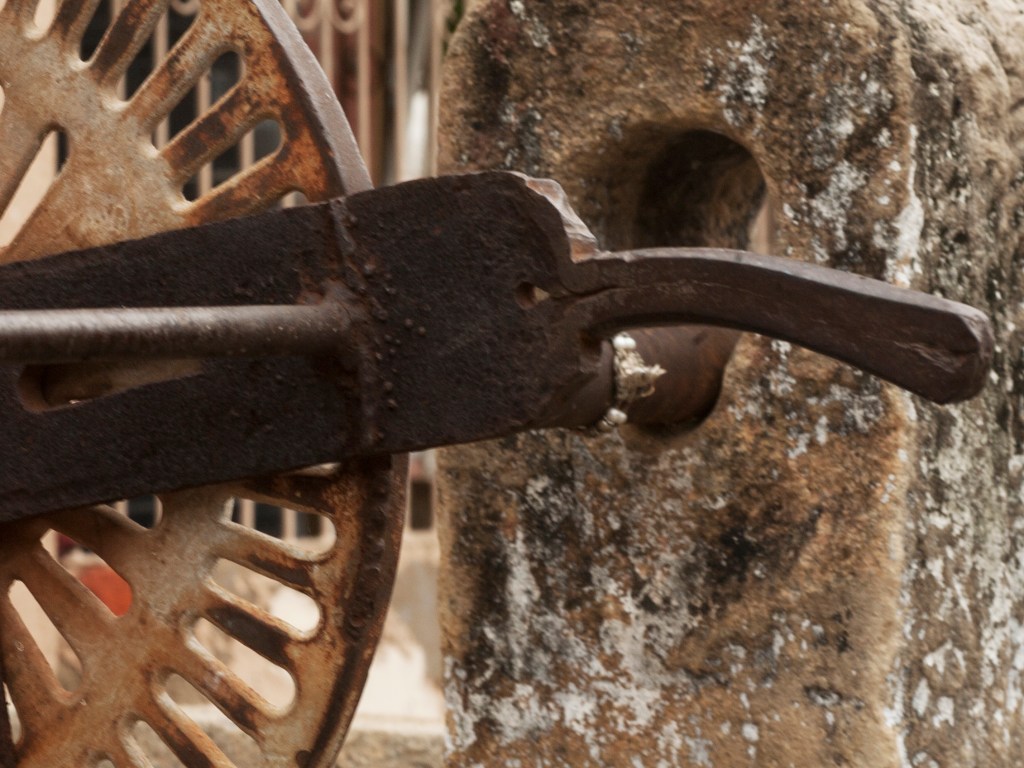
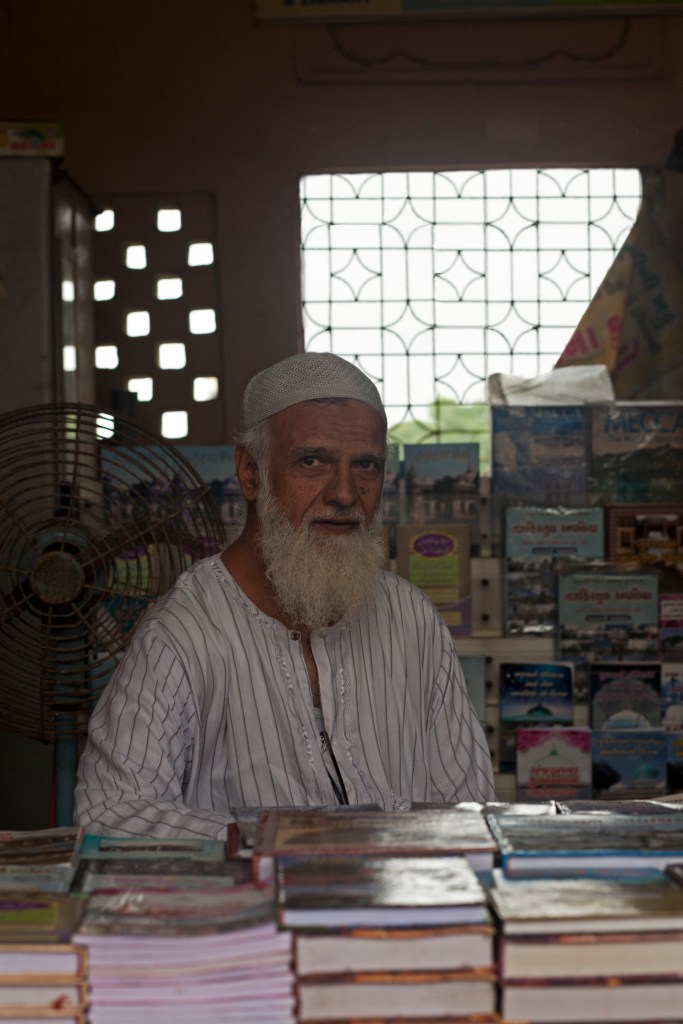
A small girl jumped and skipped on the steps oblivious to all. A spoke of the well-wheel pulley made to resemble an exotic visitor to the Sabarmati River. A cormorant or a spoonbill perhaps. The little bookshop opened early. A few men sat selling to no customers at all. Bhavna enjoyed a nice chat with them. A silvery bearded man in immaculate white clothes and matching taqiyah takes over the shop. “Maybe he’ll sell only one book today,” I thought. I buy one. But he will remain all day no matter what. Dedication. Service. We all can learn.

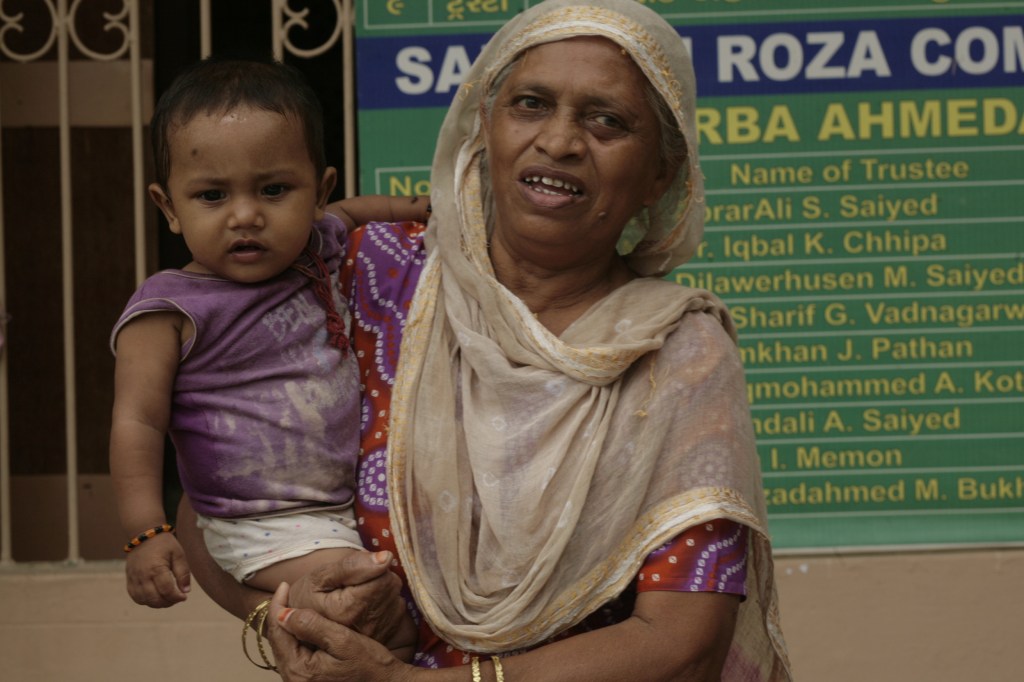
The cleaner, with her younger grandson in her arms, complained about her useless son-in-law. From Bhavna’s story to this – it felt like I had changed the radio station.
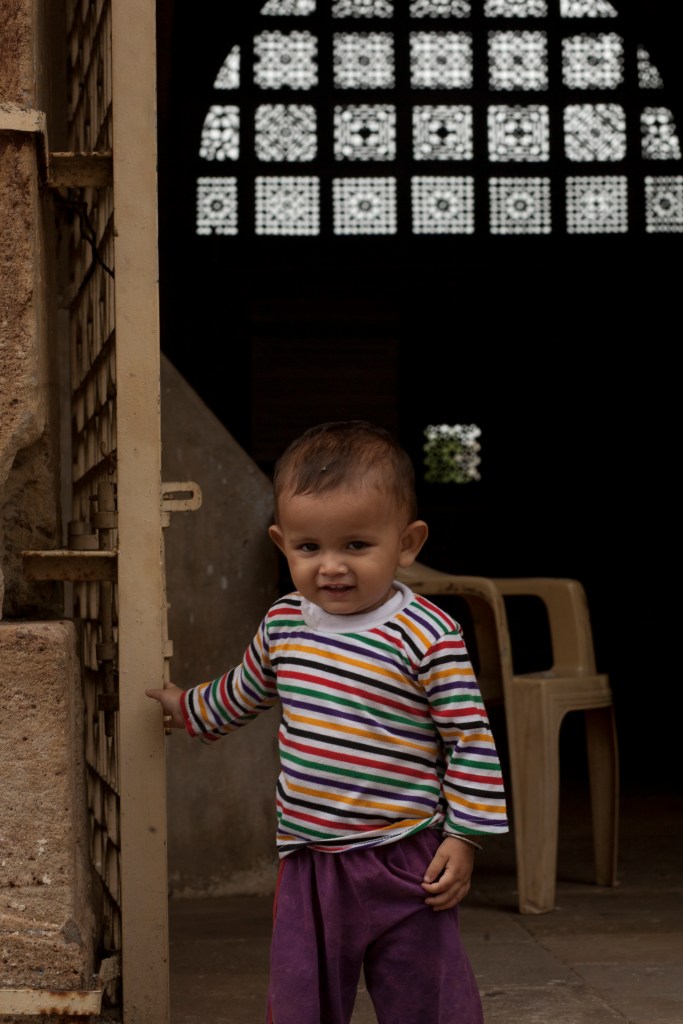
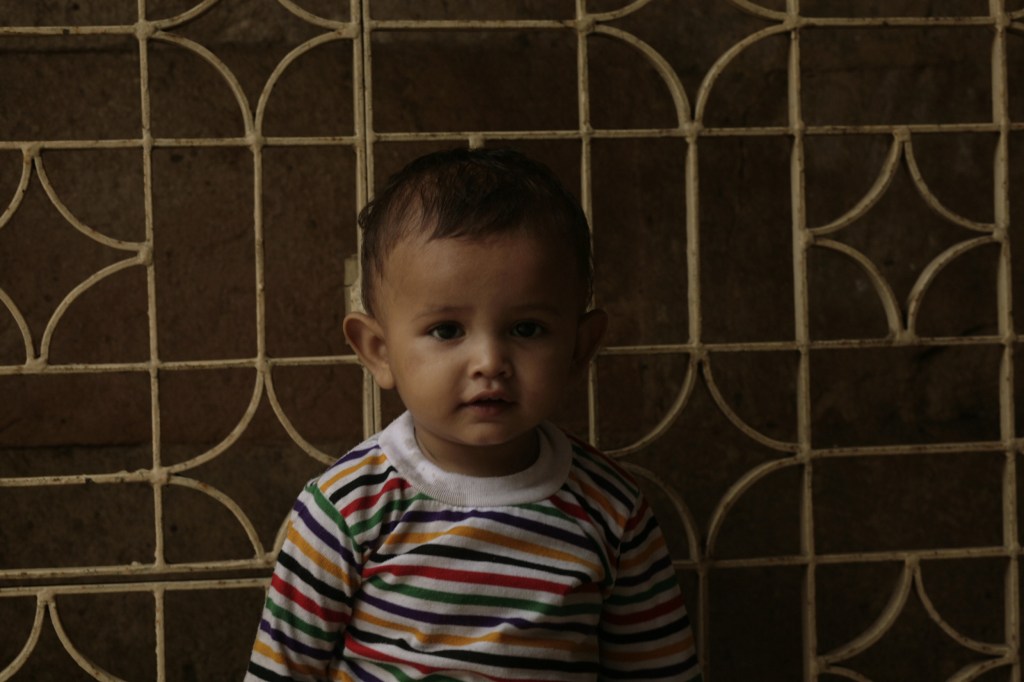
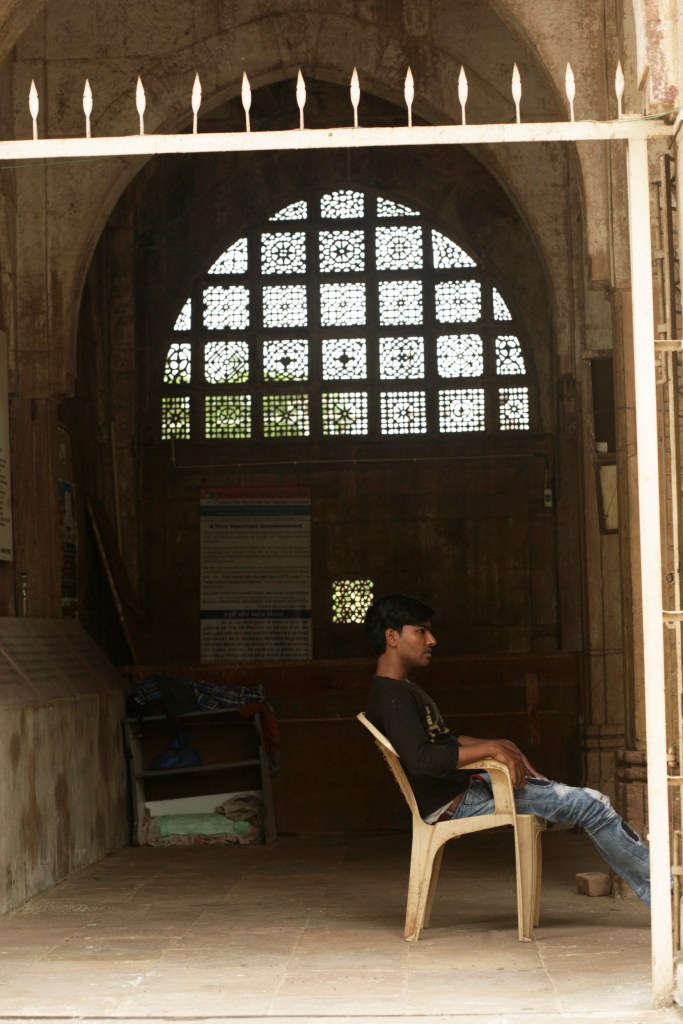
Her elder grandson played near the main gate. His angelic face captivated me so much that I took several photos of him. He kept changing poses. A young man sat on the chair.
Maybe, that was the accused.
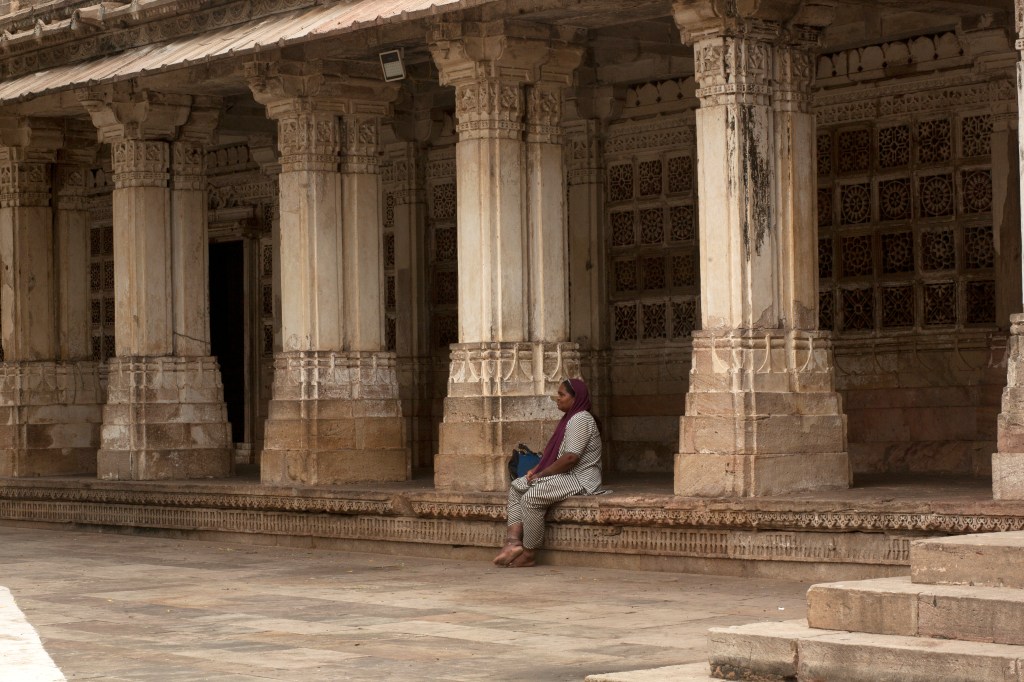
My gaze locked on a woman sitting outside the room that housed the tombs. She was not present there. She appeared to be talking to someone. But there was no one. She then laughed, and continued to laugh. Her ankles were swollen. She was a regular I was told. She walked out as aimlessly as she had walked in.
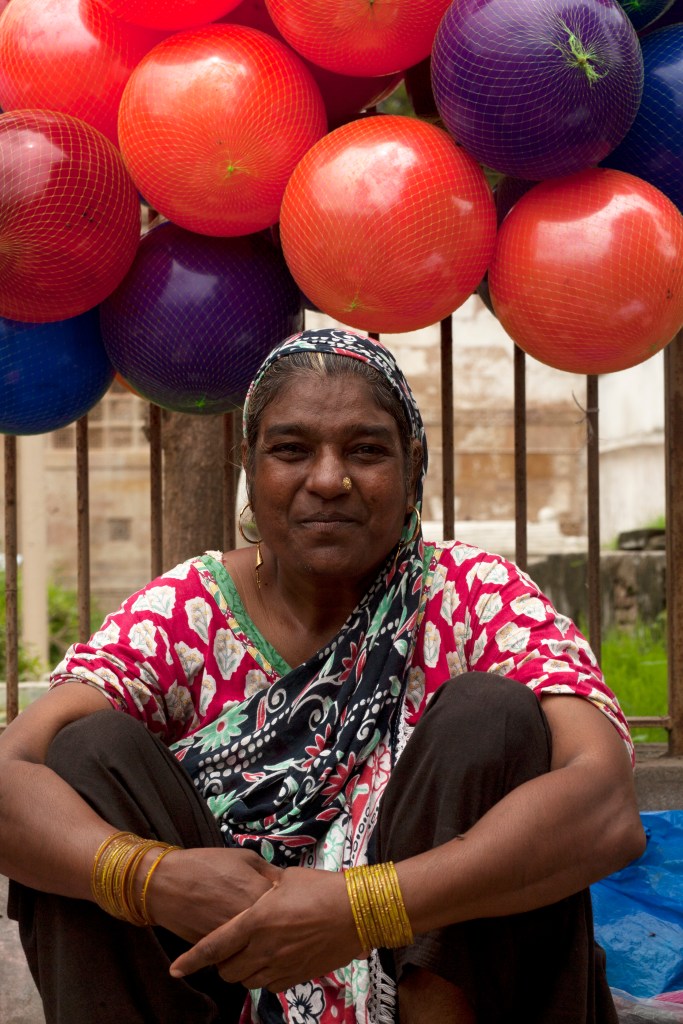
Outside the mosque, another lady sold balloons. “She’s my friend,” announced Bhavna. Where did these people buy such delightful smiles from when they could not even afford a decent meal? How can they afford such precious attributes?
On my drive back to Ahmedabad, and before I hit the highway, I saw the lady who spoke to the spirits. She was on her way to… nowhere.
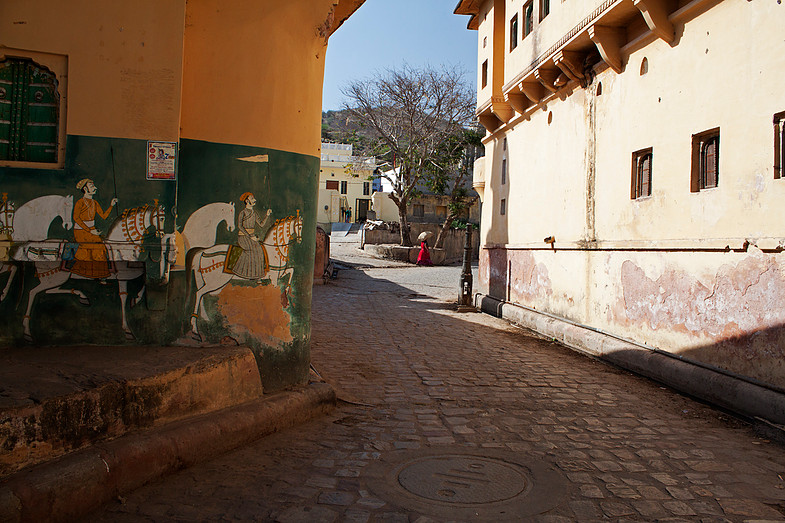
Apart from the great many tourists flocking to the grand fortress of Amer, where the maximum activity is noticed, the town of Amer remains unchanged since at least my childhood days. I cannot imagine it being any different a century ago, or even two or three centuries ago for that matter. The 17th century muralled walls of the many temples, the Panna Meena Kund, the bazaars, and the shops tucked into the small pockets of the fort’s base, remain untouched and neglected. As a result, many sandstone structures have fallen into a state of grave disrepair. But, the raw beauty prevails.
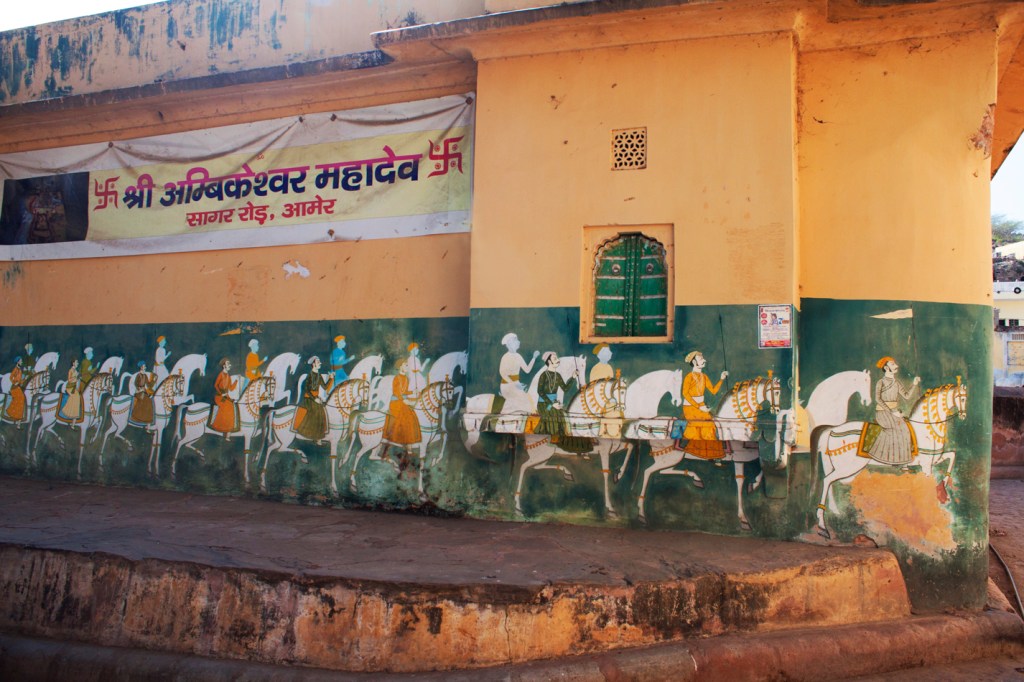
I hail from Rajasthan, and the areas around Aravalli Mountains (the oldest range of fold mountains in India) have been frequented by me since I was a child. I grew up knowing the region, its people, language and the customs. The women’s attires were always ‘very’ colourful, with one neon-orange found aplenty, the men wore the same multi-coloured turbans as they did now, and the kids played with marble balls on sandy tracks even then.
The sultry afternoons were, and still are, lazy, and many folks kept cows, buffaloes and goats for milk. Langurs guard the gullies, and keep a count of the kids returning from school with their huge backpacks.
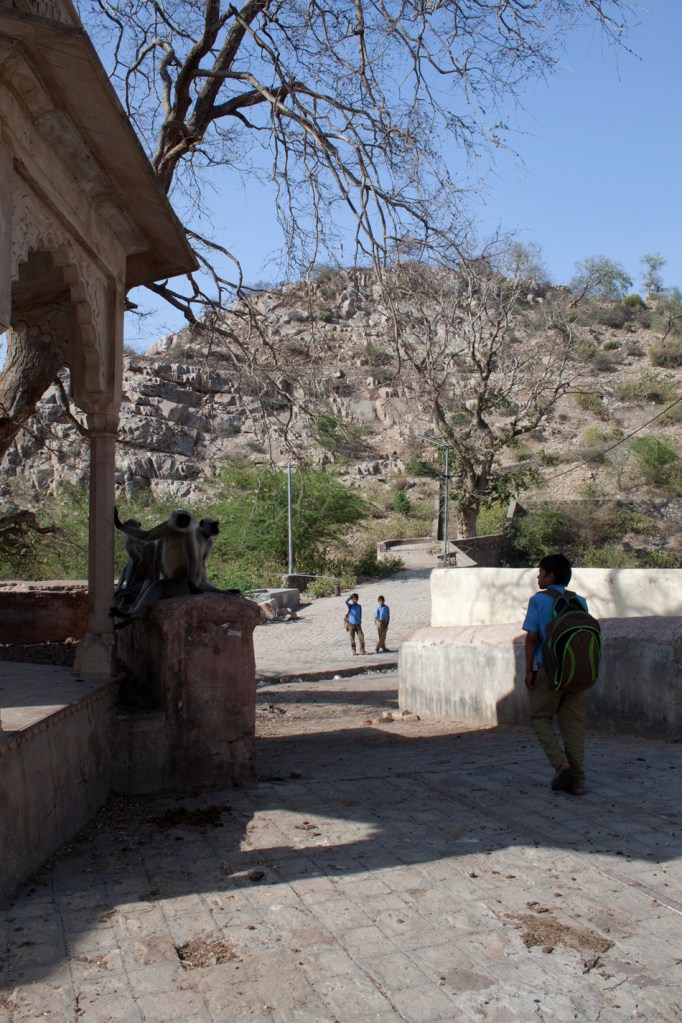
A few women carried hay on their heads for the cattle, while some hung-out to sing desert lyrics, or gossip. The men played card games and smoked bidis and chewed tobacco or paan.
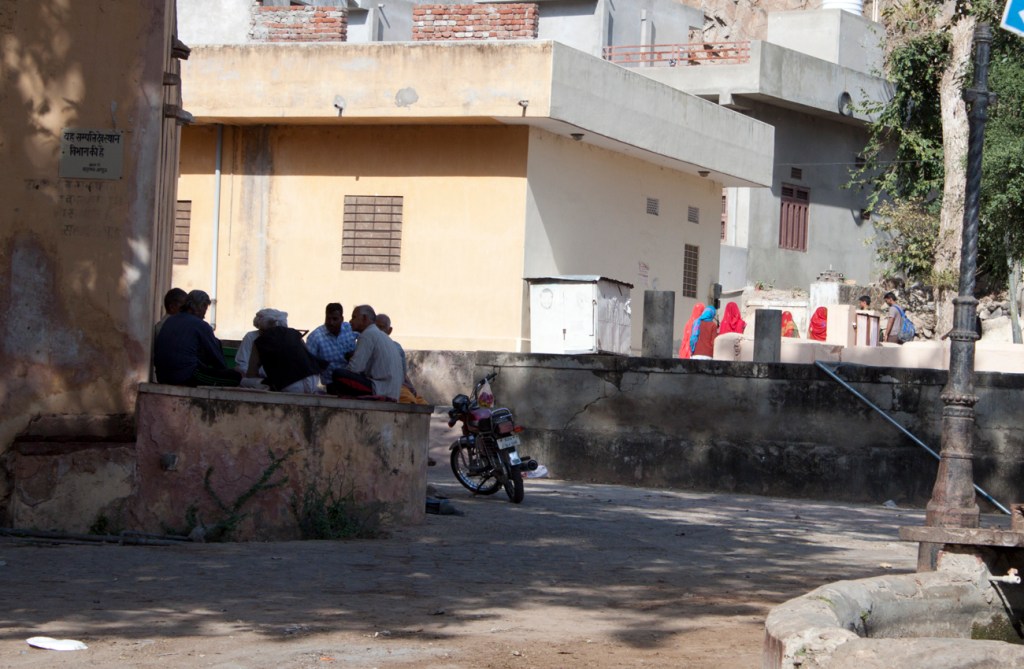
Once in a while an object comes into sight that makes the time we are in apparent. My camera being the biggest reminder, of course.
It takes them a while to acclimatise to my presence . These people do not like their privacy being invaded. It is very difficult to photograph women facing the camera with their veil completely lifted. I speak their language, and yet…
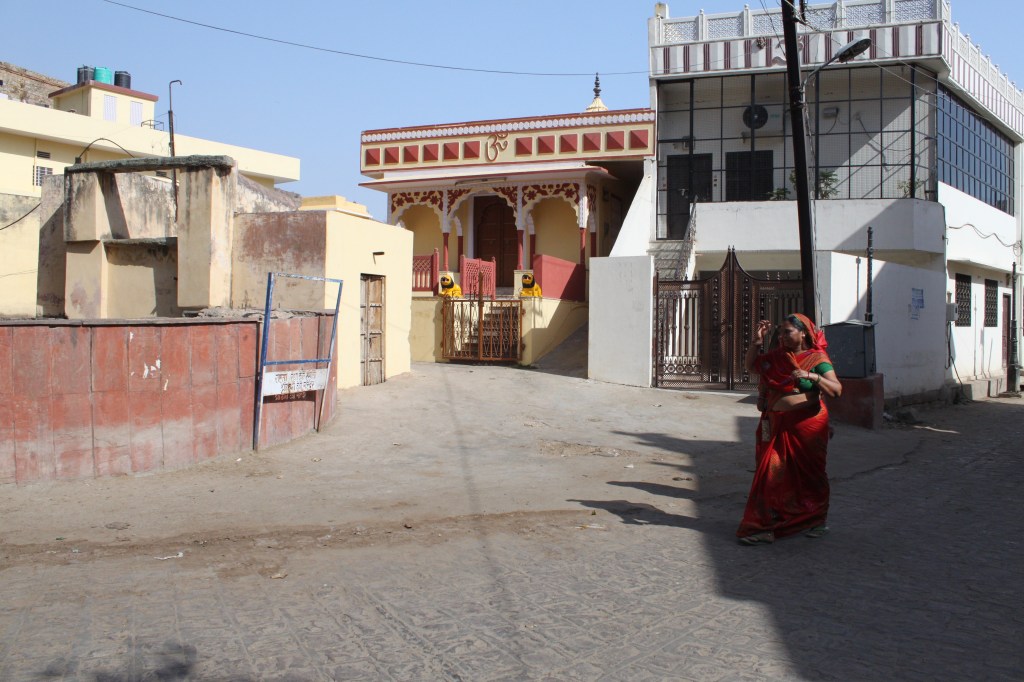
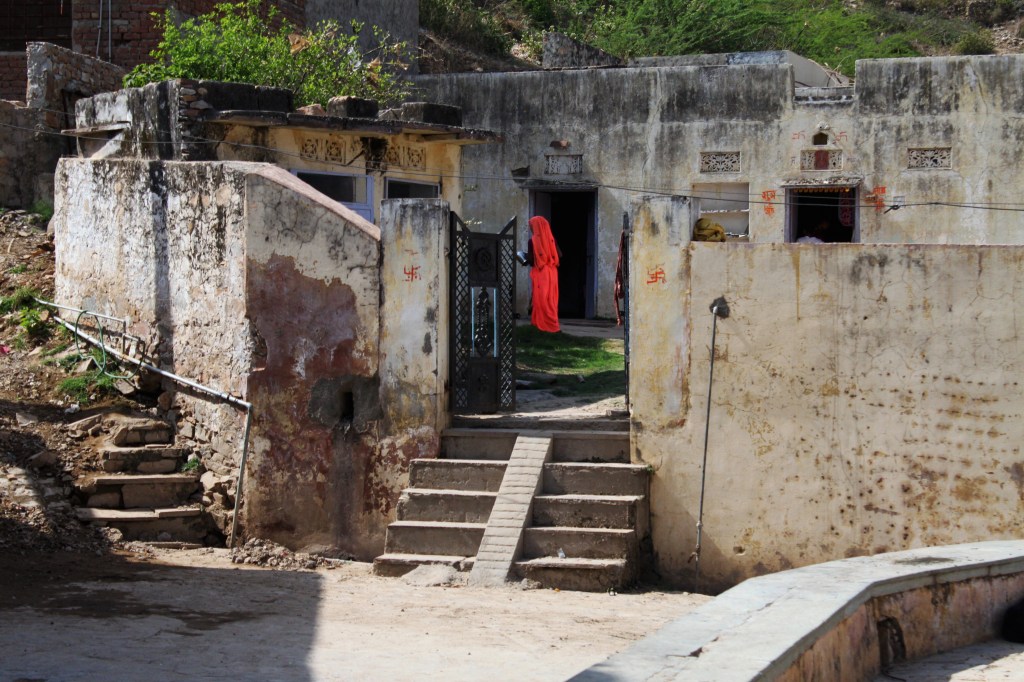
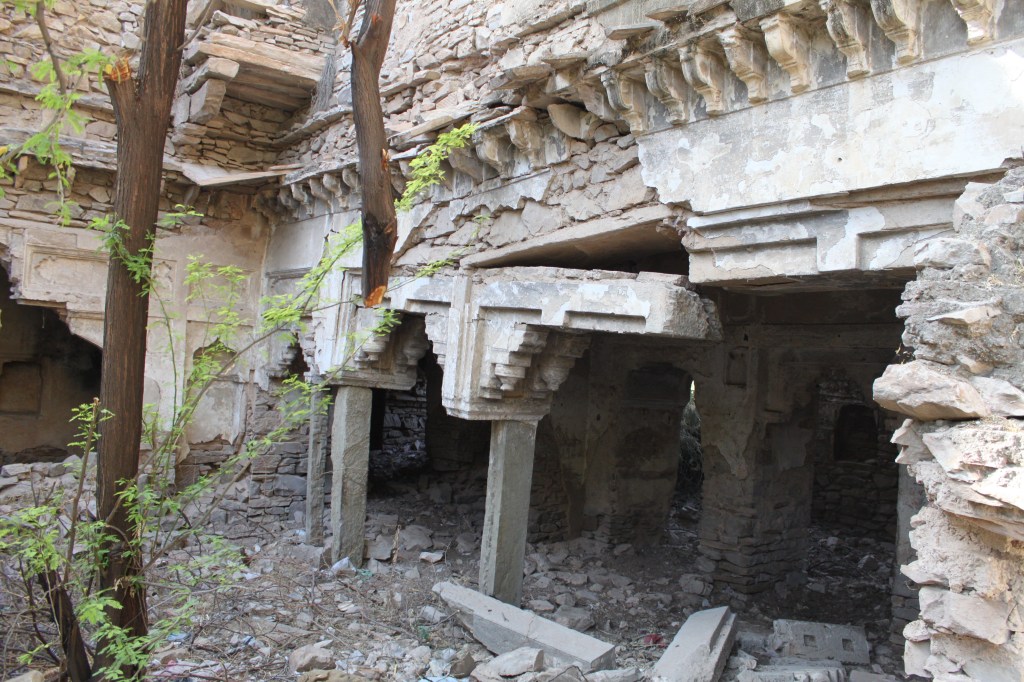
Many grand old mansions that belonged to the aristocrats are now in a crumbling and uninhabitable state. The families and their grandeur have long gone and, despite a shortage of good living space for people, these mansions are allowed to wither away.
But the Khejri tree indiscriminately thrives in every quarter.
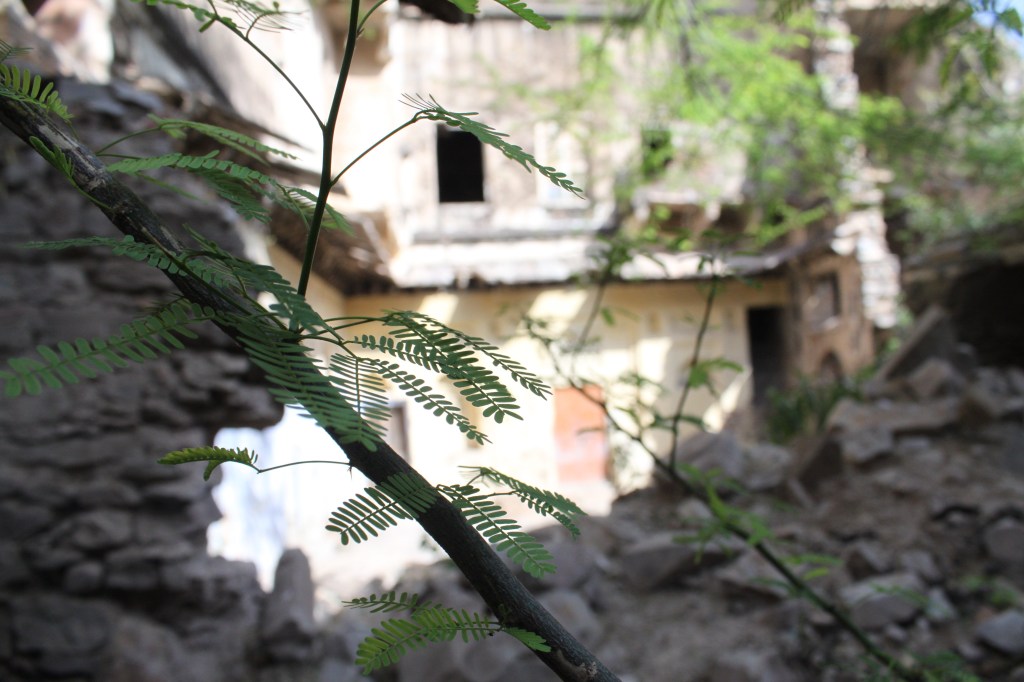
I take my time. I am in no rush. I carry my heavy camera in the sweltering afternoon, walking miles, striking conversations with those I walk past, ensuring they realise I am one of them, that I just wear different clothes.
I long to return.
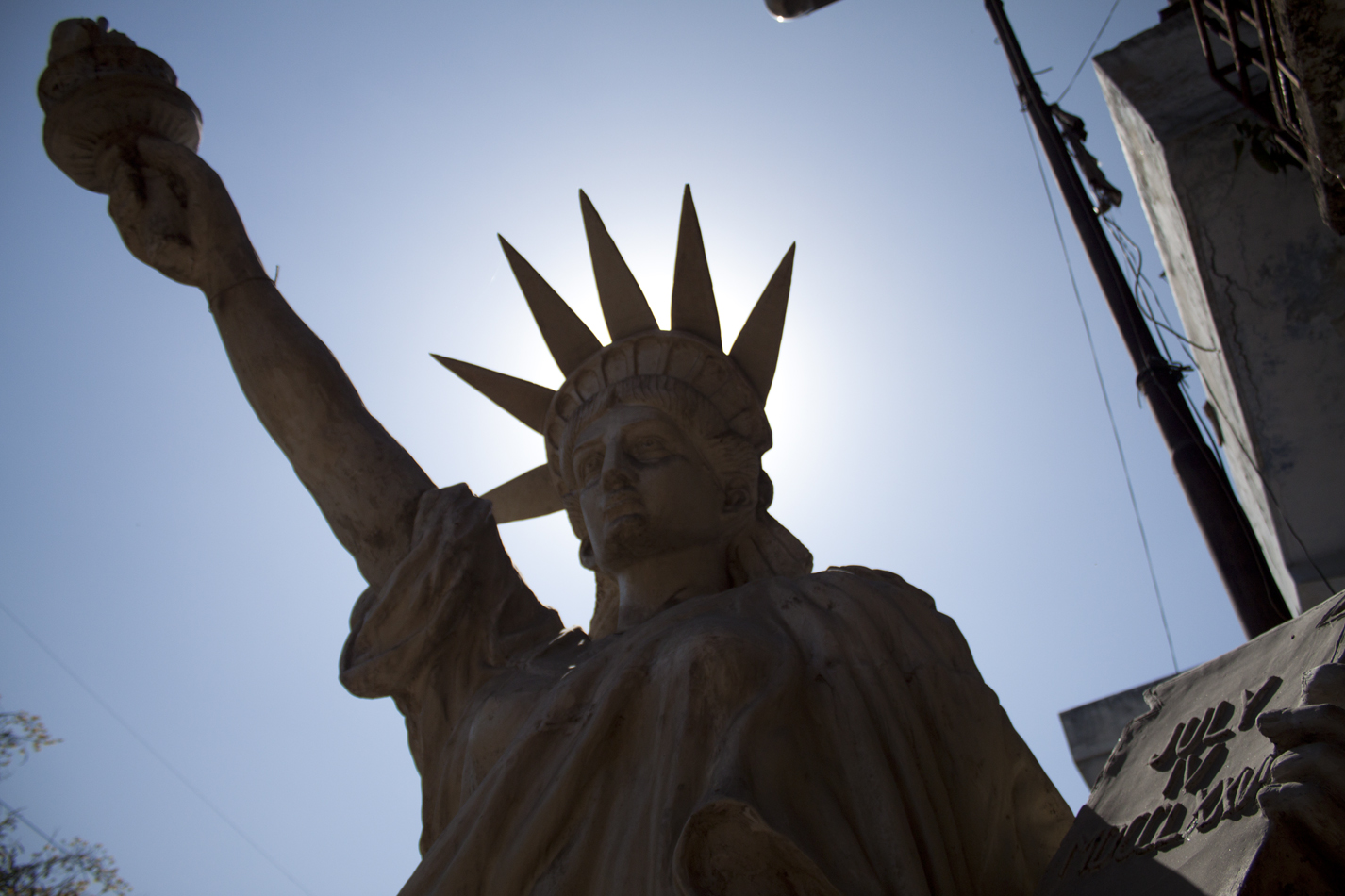
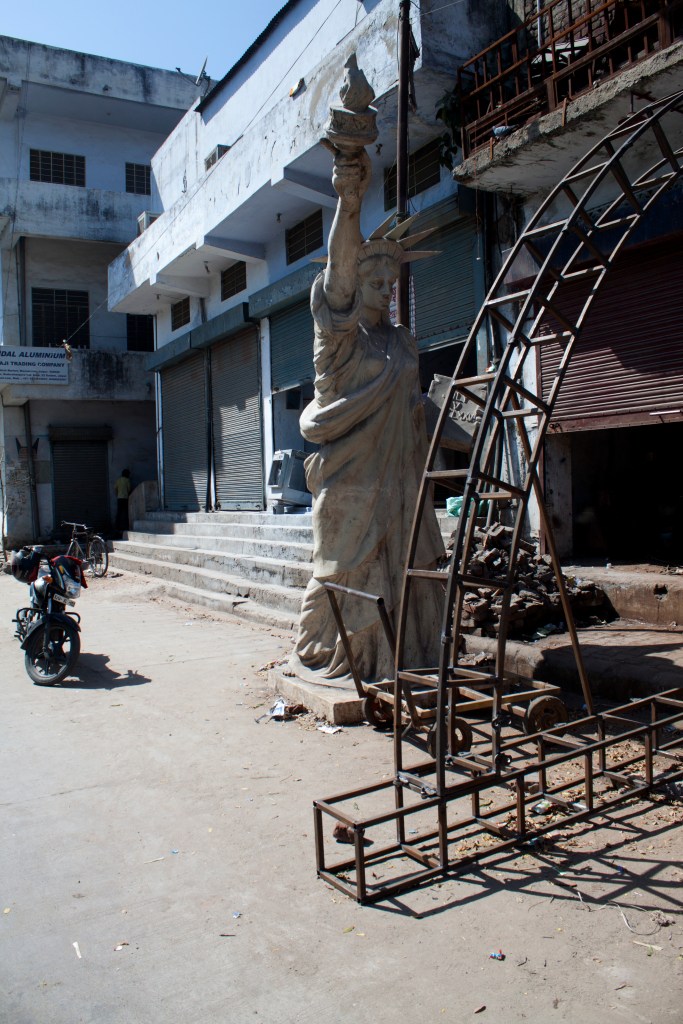
My family and myself were in a car driving through the lesser known streets of Jaipur. There were shops alongside residential areas — greengrocers, motorcycle repairers, barbers, stationers, street vendors, metalsmiths and stonemasons. Building smaller replicas of famous statues and other landmarks seemed to be the side business of the metalsmiths and stonemasons combined, as I saw quite a few statues scattered, part finished, part unsculpted.
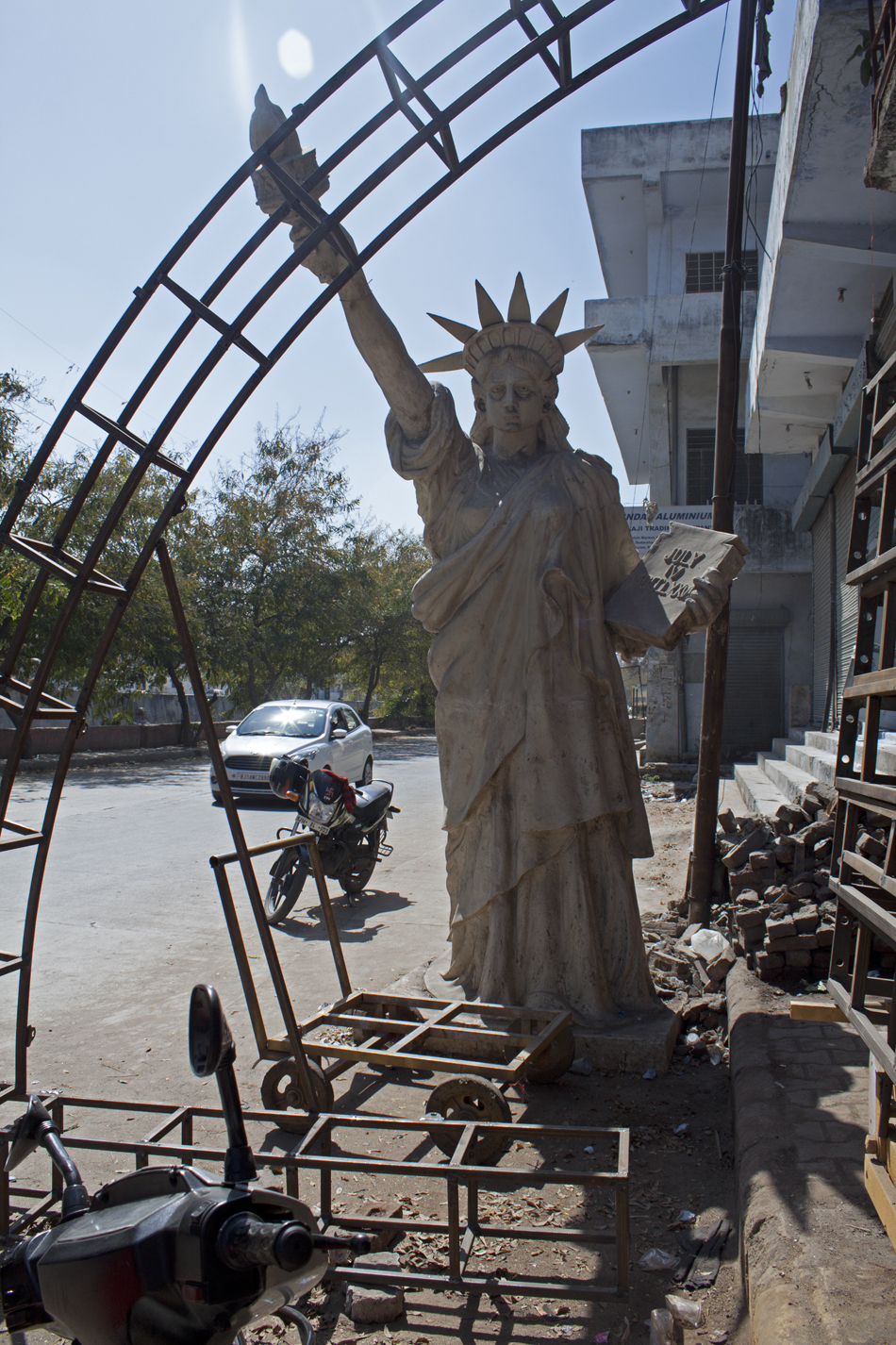
Libertas, that attracted millions of visitors daily in the West, had almost zero admirers on that street. She stood on a shoddy unpaved muddy sidewalk in 48°C (118.4°F).
We were instantly amused, but also bemused. What was that statue doing there? There was clearly a demand for these. In the habit of always carrying my camera, I got off the car to take a couple of photographs. The men on the site found my actions as hilarious as I found theirs.

I asked where the statue was going. “It’s for a wedding.” It saddened me to learn that these men on meagre wages were building these enormous figures for an evening party. “What pleasure exactly could be derived from these cheap replicas that cost many times more than those workers’ combined monthly wages?” I wondered. “Were they trying to fake the location through these?” “Were the business families uploading the party videos on YouTube, captioned, ‘Cocktail in New York’?”
What next? A demolition party? Where do these statues go? Submerged into the waters like Kali and Ganesha? But this is the desert state – so, no sea. Recycled? Maybe! There might just be a second-hand market for these for smaller budget weddings. Who knows!
I never found out.
Later that evening, just when my camera packed up (probably due to the heat), I saw an Eiffel Tower in the middle of a garden in an affluent residential area. The bungalow was getting ready for a wedding (one can tell of the nature of the event from the extent of the embellishments). That was definitely a wedding.
I bet there is a YouTube video of the pheras in Paris.
In my next trip, I would like to know of the fate of these non-permanent structures.
…… is the best way to connect with my loved ones.
It transcends all other forms of communication.
It’s serene and restful.
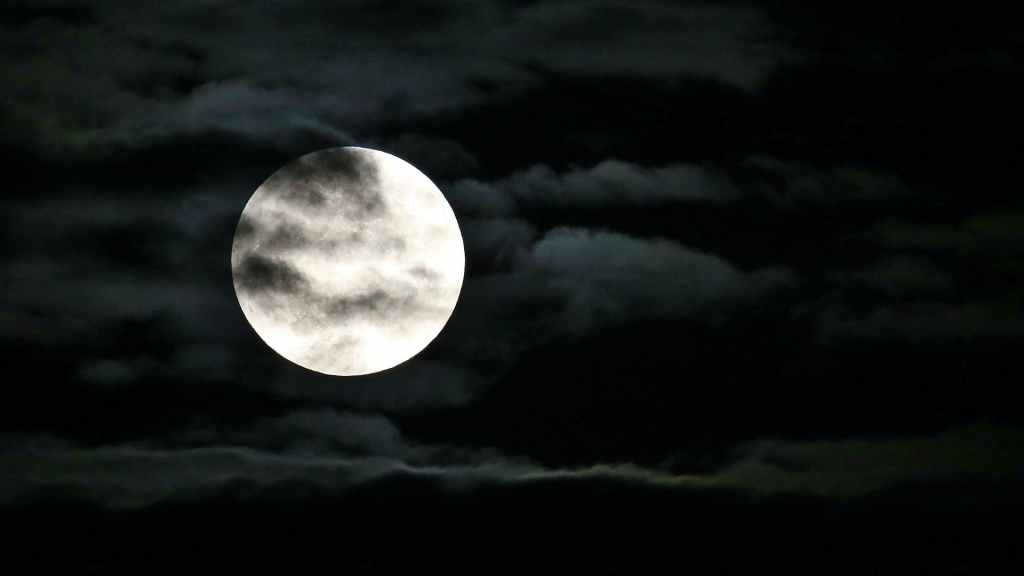
My happy channel.
It is in no hurry to meet the Sun.
It’s with me during the most romantic time of day – the night.
It gives me a pacific smile as I look into its face, the mirror.
I ask if it can see my loved ones too.
“Yes, at the same time,” comes the reply.
I fix my gaze for the glimpse of them reflected in its face.
It’s the same moon that is with me as with them.
The sweet Moon of the night.
With me for 14 nights a month.
Sirius, its proxy, for the rest 14. But it’s rather slow in understanding my needs. Neither it knows how to smile, nor has a reflective face.
Overcast nights bring a lockdown.
I eagerly await the natural satellite, dubbed by me ‘the star of the night’, – the Moon.
It takes me to my loved one.
14 nights are better than none.
…. Sapna Dhandh Sharma
Image credit: History Channel.
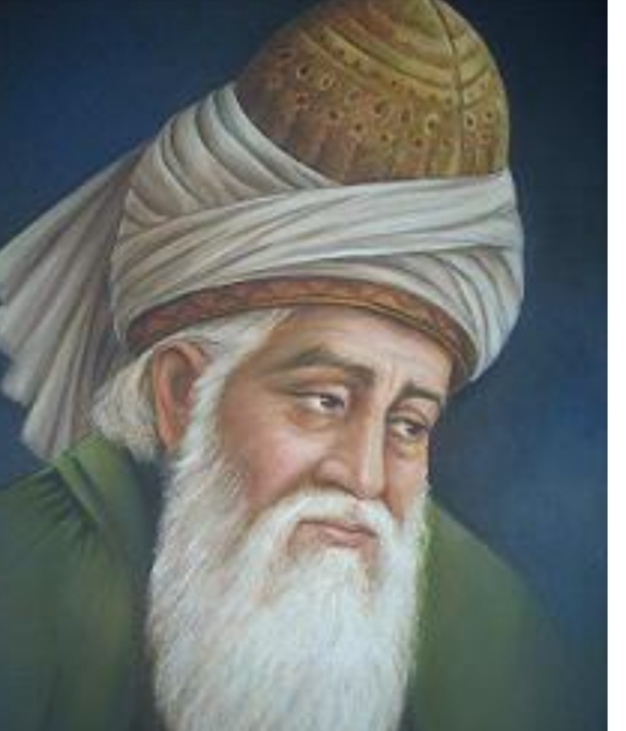
I loved poetry from an early age – learning, reciting verses in English, Hindi, Sanskrit, Urdu and Persian. Partly because it was a compulsory requirement in my school, but also because I enjoyed the analysing and the memory testing process.
I would often buy books by Persian writers. My favourites were Omar Khayyam, Ferdowsi, Hafez, Shirazi and Rumi. I also read Kahlil Gibran for his peculiar style of writing.
Last trip, I packed some of these books to bring along with me. Loved their aged look (they loved my aged look too). I read them again after a long time. All these men were far ahead of their time. So much depth in those words!
Today is Sufi poet Rumi’s day…..
Fountain of Fire, by Rumi, as translated by Nadar Khalili.
look at love
how it tangles
with the one fallen in love
look at spirit
how it fuses with earth
giving it new life
why are you so busy
with this or that or good or bad
pay attention to how things blend
why talk about all
the known and the unknown
see how the unknown merges into the known
why think seperately
of this life and the next
when one is born from the last
look at your heart and tongue
one feels but deaf and dumb
the other speaks in words and signs
look at water and fire
earth and wind
enemies and friends all at once
the wolf and the lamb
the lion and the deer
far away yet together
look at the unity of this
spring and winter
manifested in the equinox
you too must mingle my friends
since the earth and the sky
are mingled just for you and me
be like sugarcane
sweet yet silent
don’t get mixed up with bitter words
my beloved grows
right out of my own heart
how much more union can there be
come on sweetheart
let’s adore one another
before there is no more
of you and me
a mirror tells the truth
look at your grim face
brighten up and cast away
your bitter smile
a generous friend
gives life for a friend
let’s rise above this
animalistic behaviour
and be kind to one another
spite darkens friendships
why not cast away
malice from our heart
once you think of me
dead and gone
you will make up with me
you will miss me
you may even adore me
why be a worshiper of the dead
think of me as a goner
come and make up now
since you will come
and throw kisses
at my tombstone later
why not give them to me now
this is me
that same person
i may talk too much
but my heart is silence
what else can i do
i am condemned to live this life
i’ve come again
like a new year
to crash the gate
of this old prison
i’ve come again
to break the teeth and claws
of this man-eating
monster we call life
i’ve come again
to puncture the
glory of the cosmos
who mercilessly
destroys humans
i am the falcon
hunting down the birds
of black omen
before their flights
i gave my word
at the outset to
give my life
with no qualms
i pray to the Lord
to break my back
before i break my word
how do you dare to
let someone like me
intoxicated with love
enter your house
you must know better
if i enter
i’ll break all this and
destroy all that
if the sheriff arrives
i’ll throw the wine
in his face
if your gatekeeper
pulls my hand
i’ll break his arm
if the heavens don’t go round
to my heart’s desire
i’ll crush its wheels and
pull out its roots
you have set up
a colourful table
calling it life and
asked me to your feast
but punish me if
i enjoy myself
what tyranny is this
you mustn’t be afraid of death
you’re a deathless soul
you can’t be kept in a dark grave
you’re filled with God’s glow
be happy with your beloved
you can’t find any better
the world will shimmer
because of the diamond you hold
when your heart is immersed
in this blissful love
you can easily endure
any bitter face around
in the absence of malice
there is nothing but
happiness and good times
don’t dwell in sorrow my friend.
Wah, Rumi, wah… Khoob lafz kahe!!

I am born into a Hindu Brahmin family in India. This statement alone equals to passport to respect, social privileges, and positive discrimination for life. Every single application form asks for your caste and I wrote ‘Brahmin’, unbeknownst to me at the time its importance in terms of being accepted in whatever it was I was wanting to choose as long as I had the right credentials.
So, why in the world would I even want to highlight the wrongs of the millennia-old system, – ‘The Caste System of India’?
The answer is – my conscience does not allow me to continue without questioning.
This world; its system, environment and abundance should also belong to someone else as much as they do to me.
Same as I am opposed to monarchy, which represents all that meritocracy does not, I am vocal about casteism as this too advocates the by-birth rights, undermining the efforts and struggles of those from the ever-growing educated class, some of whom were not born into the upper strata of the caste hierarchy, but qualify only through the constitutional concessions, in spite of having the right credentials. Funnily, this new breed became a target of mockery – ‘educational success because of concessions’.
How can an upper caste person’s access to privileges not be labelled as a concession instead of a prerogative?
So, in some way, both sides of the caste-scale fall under constitutional concessions. One side has all set. The other, not so. If the caste-scale transformed into a caste-balance, it will tip to one side. The more the weight of privileges, the lighter it becomes. Oppositely, the burden of inequality is heavier, which means those on that side will forever struggle to tip the balance in their favour.
Will it ever happen? I doubt it would in my lifetime, for there is a life beyond the educational system. The upper-caste mafia rules the roost in every region, department, field, discipline, branch, sector, and so on. For some have-nots, it is a grim situation of one-step-forward-and-two-step-backwards.
Social inequality is rife worldwide. India, on the other hand, has it etched in its institution of caste. India’s caste system dates back thousands of years. It is much debated, argued and, in recent years, even denied, especially by the “modern” Indians. Constitutionally, caste-based discrimination is abolished, but socially, it is practised as openly, and somewhat shamelessly, as it always has been and reflects a different reality to the radical statement of the modern-day Indian youth.
Having said that, in my experience, the caste-based discrimination among Indians living in the West is far greater than those living in India’s urban settings. The migrators who left the subcontinent decades ago held onto the ancient and un-progressive order they were born into like an infant onto its mother’s bosom. In many cases, minimal to none social integration, or interaction with the indigenous population meant further isolation from the progressive mindset, one which India’s youth wholeheartedly adopted and want to perpetuate. The mindset I gradually started to embrace by mentally shedding the upper caste skin. I don’t remember having interactions around religon or caste. I mildly lived that life in my home, around family who had their own cultural beliefs, but without being imposed upon. We had discussions in the house, but never foisting of ideologies. A pleasantly secular household. I had freedom to make choices in life. I was like a pampered child who was left loose in a sweet shop. Perhaps, that was partly the reason I felt ill-prepared for a world beyond my childhood, a world where freedom was not considered a birth-right.
My friends were from all faiths, castes and genders. There was no fear about anything in my life that was being shaped in the same pre-dominantly Hindu and casteist society. We discussed everything under the sky, except our differences. For a girl like me, stepping into the Indian life of Britain was like stepping into a world I did not grow up knowing. Even my parents did not grow up knowing that world. This might have been a world somewhat before theirs.
British Indian society, I felt, was a sort of strange concoction of desi and fringed native, an impotent east-west cocktail with illogical, uncompromising values at its core. The elders were unwilling to adapt, leaving their offsprings in a state of utter confusion. The result was sheer misery for many. Casteism, plus racism, combined with ever-present misogynistic attitude and double standards. This is not to say that Indians in India do not have these, but they can be excused for not having lived in the West where there is far greater equality. How can one enjoy the freedom that western life offers, but be unwilling to relinquish the life alien to the free world?
Some elders go as far as making their kids feel guilty by loudly reminiscing their own marriages to their uncles’ and aunts’ family relations, skipping one gotra, as they say. If kids had any sense, or freedom to that sense, they would argue back by calling it ‘marrying a second cousin’. So, the elders not only want their children to marry in the same caste, but in the same family too, if they can help it. Familyism?
Intercaste interactions will, despite the brainwashing and emotional blackmailing, occur. They have been happening for centuries. But, somehow, such interactions seem less in a familial situation than in the realms of matrimony or out-of-family friendships. Marrying outside the caste is still seen as an unacceptable, and somewhat shameful, act. One elder actually told me that her entire family had to relocate to another city, cutting off all the neighbourhood ties, because the daughter brought shame on the family by marrying a, what she described as, a lower caste man. This elder would never mention her daughter’s married surname to people because of the shame factor.
This is another thing… In Indian families, even if you leave the caste, the caste doesn’t leave you. It’s attached in the form of your surname. This whole ‘shame’ concept is simply incomprehensible to me, especially when families living in England engage in this kind of nonsense, but I also know that it’s a culturally inherent trait that has to be dealt at grass-roots level. It is almost like no one wants to steer the boat that faces the tide.
Each caste is happily or unhappily a part of this very complex network of occupational inter-dependence. This is a chain where every unit plays a designated role. You break that link, the whole network is affected. So, when the modern youth starts uttering liberal platitudes, he has to think about which section of the matrix he should first snap in order for the system to respond positively to bring about the much-required change.
What remains to be seen is how long can a system, which took thousands of years to evolve and perfect to this degree of inter-exploitation, be changed within the lifetime of any of those alive!
Will that change be internal, or will it only be a superficial victory?
….Sapna Dhandh-Sharma
 People | Life